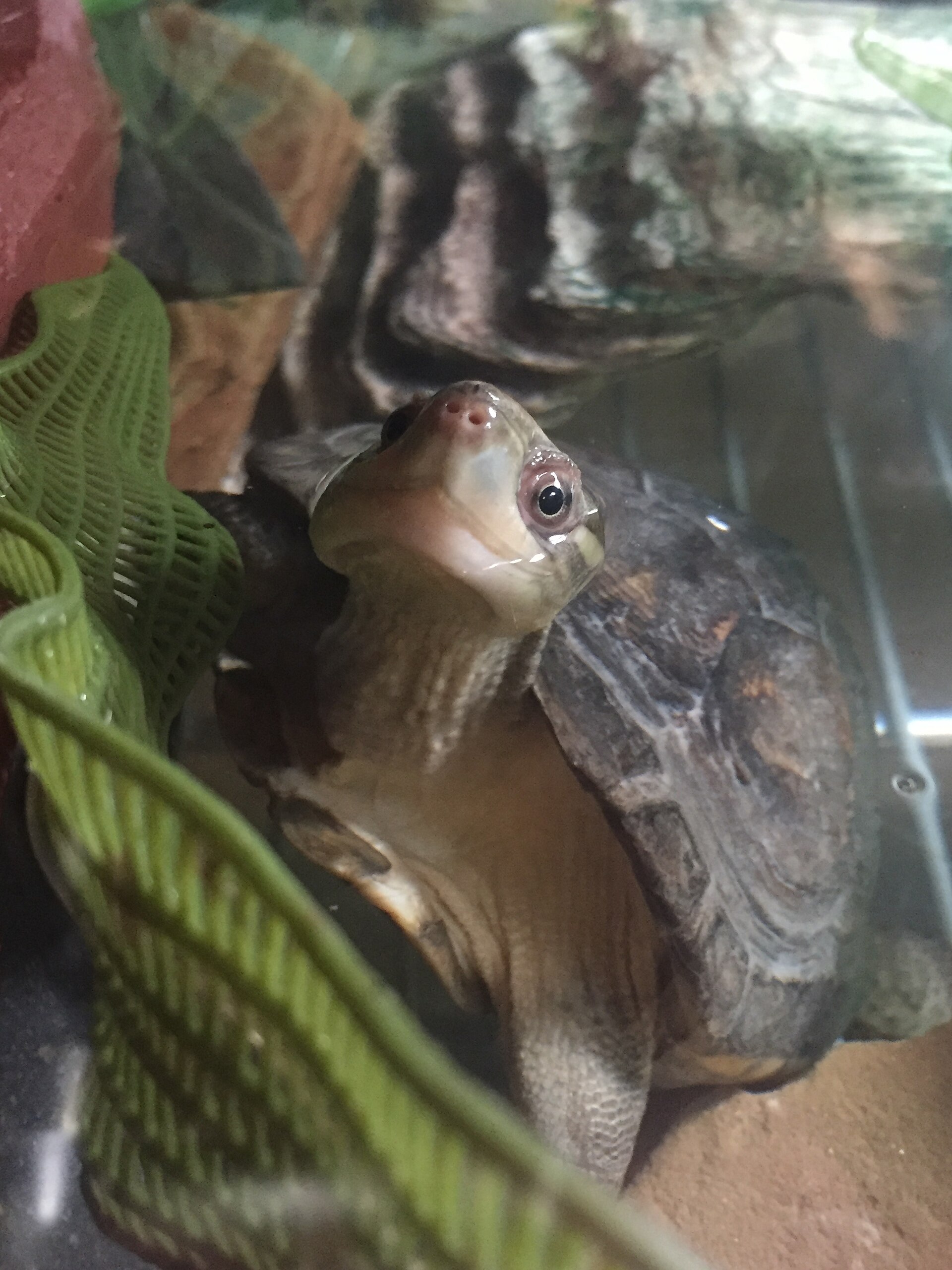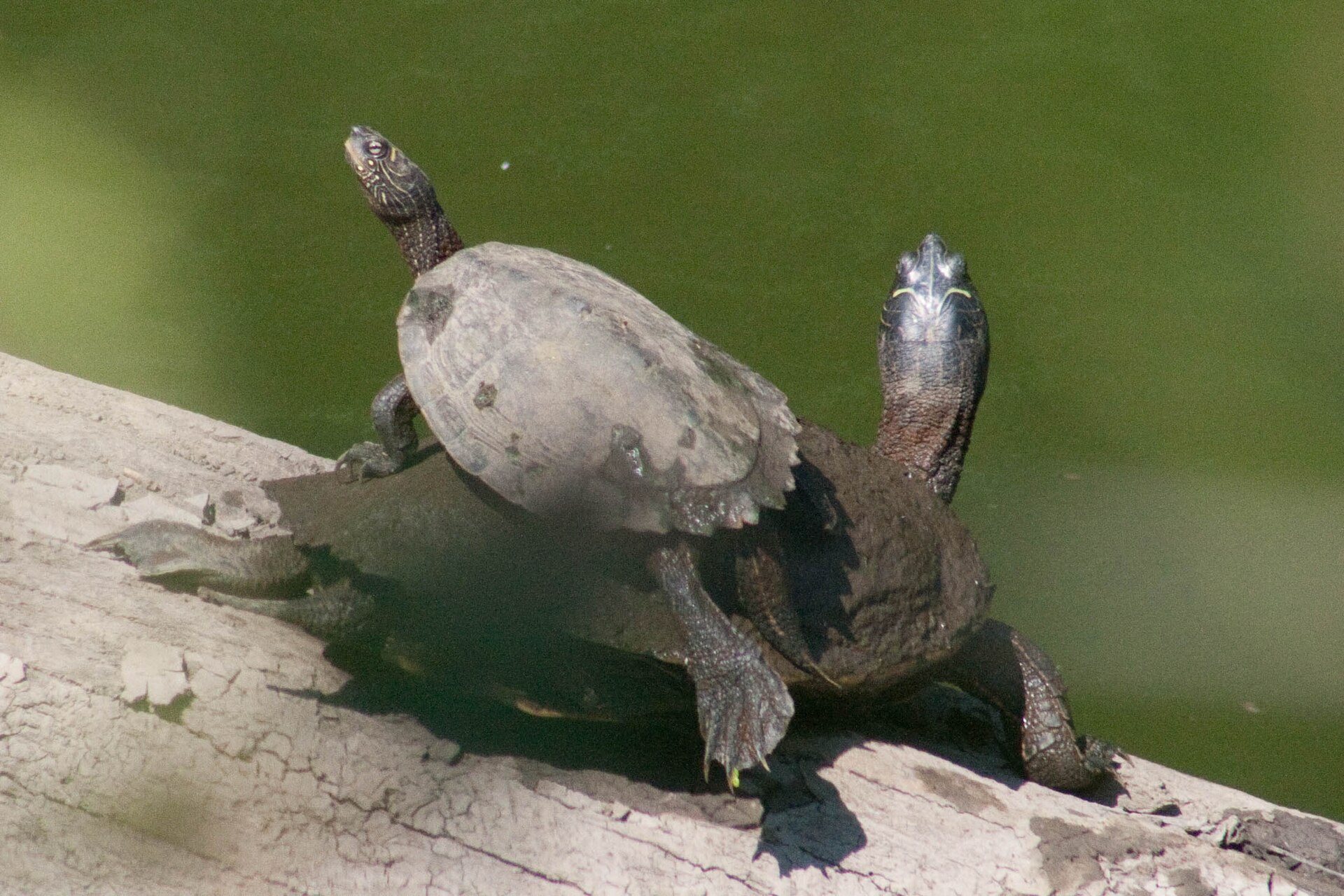
A turtle cannot make its own heat. It warms up by climbing out of the water and lying under something hot, and it uses that heat to digest, to fight infection and to build shell. Take away the basking spot and a turtle slowly stops doing all three.
Three temperatures
- Water: 75 to 80°F for sliders, painted and map turtles; 72 to 78°F for musk turtles.
- Basking surface: 90 to 95°F, measured on the dock with a probe, not in the air above it.
- Air above the water: 80 to 85°F, so the turtle is not chilled the moment it climbs out.
Buy a digital thermometer with a probe and tape the probe to the dock. Dial thermometers stuck to the glass are measuring the glass.
Two bulbs
Heat comes from a plain halogen or incandescent basking bulb in a dome fixture. Start with 75 watts and move it up or down until the dock reads 90 to 95°F. UVB comes from a separate fluorescent tube or compact bulb. The two jobs are separate because almost no single bulb does both well, with the exception of mercury vapor bulbs, which suit tortoise tables but run too hot for most tanks.
Why UVB matters
UVB light lets a turtle make vitamin D3, which lets it use the calcium in its food. Without it the shell goes soft, the legs weaken and the turtle dies slowly over a year or two of what is called metabolic bone disease. Glass and plastic block UVB, so the bulb must shine on the turtle directly, from the distance the maker specifies, usually 12 to 18 inches. The output fades long before the bulb burns out, so replace tubes every twelve months and compact bulbs every six.
A day and a night
Put both bulbs on a timer at twelve hours on, twelve hours off. Turtles need dark to rest. The water heater runs around the clock.
The signs you got it wrong
A turtle that never basks has a cold dock or feels unsafe. A turtle that basks all day has cold water. Swollen eyes, a soft shell edge or a refusal to eat in a turtle with correct temperatures means a vet visit, and reptile vets exist in every major city.