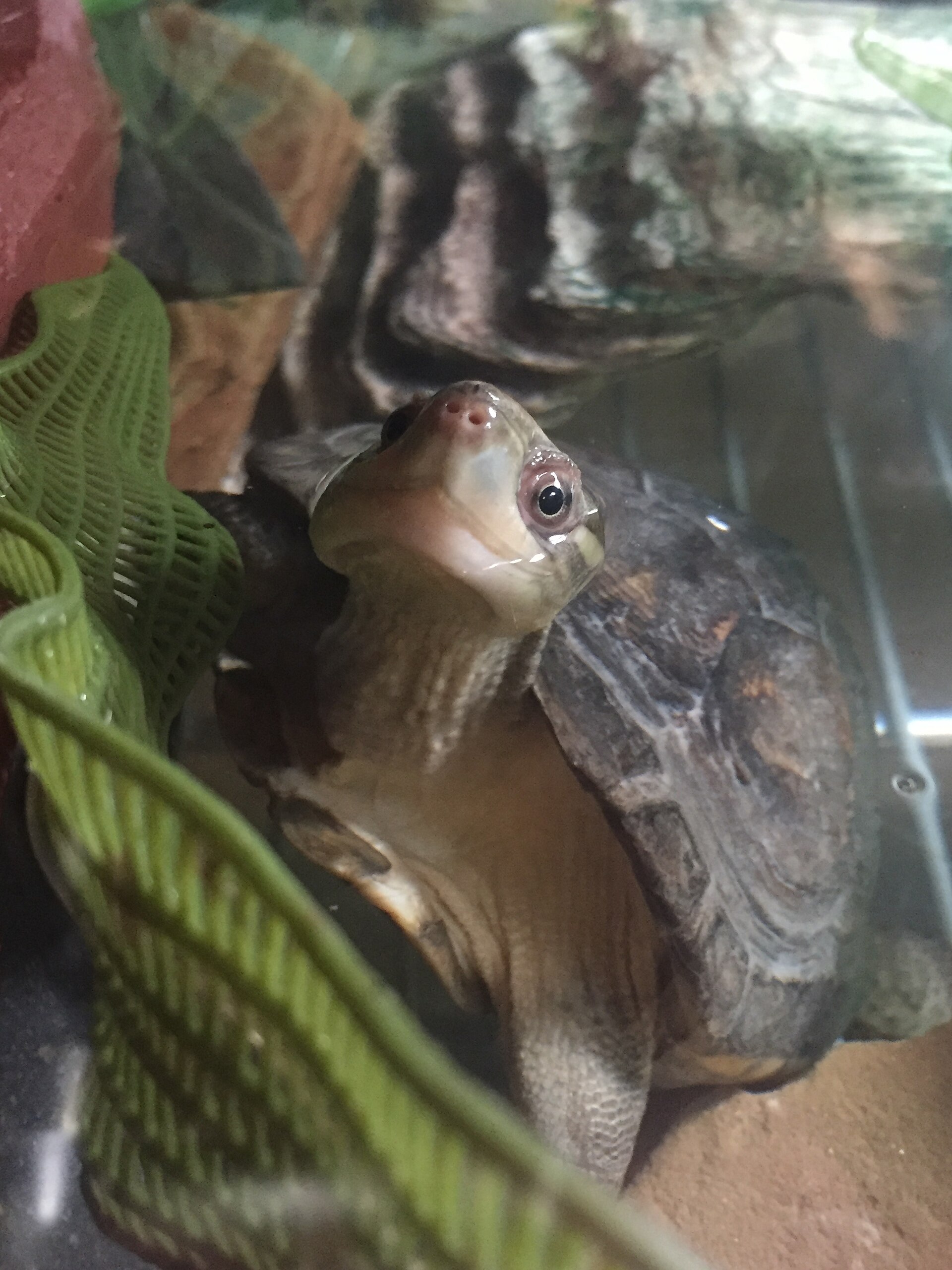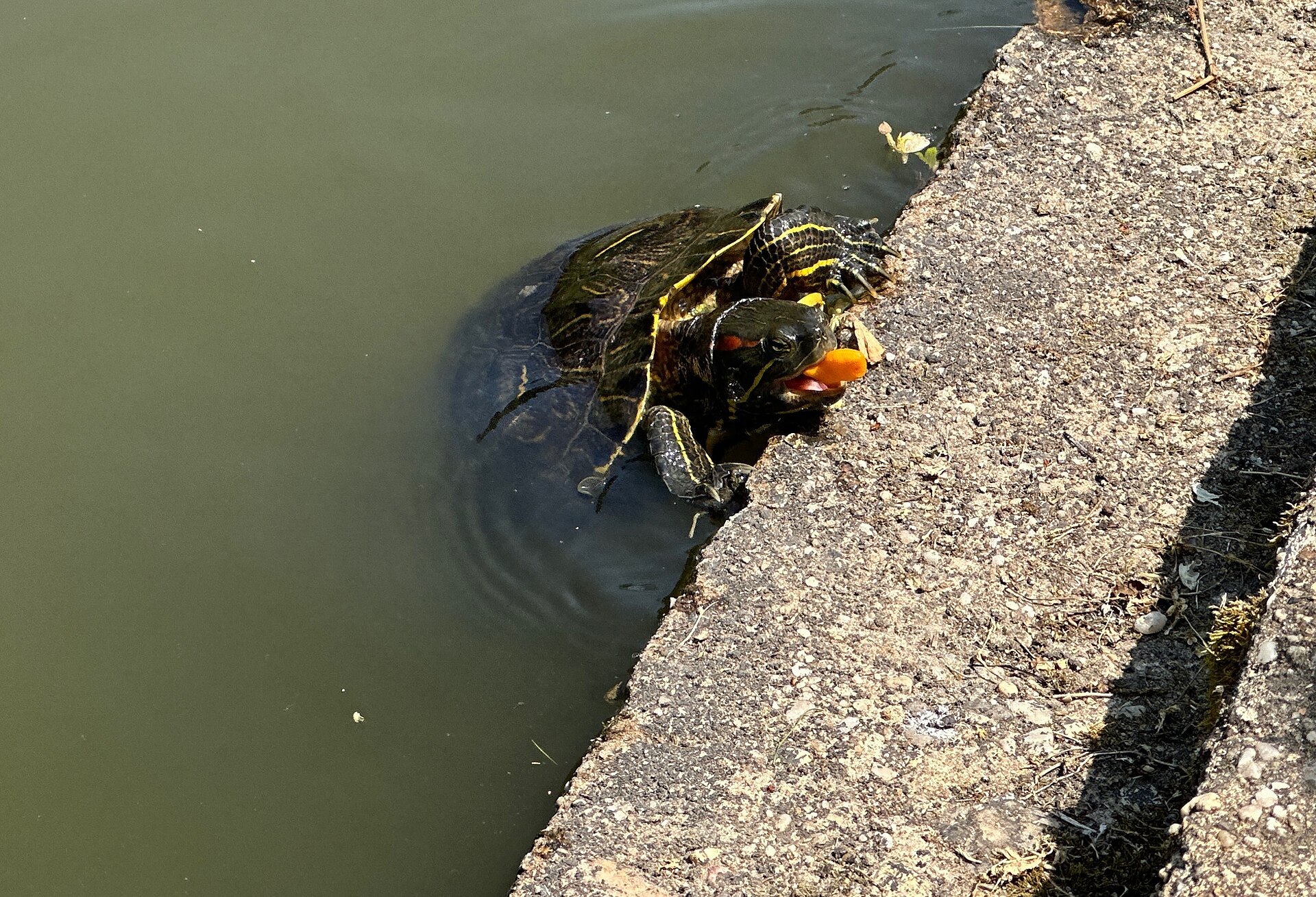
Nearly every turtle carries Salmonella bacteria in its gut and sheds it on its skin, its shell and into its water. This is normal and no treatment removes it. The bacteria do not harm the turtle. They harm people, through hands that touch a turtle or its tank and then touch food or a face.
Who should not keep a turtle
The Centers for Disease Control advise that households with children under five, adults over sixty-five, pregnant people or anyone with a weakened immune system should not keep a turtle. That advice is worth taking seriously. Most reported outbreaks involve small children and small turtles.
The rules that work
- Wash hands with soap for twenty seconds after touching the turtle, its tank, its water or its food.
- Keep the turtle and its equipment out of the kitchen. Do not wash tanks, docks or filters in the kitchen sink.
- Empty tank water into a toilet or an outdoor drain, not a bathtub.
- Do not kiss the turtle and do not let it walk on food surfaces or furniture.
- Children handle turtles only with an adult present and wash hands straight after.
Keep the tank clean
A strong filter and weekly water changes lower the bacterial load in the water and make every other rule easier. Feeding in a separate tub keeps uneaten food and waste out of the main tank.
If someone gets sick
Salmonella infection looks like food poisoning: fever, cramps and diarrhoea a day or so after exposure. Tell the doctor there is a turtle in the house. Most cases pass in a week, but young children and older adults can need hospital care, which is the whole reason the four-inch rule exists.