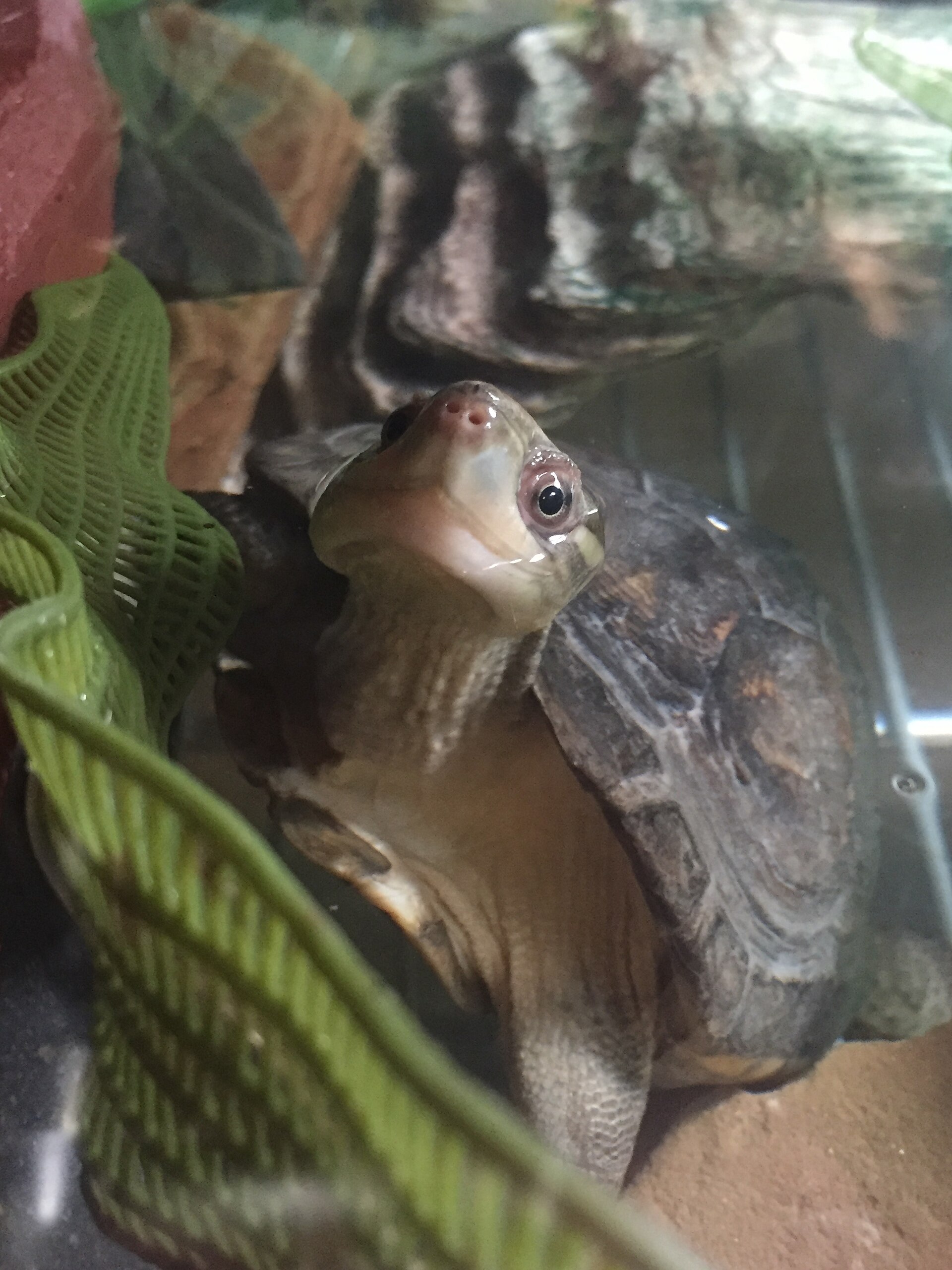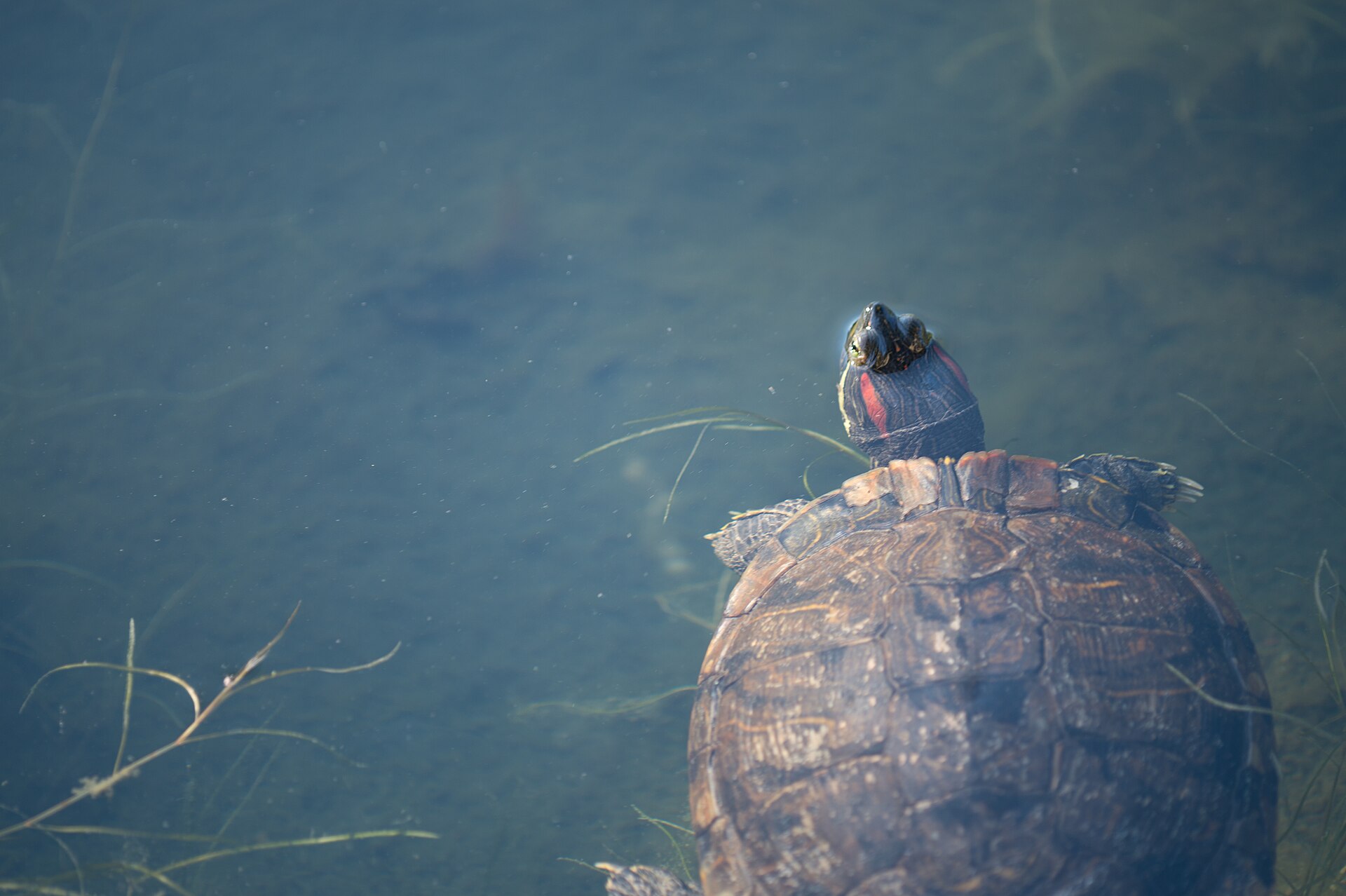
Run a fingernail over the green. If the shell underneath is hard, smooth and has no smell, there is no emergency, and this page will have it clean in ten minutes. If you find a soft spot, a pit, a patch that is white, grey or pink, a scute that lifts with red or fluid underneath, or a smell like something rotting, stop scrubbing. That is shell rot, and it needs a reptile vet this week.
What the green is
The same algae that grows on the glass. It settles on a shell that is wet for long periods under bright light in water with nutrients in it, which is why VCA Animal Hospitals describes algae on the shell as a reflection of a dirty tank, inadequate filtration or infrequent water changes. Wild sliders, map turtles and musk turtles carry a coat of it and come to no harm. In a tank it becomes a problem only when it is thick enough to hold water against the shell, or to grow under a scute that is partly shed. VCA notes that excessive growth can penetrate the shell surface. A thin green film is a message about the water. A furry green coat is a reason to act.
How to clean it
- Fill a tub with water at 75 to 80°F, deep enough to cover the legs but not the head.
- Use a soft toothbrush kept for this job. Brush gently in the direction of the scute edges, two or three minutes for the whole shell. Do the plastron too; turn the turtle over for a few seconds at a time, not longer.
- Plain water does most of it. VCA suggests periodic brushing with a disinfectant cleaner. Merck’s advice is to ask your vet which disinfectant and what dilution, so ask, and in the meantime use water.
- No scrapers, no scouring pads, no bleach, no pressure. A shell is living bone covered with a thin layer of keratin, and the seams between scutes bleed if you dig at them.
- Rinse the turtle, put it back, and disinfect the tub and brush. Wash your hands for twenty seconds. The algae is harmless; the Salmonella on the shell is not.
Do this weekly for a month and the shell stays clean once the water is fixed. If a patch comes back in the same place every week, look closely at it: that is where to suspect a scute that is not shedding and water trapped under it.
Stop it coming back
Algae wants light, wet and nutrients. Take away two of the three.
- Water: a canister filter rated for two to three times the tank volume, and a 25 to 50 percent water change every week. Nitrate is what the algae feeds on, and water changes remove it.
- Light: the lamps on a timer at twelve hours, and the tank out of direct sun. A sunny window grows algae faster than any lamp.
- Basking: a dry shell kills algae. The dock surface at 90 to 95°F so the turtle stays out long enough to dry completely, with the UVB tube over the dock. A turtle that never basks is a turtle that is always green, and the basking guide covers the reasons.
Algae or shell rot
| Sign | Algae | Shell rot |
|---|---|---|
| Colour | Green | White, grey, yellow or pink |
| Surface | Flat film over a hard shell | Pits, holes or soft spots |
| Smell | None or pond | Rotten |
| After brushing | Comes off clean | Leaves a crater or weeps |
| Under a scute | Nothing | Fluid, red tissue, a scute that lifts |
Thin, see-through flakes peeling from the scutes are normal shedding. Merck describes the aquatic turtle shell infection called SCUD as pitting of the scutes, and names crayfish in the diet and poor sanitation as the usual causes. VCA adds that shell infections can penetrate deep into the shell and reach the bone, and that any fresh crack or wound in the shell can become infected within hours.
When a vet is needed
Any pit, soft spot, smell or discharge, any lifting scute with fluid under it, and any crack from a fall or a bite. The vet will scrape and culture the lesion to tell bacteria from fungus, cut away dead shell under sedation, treat with a topical antiseptic such as iodine and often an antibiotic, and may dry dock the turtle for part of each day while it heals. Shell takes months to regrow and the vet will want to see it every few weeks.
What helps
A canister filter, 900 gph, if the current filter was sized for the tank rather than for a turtle. An outlet timer so the lamps are not on for sixteen hours. A 75 W basking bulb if the dock is not hot enough to dry the shell. The vet directory lists reptile vets by state.
Sources
- Common Problems in Aquatic Turtles, VCA Animal Hospitals
- Common Diseases of Aquatic Turtles, VCA Animal Hospitals
- Disorders and Diseases of Reptiles, Merck Veterinary Manual
- Providing a Home for a Reptile, Merck Veterinary Manual
Written from these and checked three times before publishing. Not veterinary advice; a reptile vet who can see the animal beats any page.