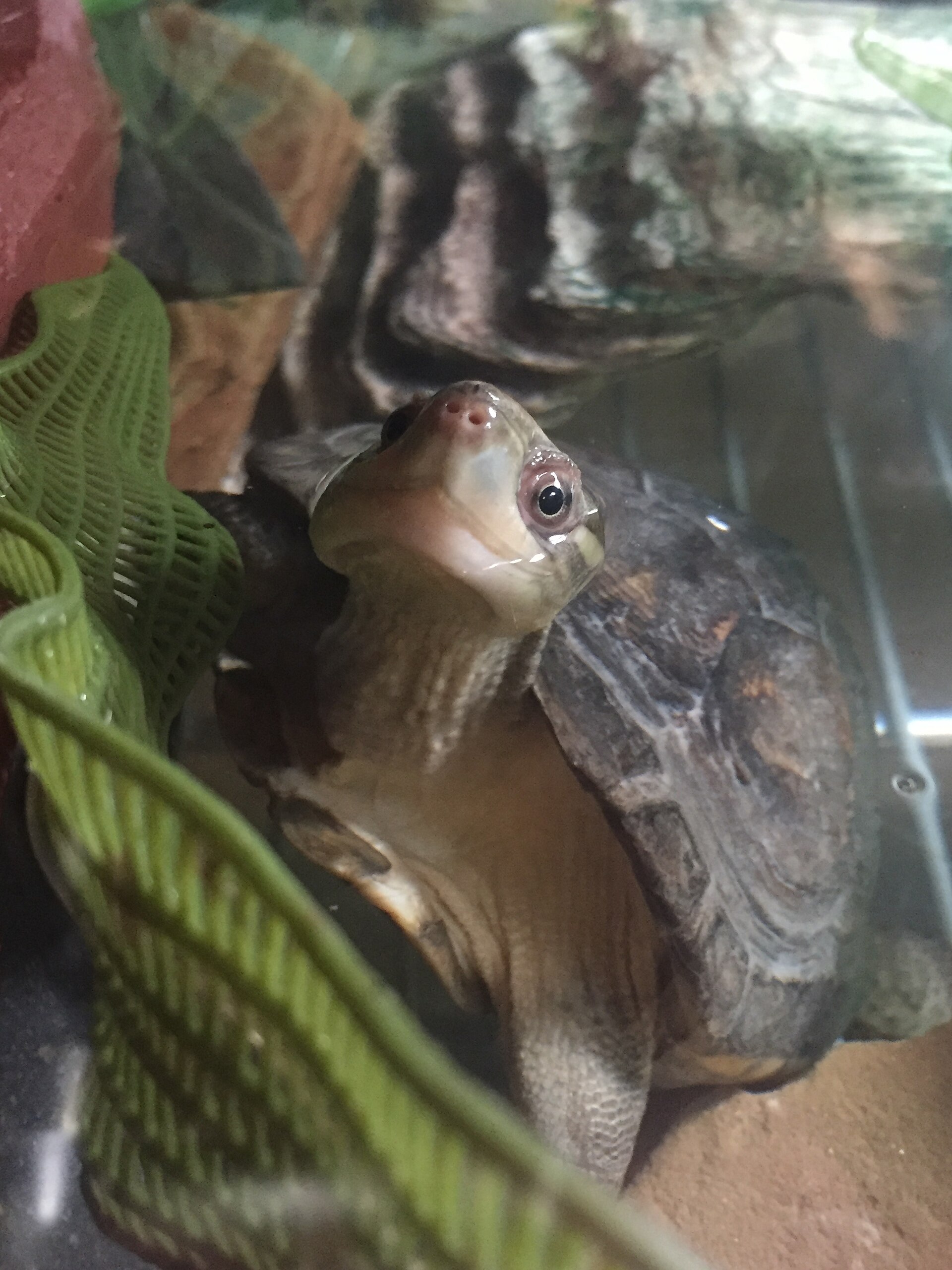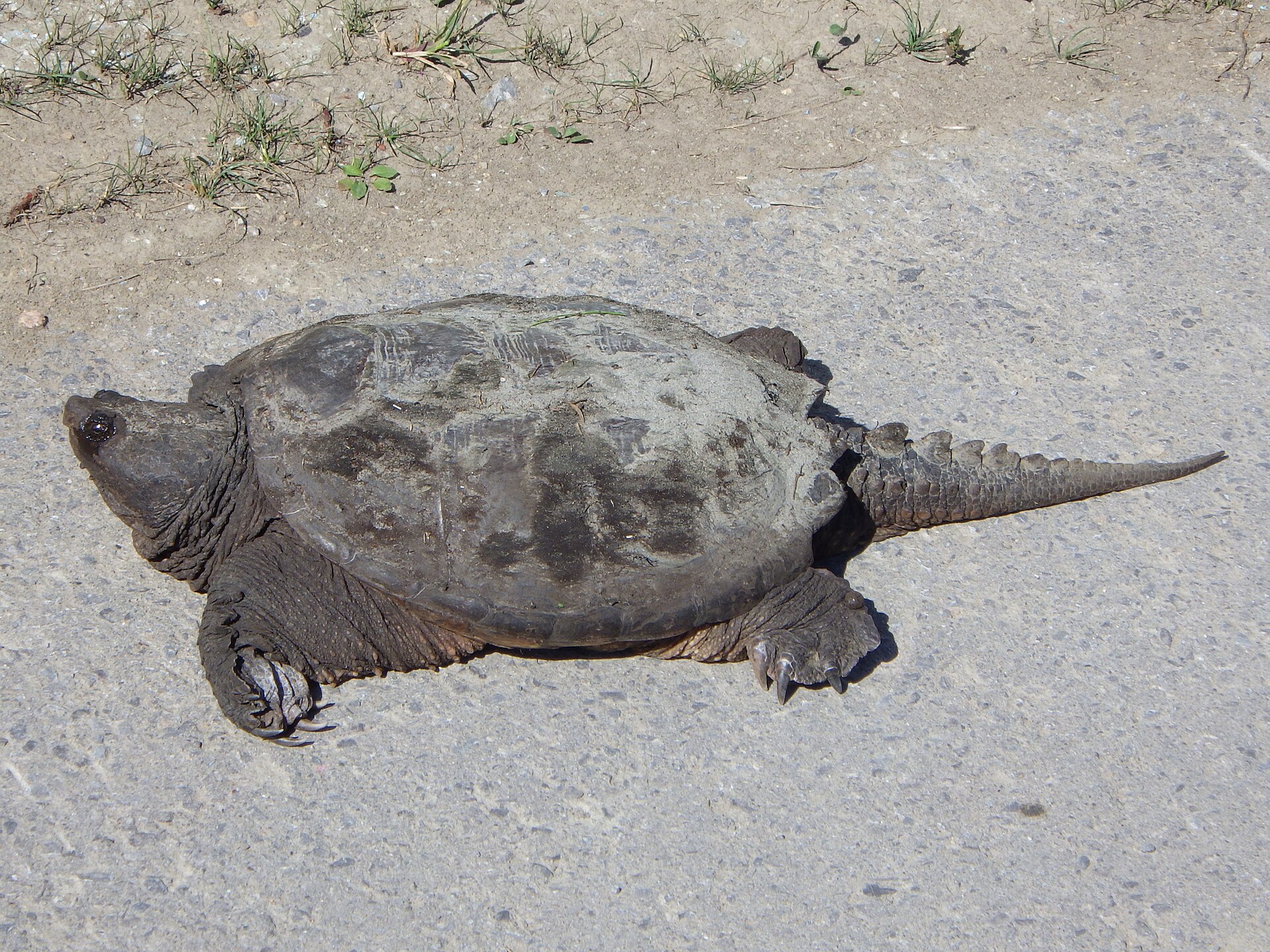
If you have just been bitten, wash the wound with soap and running water for a few minutes, press a clean cloth on it until it stops bleeding, and cover it. Get a tetanus booster if yours is more than ten years old, or five for a deep wound. See a doctor if the bite is deep, on the face or a joint, or if it goes red, hot or swollen over the next two days. Turtles carry Salmonella on their skin and in their mouths, so wash again after you have finished with the tank.
A turtle has no teeth
It has a beak, and veterinary sources describe it as strong. A slider’s bite pinches and can break skin. A snapping turtle or a softshell can take flesh and will not let go. A box turtle or a tortoise rarely bites a person at all but will take a finger that looks like a strawberry. Size tells you how seriously to take it.
Your hand smells of food
Most bites happen at feeding time. A turtle that is fed from the fingers learns that fingers are where pellets come from, and when the pellets stop it tries the finger. A turtle that sees your hand come over the water every day at feeding time will lunge at it on the days you are only moving the filter.
The fix is to take hands out of feeding. Drop pellets into the water from above, or use tongs. Better, feed in a separate tub, so the main tank is never where food appears. Wash your hands before you put them in the water, not only after.
It is frightened
In the wild a slider slides off the log at the first sight of a person. In a tank it cannot leave, so it bites what comes at it. Hands that arrive from above and in front look like a heron. Pick a turtle up from behind, with one hand on each side of the shell between the front and back legs, and keep your fingers off the rim near the head. Lift it low and put it down fast. Do not hold it up to a face, and do not let a child carry it.
A male in spring
Male sliders, painted and map turtles bite at females’ faces and necks as part of courtship, and bite each other over females. Veterinary sources describe aggression during mating and feeding as common in semi-aquatic turtles. A lone male in a tank will sometimes court a hand, a reflection or a foot. It passes with the season. If there is a female in the tank, the bitten one needs a second tank, not a bigger one.
Defending a space
A turtle that bites only when you reach near its dock or its hide is not aggressive, it is cornered. Rearrange nothing while it is in the enclosure. Put a hand in only when the turtle is in the water and away from the dock.
Turtles biting turtles
Bites between tank mates are a separate problem with a separate answer, which is a second tank. A turtle with a bite through the skin, on the shell, or near an eye needs a reptile vet, who will clean it and usually give an injectable antibiotic, because wounds in tank water turn septic. Our guide on tank mates covers it.
Biting the glass
A turtle that bites at the glass, its own legs or the filter outlet for hours is not angry. It may be hungry, kept too cold to digest, or seeing its reflection. Check the water at 75 to 80°F and the dock at 90 to 95°F, and put a strip of paper on the outside of the glass where it is biting. If it persists for a week, a vet will want to look at the mouth and rule out an infection or a retained piece of shed on the beak.
What helps
Feeding in a 40-gallon breeder tank with a few inches of warm water keeps the main tank food-free. Aquatic turtle pellets dropped from above, and dried shrimp and insects as the occasional treat, both from tongs. A second floating basking dock if two turtles share a tank. The vet directory lists reptile vets by state.
Sources
- VCA Hospitals: Aquatic turtles, owning
- VCA Hospitals: Box turtles, owning
- Merck Veterinary Manual: Providing a home for a reptile
- MedlinePlus: Animal bites
Written from these and checked three times before publishing. Not veterinary advice; a reptile vet who can see the animal beats any page.