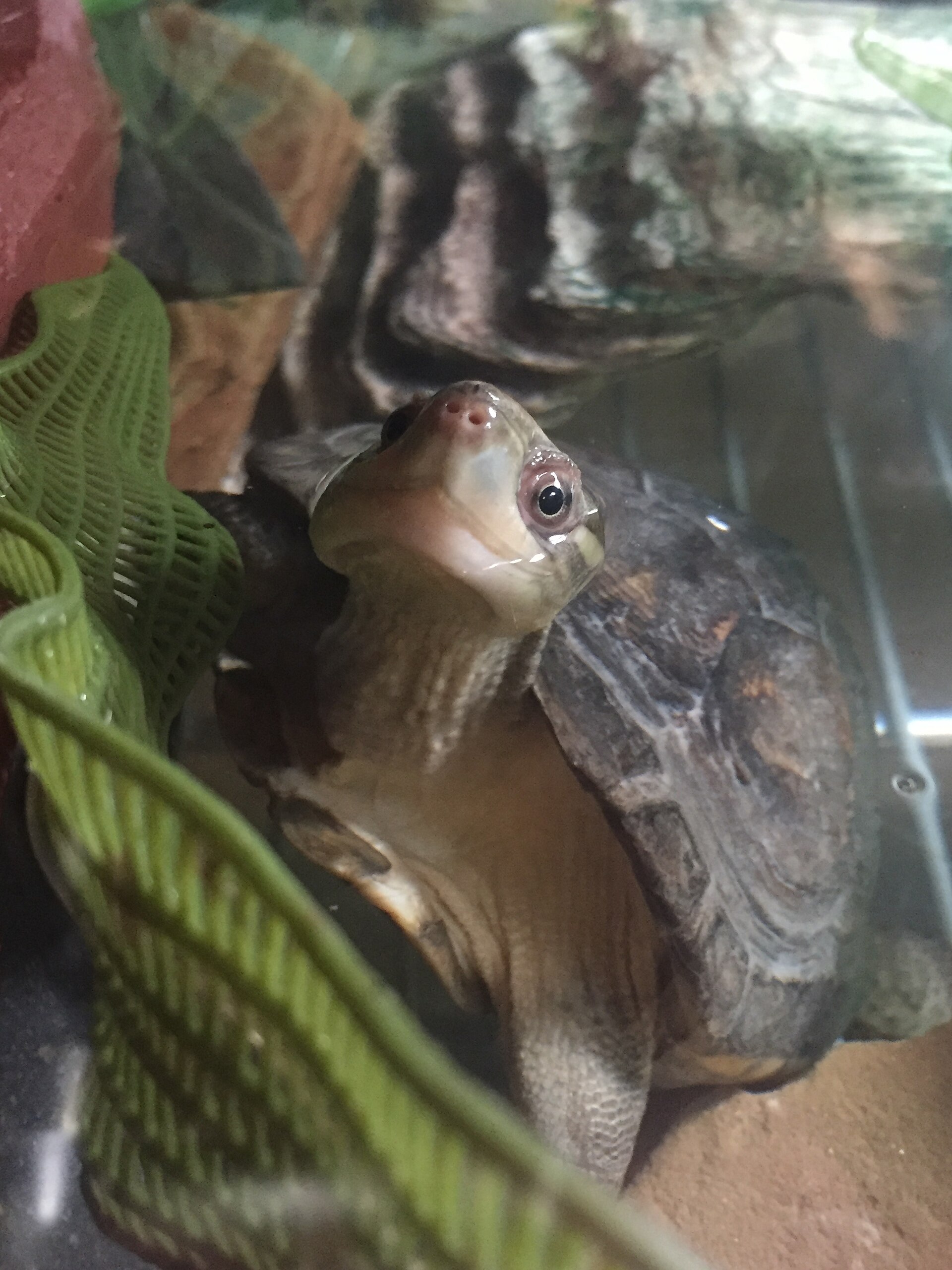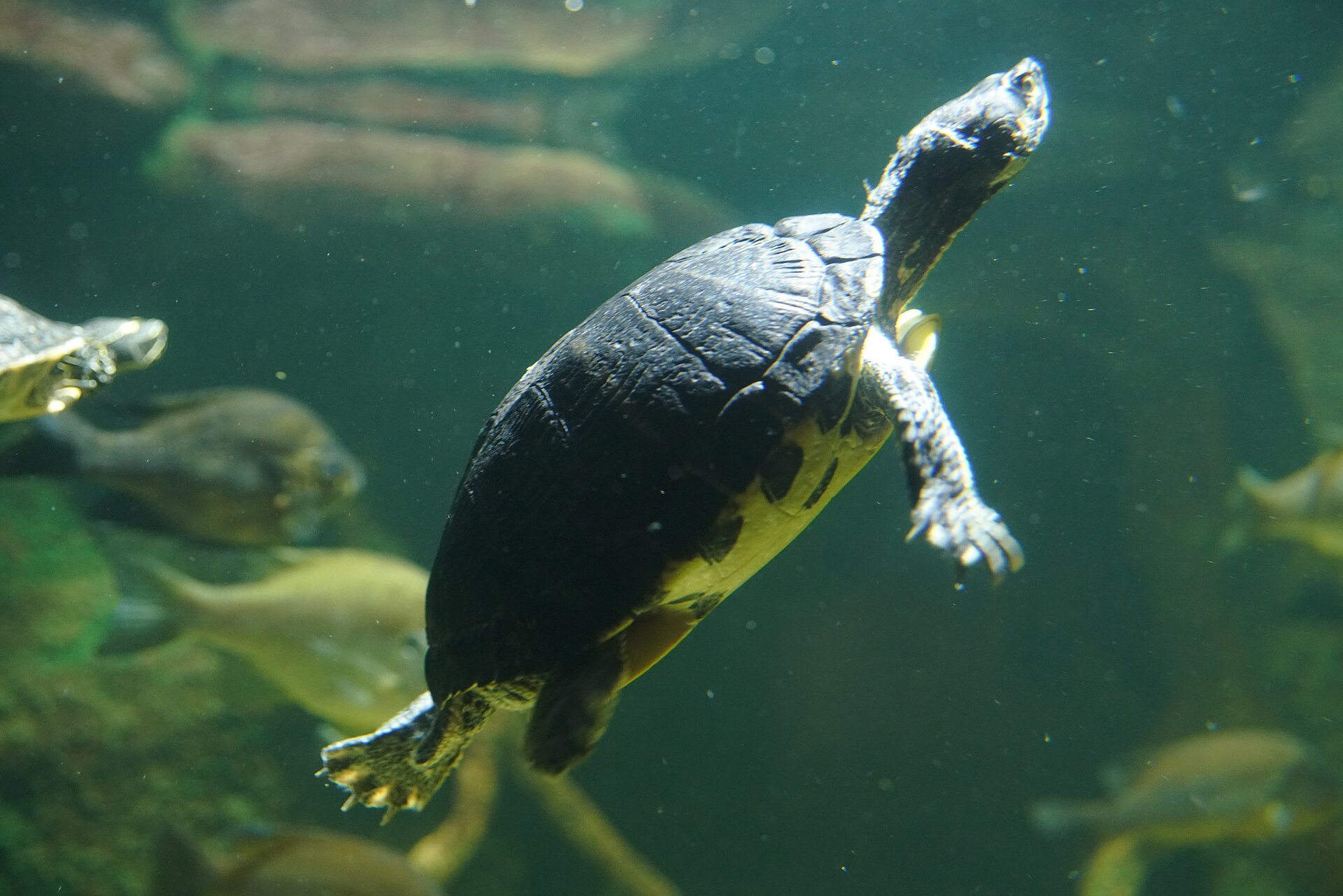
If your turtle floats with one side of the shell higher than the other, or swims in a corkscrew, or cannot get down to the bottom and stay there, book a reptile vet now. Tilting is the one sign that points at pneumonia on its own, before any other symptom shows. Pneumonia in a turtle does not clear up by itself and it does not clear up with warmer water alone. While you wait for the appointment, raise the temperatures and make it easy for the turtle to rest with its head out of the water.
Why it tilts
A turtle’s lungs sit high in the shell, one on each side, running most of the length of the body. The turtle floats level because the two lungs hold about the same amount of air. When one lung fills with fluid and infected tissue, that side gets heavier and holds less air, so it sinks. VCA Animal Hospitals puts it plainly: the tilt occurs because diseased lung tissue is heavier than regular lung tissue. The turtle is not off balance. One lung is not working.
A turtle that floats high and level like a cork, and cannot dive at all, is a different problem. That is usually gas in the gut, from a bad meal, constipation or an impaction. It also needs a vet, but it is not pneumonia.
Other signs to look for
- Bubbles or stringy mucus at the nose or mouth, especially after it surfaces.
- Stretching the neck out and breathing with the mouth open, or a wheeze or click with each breath.
- Not eating, and spending days on the dock or days lying on the bottom.
- Swollen, closed or crusty eyelids. That is a vitamin A deficiency, and it sits underneath most turtle pneumonias.
What to do tonight
- Put a probe thermometer in the water and on the dock. Bring the water to 78 to 80°F and the dock surface to 90 to 95°F. Merck advises keeping a reptile with a respiratory infection at the middle to upper end of its temperature range, because warmth drives the immune system.
- Lower the water level or add a ramp so the turtle can rest with its nose above the surface without swimming. A sick turtle that has to paddle to breathe gets tired and can drown.
- Do not put anything in the water that is sold as turtle medicine, and do not use fish antibiotics. They are the wrong drugs at the wrong dose.
- Keep handling to a minimum. Stress makes the breathing worse.
What the vet will do
The vet will take a history of the water temperature, the diet and the filter, then look at the nostrils, open the mouth and feel the soft areas in front of the back legs for eggs, stones or fluid pressing on the lungs. Because a turtle cannot be listened to with a stethoscope through its shell, imaging comes next: X-rays, or a CT scan where the practice has one, which shows both lungs in three dimensions and tells the vet exactly how much lung is affected. Many practices now have a CT unit and the cost is in the same range as a set of three X-rays.
Treatment is antibiotics by injection, chosen from a culture where the vet can get one by washing the airway with sterile saline. Expect a course of at least four weeks. Dr. Mike Corcoran, in a LafeberVet lecture on chelonian respiratory disease, continues treatment two weeks past the point where both the turtle and the X-ray look normal, and says a bacterial pneumonia in a turtle can take months. Oral drugs are possible but hard to give. A turtle that is deficient in vitamin A gets a supplement by injection, under supervision, because an overdose is as dangerous as the deficiency. Very sick turtles are hospitalised for fluids and tube feeding. A turtle sent home comes back in two to three weeks for a repeat X-ray, or within days if it was struggling to breathe.
Why it happened
Nearly every case comes back to three things: water that was too cold, water that was too dirty, and a diet without vitamin A. Iceberg lettuce, an all-meat diet and cheap sticks are the usual culprits. Fix all three while the turtle is on antibiotics or the infection comes back when the course ends. Water at 75 to 80°F, a filter rated for two to three times the tank volume, and a diet built on pellets with dark leafy greens and the occasional piece of carrot or squash.
What helps
A digital probe thermometer, so you know the water temperature rather than guessing it. A 300 W submersible heater with guard if the water is below 75°F. Aquatic turtle pellets as the base of the diet. The vet directory lists reptile vets by state.
Sources
- Common Diseases of Aquatic Turtles, VCA Animal Hospitals
- Disorders and Diseases of Reptiles, Merck Veterinary Manual
- Respiratory Disease in Chelonians, Dr. Mike Corcoran, LafeberVet webinar transcript
Written from these and checked three times before publishing. Not veterinary advice; a reptile vet who can see the animal beats any page.