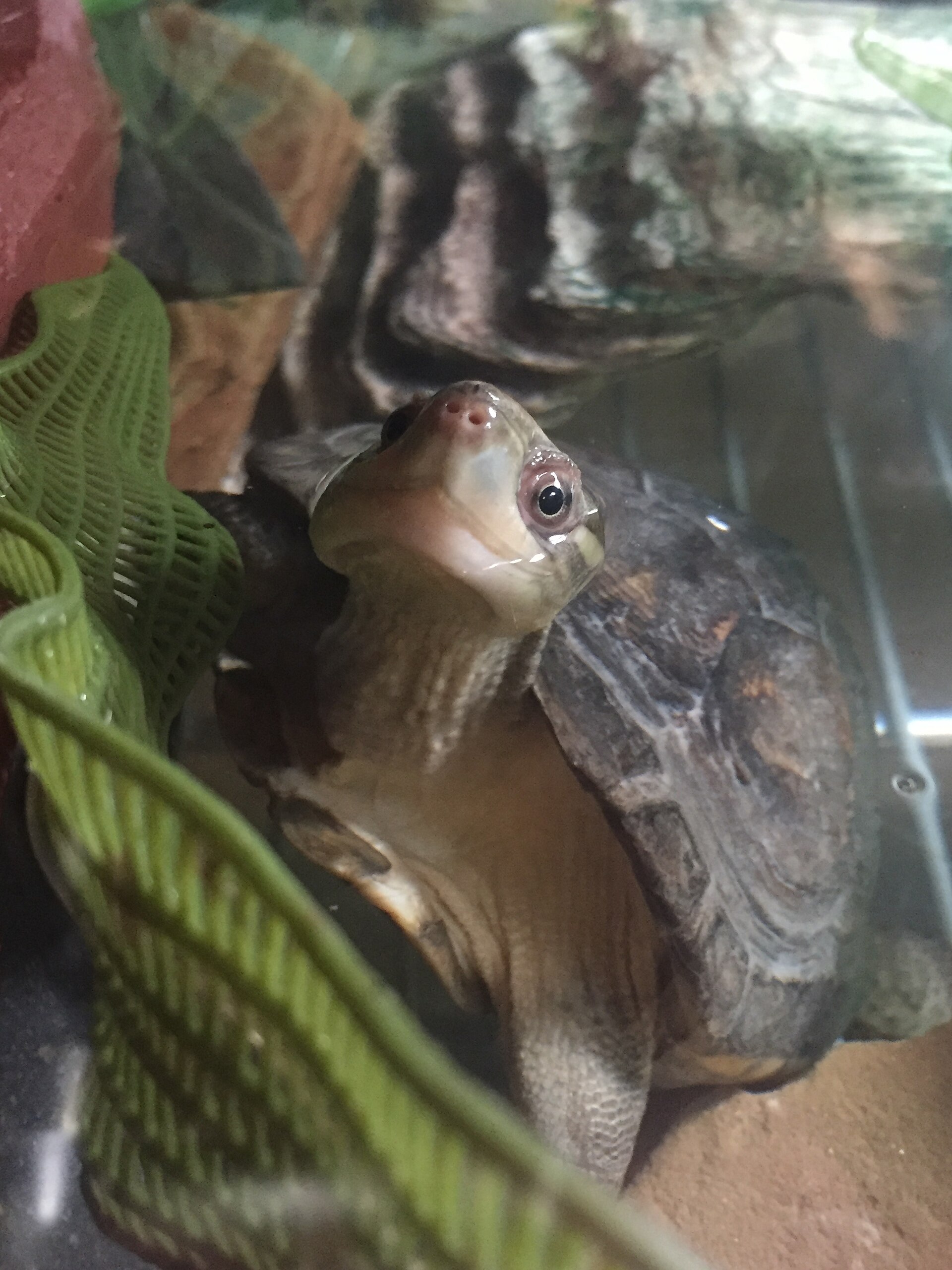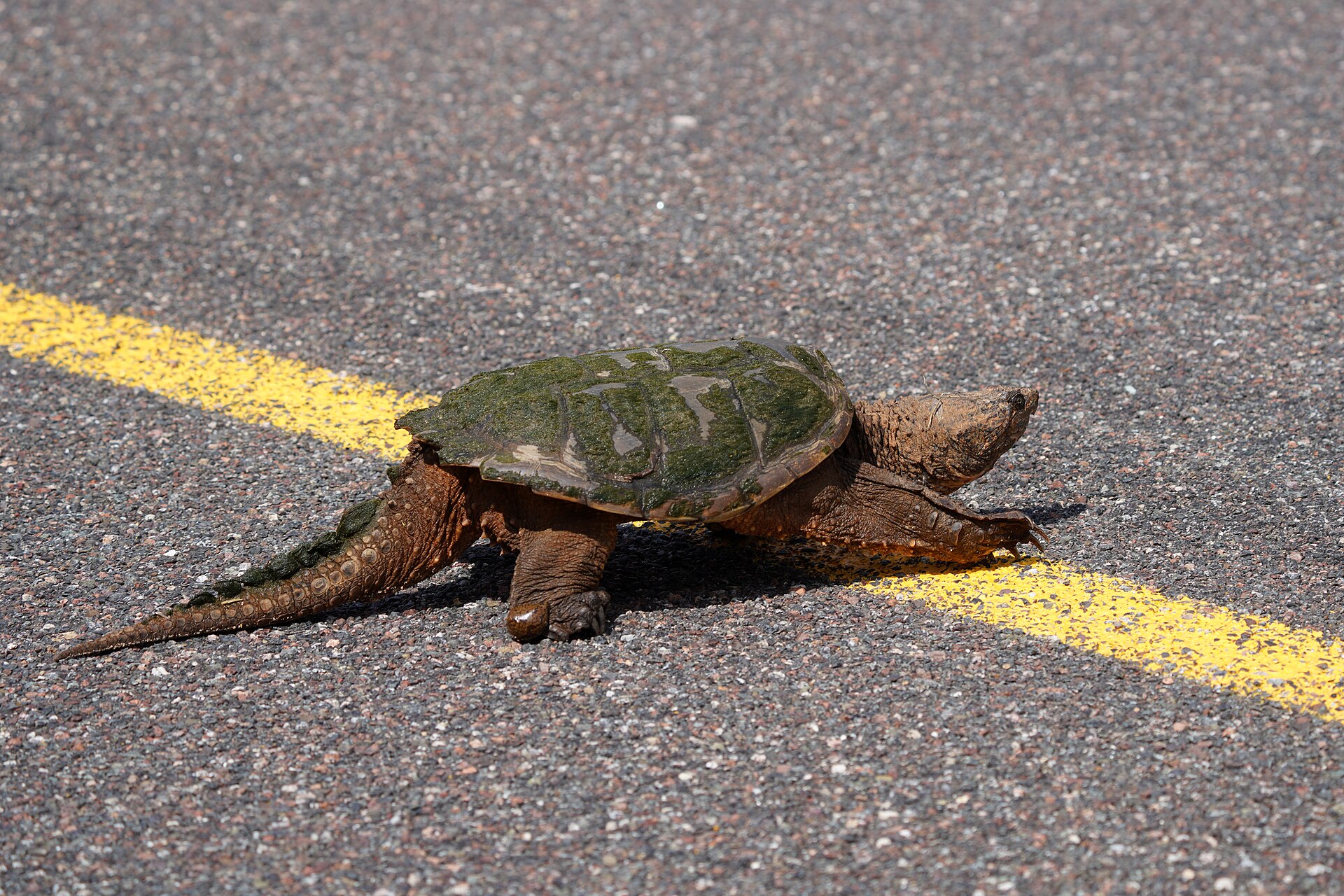
If the turtle is on a road and you can stop safely, pick it up and carry it to the far side in the direction it was already facing. Set it down a few yards off the pavement and leave. That is the whole job in nine cases out of ten. The rest of this page is about the tenth.
Why the direction matters
A turtle on a road is not lost. It is going somewhere: a nesting site in May and June, a pond that has not dried up, the burrow it has used for twenty winters. Turn it round and it will cross again as soon as you drive off. The Orianne Society, a reptile conservation body, puts it well: treat it like an elderly person at a crossing. Help them over. Do not take them home, and do not drop them at a nicer pond across town.
Box turtles are the clearest case. North Carolina’s wildlife agency notes that an eastern box turtle spends its whole life inside about 2 acres and has a strong homing instinct. Moved a mile, it will spend the rest of its life trying to walk back, through every road in between. If you must move one, the agency’s advice is the shortest distance possible, ideally under 50 feet.
How to pick one up
- Hold it by the sides of the shell, behind the front legs, with both hands. Keep it low and level.
- It will probably empty its bladder on you. That is normal, but it has just lost water it needed, so set it down near cover.
- A snapping turtle can reach halfway back along its own shell with its neck. Do not lift one by the tail; that damages the spine. Slide a car mat or a flat shovel under it and drag it, or push it gently from behind with a stick, in the direction it was headed.
- Wash your hands as soon as you can. Every turtle carries Salmonella on its skin, and so does the inside of your car now.
When it needs help
A fresh injury means a wildlife rehabilitator. Fresh means bleeding, a crack in the shell with pink or red tissue showing, exposed bone, a leg hanging wrong, or a turtle that cannot pull in at all. Old damage does not count. Wild turtles carry healed cracks, missing scutes and missing legs for decades, and an animal with a dull scarred shell that is walking well is fine and should be left exactly where it is.
If it is hurt, put it in a box with a towel, keep it quiet and at room temperature, do not feed it and do not put it in water. Write down the exact spot you found it, down to the roadside tree, because the rehabilitator will release it there. Then call. Every state wildlife agency keeps a list of licensed wildlife rehabilitators, and most list the ones who take reptiles. The agency’s general number will give you the nearest one, and so will most wildlife centers and many reptile vets. A vet cannot legally keep a wild turtle long term, but most will stabilise one and hand it on.
A turtle laying eggs
A female digging at the roadside in early summer is nesting. Leave her. If the water is on her side of the road she will go straight home when she is done. If it is across the road, wait and help her over afterwards if you can; the job can take two hours. Do not dig up the nest and do not take it home. Most states protect nests as they protect the adults.
Why not keep it
- It is usually illegal. North Carolina, for one, bars taking, holding or selling five or more box turtles and advises against keeping even one, because every adult removed is gone from a breeding pool that is already shrinking. Many states ban any take of native turtles without a permit. Check your state agency’s page before you decide anything.
- Wild adults do badly in tanks. A turtle that has lived twenty years on a hillside does not learn a glass box. Many refuse food for months.
- It carries parasites and sometimes disease that your own turtles have never met.
- The species needs that animal more than you do. Turtles take 5 to 10 years to mature and lay only a handful of eggs a year. A population survives on its old females, and roads are killing exactly those.
A dumped pet
A red-eared slider in a state where sliders are not native, or a tortoise anywhere in the northern half of the country, is a dumped or escaped pet. Do not release it again. Call your state wildlife agency for guidance, or a local turtle rescue, and hold it in a dry tub in the meantime. Never let a pet turtle go in the wild, however native it looks; the CDC and every wildlife agency say the same, because released pets spread disease to wild turtles and seldom survive.
What helps
Nothing from the shop, unless you end up fostering a dumped pet for a few weeks, in which case a 40-gallon breeder tank, a 75 W basking bulb and a digital probe thermometer will keep it alive until the rescue can take it. The vet directory lists reptile vets by state.
Sources
- Orianne Society, How to Help Turtles Cross Roads
- North Carolina Wildlife Resources Commission, Eastern Box Turtle
- VCA Hospitals, Owning an Aquatic Turtle
- Animal Diversity Web, Terrapene carolina (University of Michigan)
Written from these and checked three times before publishing. Not veterinary advice; a reptile vet who can see the animal beats any page.