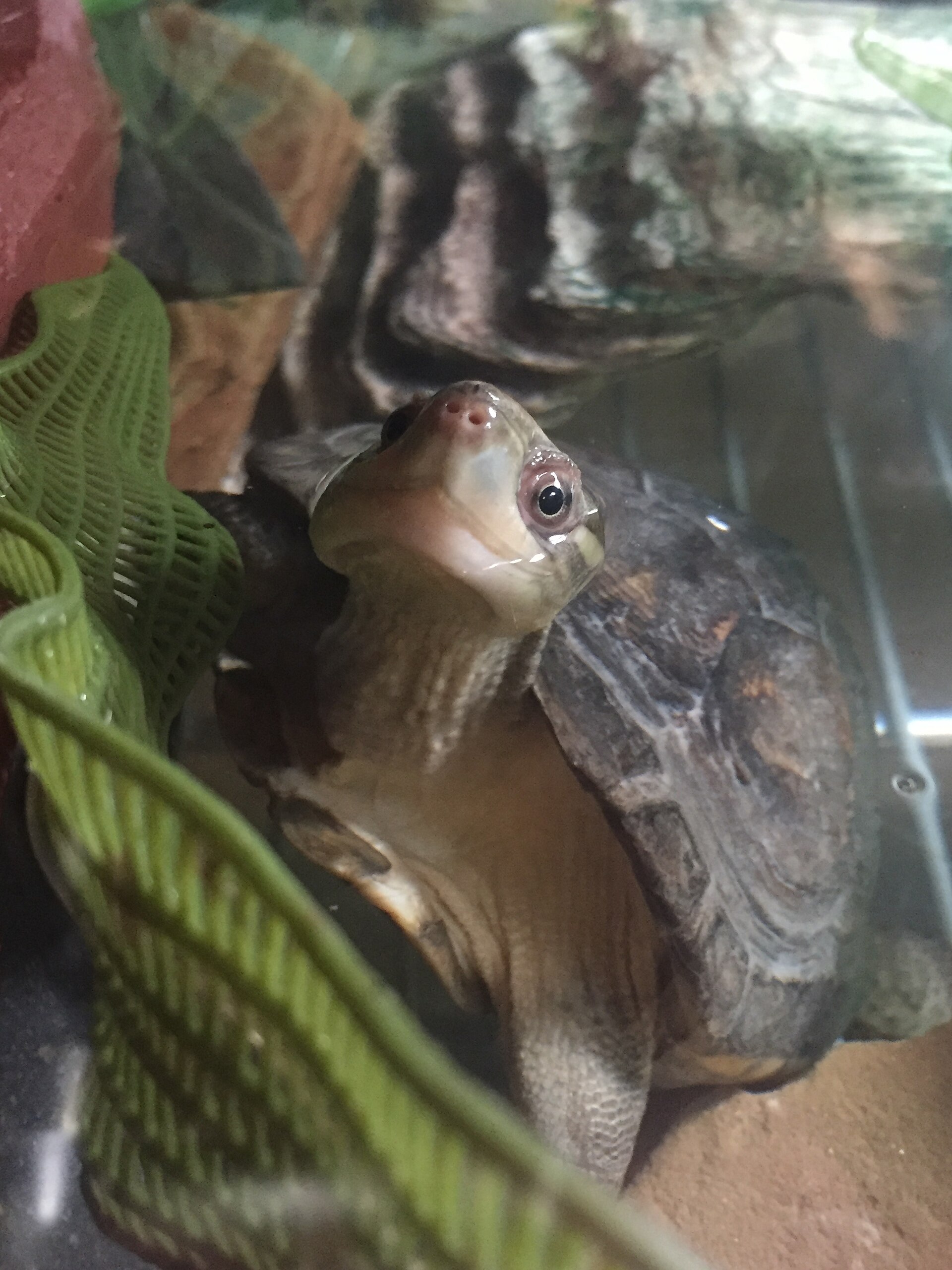
If an aquatic turtle has been out of its tank for a day or more and you have just found it, do this first: fill a tub with water at 75 to 80°F, deep enough to reach the bottom edge of the shell and no deeper, and leave the turtle in it for 30 minutes with the room quiet. Then put it back in its tank. If it cannot lift its head, if its eyes look sunken, or if the skin on its neck and legs is dry and wrinkled, it is dehydrated and needs a vet today.
The honest answer
There is no veterinary figure for how long a red-eared slider, painted turtle or musk turtle can survive out of water, because it depends on the species, the size of the animal, the temperature and the humidity. A cool, damp, dark corner at 65°F can keep a healthy adult alive for days. A sunny windowsill or a heated room at 80°F with dry air can kill a hatchling in an afternoon. Merck’s guidance for keepers is simply that water should be available at all times to avoid dehydration, and it notes that a dehydrated turtle can take water in through the cloaca while it soaks, which is why a soak works faster than offering a drink.
Two other facts set the clock. Sliders and most aquatic turtles swallow only in water, so a turtle out of its tank is not eating. And a turtle’s skin and shell dry out and crack sooner than its body runs short of water.
Daily time out is normal
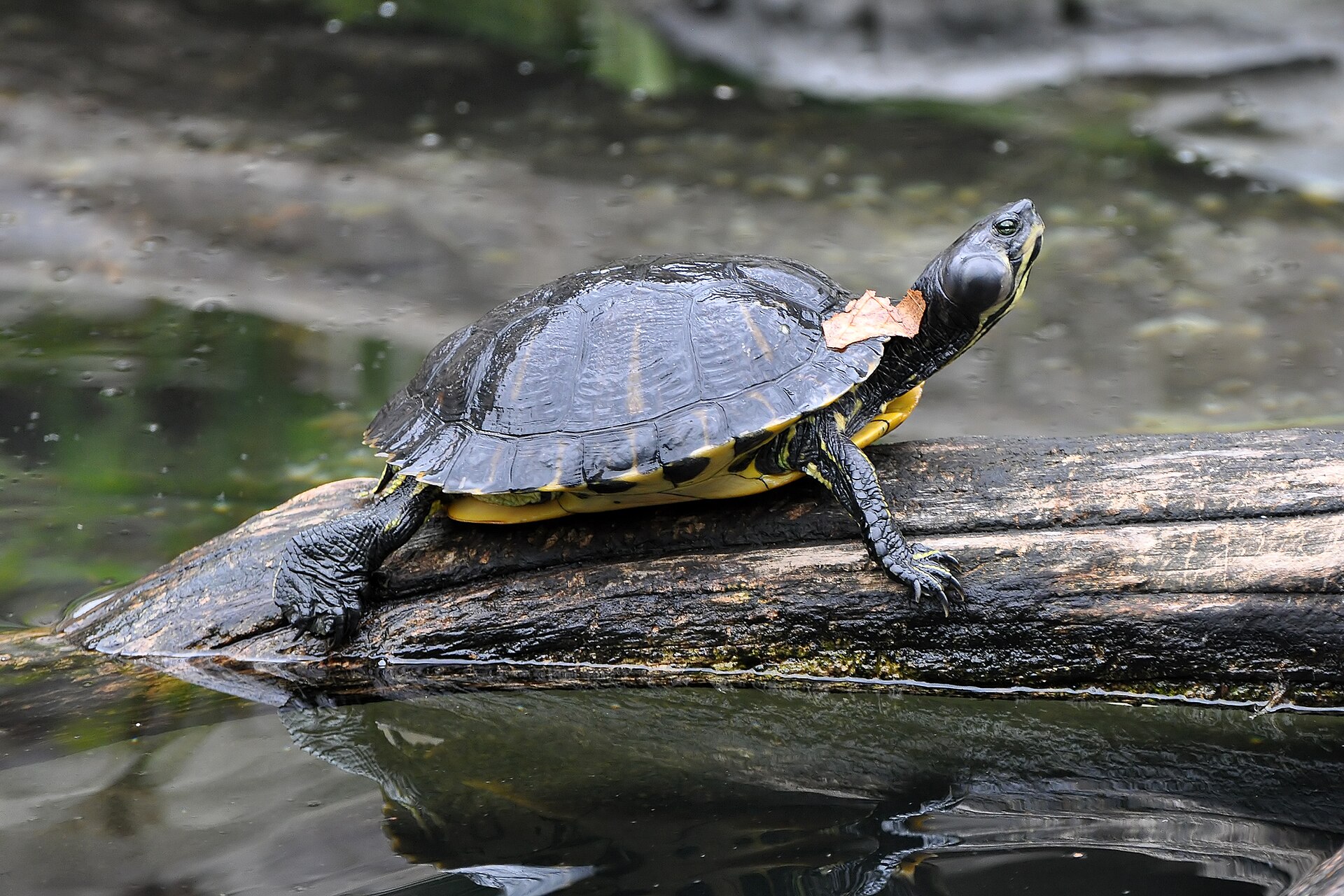
A healthy turtle leaves the water every day. Basking for three or four hours under a lamp, with a surface temperature of 90 to 95°F, is how it warms up, digests and dries its shell. VCA recommends a dry area equal to 15 to 25 percent of the water surface so the whole turtle can climb out. A turtle that sits on the dock all day is a different question, and the guide on basking covers it. Out of the water on its own terms, with water a step away, is not a problem.
An escaped turtle
Turtles leave tanks more often than people expect, usually by climbing the filter tube or the edge of the dock. They head down and toward warmth and darkness. Look under furniture, behind the refrigerator and dryer, inside shoes and bags, and in any gap along a wall. Turn off the television and listen; a turtle on a hard floor scrapes. Put a shallow dish of water on the floor of each room and check it in the morning.
When you find it, do the soak above. Then watch it for three days. It should drink in the first soak, bask within a day and eat within two or three. If it does none of those, or its eyes stay sunken after a soak, see a vet.
Travelling to the vet
A trip of a few hours needs no water. Put the turtle in a plastic tub or a cardboard box with a damp towel on the bottom and air holes in the lid, and keep the car at 70 to 80°F. Do not add standing water, which sloshes, chills the animal and spills. In winter, warm the car before the turtle goes in, and carry the box inside a bag or a second box.
Dry docking
A reptile vet treating shell rot, a wound or a skin infection may tell you to keep the turtle out of water for most of each day, so the shell dries and the medicine stays on. This is called dry docking. It is a prescription, not a home remedy: the vet sets the hours, the temperature and how long the turtle goes back into shallow water each day to drink, eat and empty itself. Ask for the plan in writing. A turtle dry docked without that daily soak will stop eating and dehydrate.
When a vet is needed
- Found after more than a day in a warm, dry room, or after any time in direct sun.
- Sunken eyes, wrinkled skin or a head it cannot hold up after a soak.
- Not eating three days after it went back in the tank.
- Found cold and limp. Warm it slowly to room temperature on the way, not under a lamp.
The vet will weigh the turtle, judge how dehydrated it is, and give fluids by injection or by a long warm soak, then check the skin and shell for cracks that can get infected.
What helps
A shallow soaking dish for the first-aid soak, and a digital probe thermometer to get the water to 75 to 80°F rather than guessing. A floating basking dock with a ramp gives a turtle a reason to leave the water that is not the top of the filter. The vet directory lists reptile vets by state.
Sources
- Providing a Home for a Reptile, Merck Veterinary Manual
- Disorders and Diseases of Reptiles, Merck Veterinary Manual
- Housing for Aquatic Turtles, VCA Animal Hospitals
Written from these and checked three times before publishing. Not veterinary advice; a reptile vet who can see the animal beats any page.