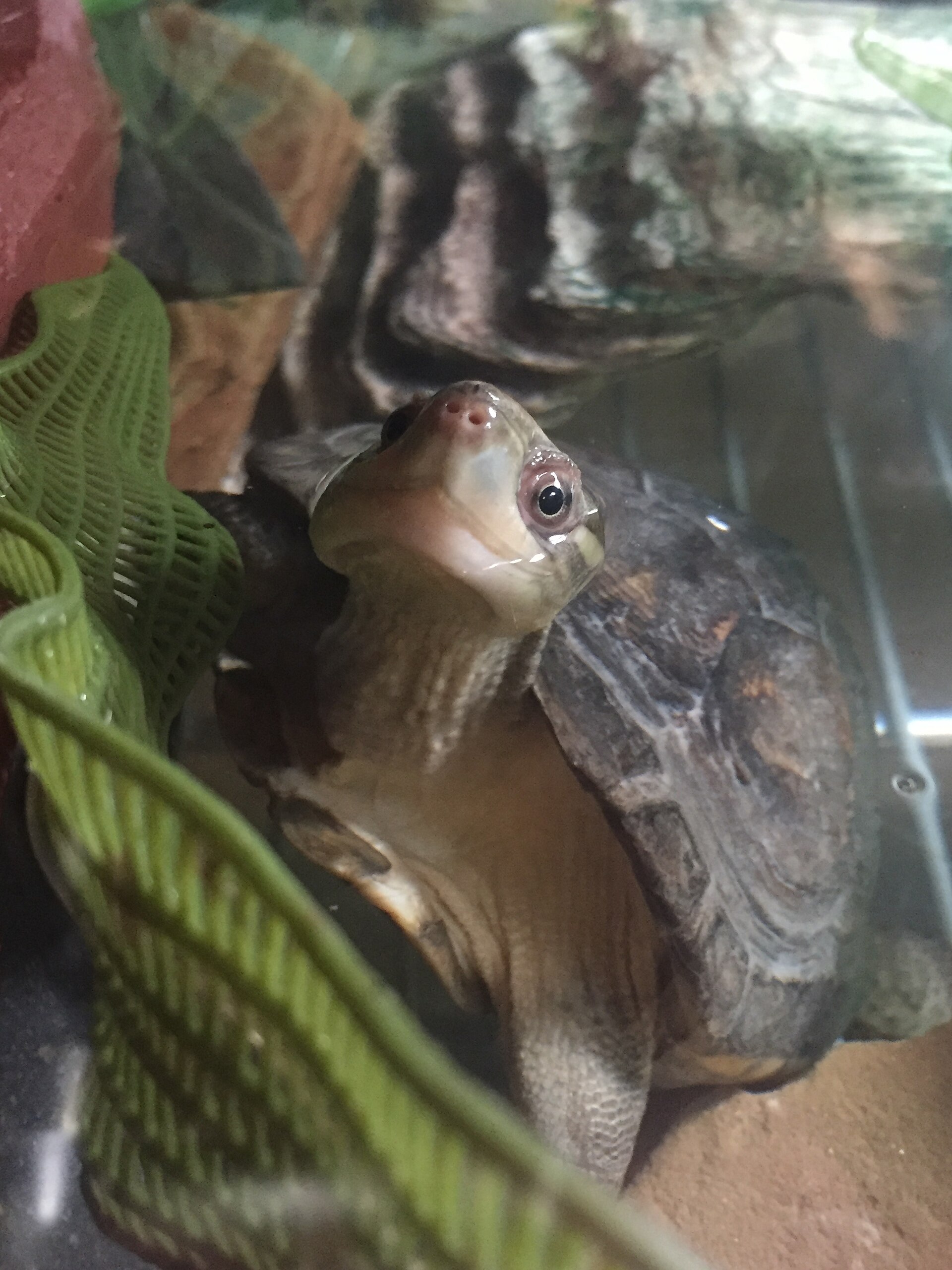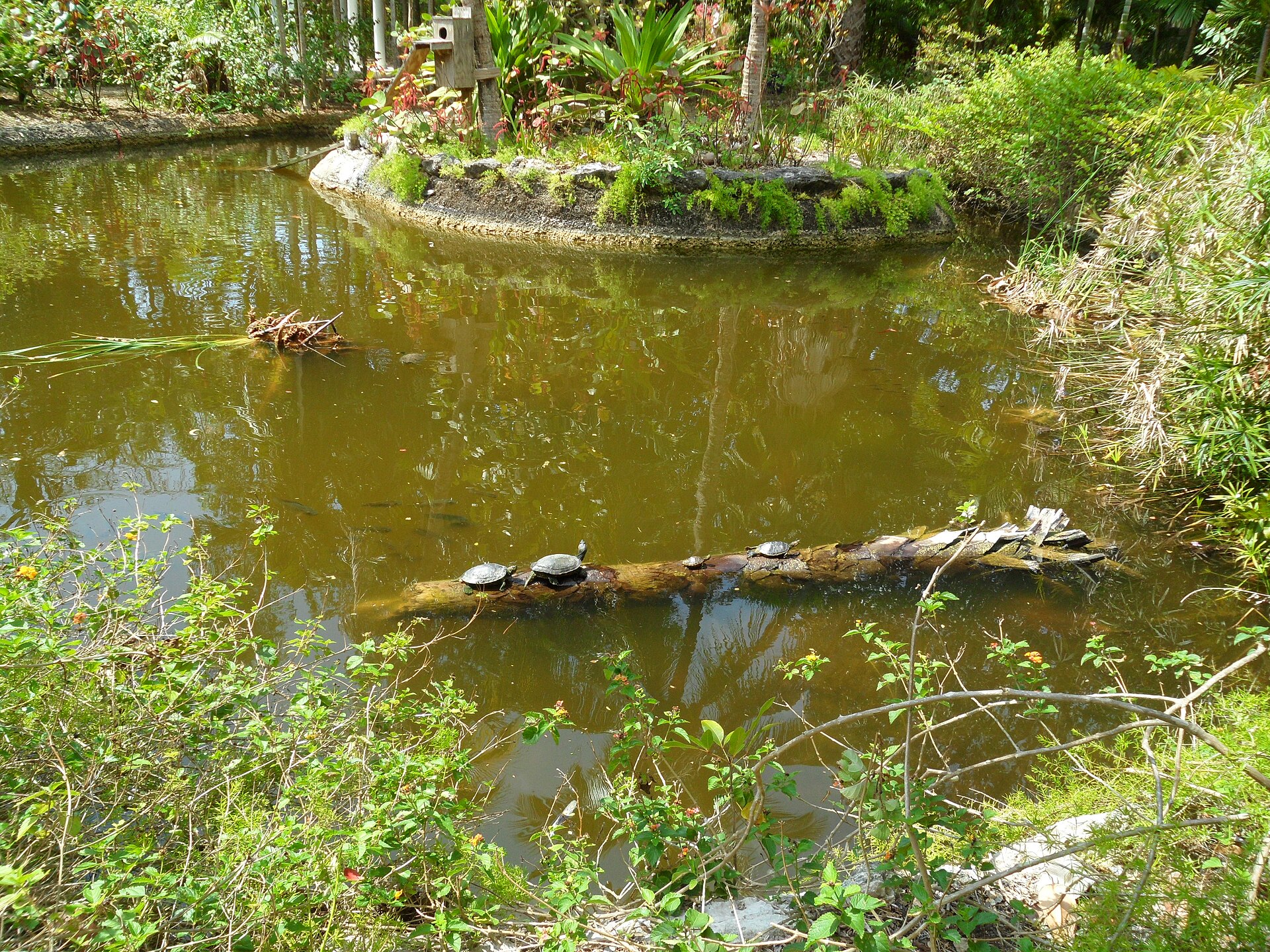
Nothing you can buy for a slider beats a pond in the sun. Veterinary sources say one to two hours a week of unfiltered sunlight changes a turtle’s health, and a pond gives it that every day. The pond itself is the easy part. Ponds lose turtles to escapes and to raccoons, and both are solved before the first bucket of water goes in.
Who it suits
Sliders, painted, map and cooter turtles from about 4 inches up, in climates where summer days run above 80°F. Musk and mud turtles do well in a shallower pond with a lot of cover. Box turtles want a damp garden pen with a shallow dish, not a pond. Tortoises want a dry pen and no pond at all.
How big and how deep
Keep to ten gallons of water per inch of shell. One adult female slider needs 100 gallons; three adults need 300. In a pond that is roughly a hole 6 by 4 feet and 2 feet deep. Build it with two levels: a shelf 6 to 10 inches deep along one side for warming up and feeding, and a deep end of at least 2 feet. The deep end is where the turtle gets away from heat and, if you overwinter outdoors, from ice.
The walls
A turtle climbs anything it can hook a claw into. Run a smooth wall at least 18 inches high around the whole area, with an inward overhang of 4 to 6 inches at the top. Bury the base 6 to 12 inches, because turtles dig out as readily as they climb. A preformed plastic pond or a 100-gallon stock tank sunk in the ground makes the water part simpler, and the wall still needs to go round it.
The lid
Raccoons take turtles up to the size of a dinner plate and eat the smaller ones in the water. Herons and crows take anything under 4 inches. Dogs, including your own, crack shells. A frame of half-inch hardware cloth that locks shut is the cheapest insurance you will buy, and it also stops theft, which veterinary sources list alongside predators as a real risk of outdoor keeping. Lift the lid for a basking hour when you are home if you want direct sun on the dock.
Water, filter and plants
A pond pump rated to turn the whole volume over at least once an hour, feeding a box filter or a bog of gravel and plants, keeps the water clear enough to see the turtle. Turtles eat most pond plants, so treat them as food, not decoration. Duckweed, water lettuce and anacharis grow faster than a slider eats them. Give the deep end some shade, from a plant or a board, so the turtle can get out of the sun.
The basking spot
A log or a rock that the whole turtle can climb onto and dry on, positioned in the sun from mid-morning on. No lamp is needed outside. Check the dock surface with a probe thermometer on a hot day; above 100°F the turtle will stop using it and needs a shaded second dock.
Winter outdoors
Freezing kills. A turtle can sit on the bottom of a pond under ice if the water beneath it stays liquid and the pond is 2 feet deep or more, which is why wild sliders survive northern winters. If your pond is shallower, or you are not sure, bring the turtle inside to a tank at 75 to 80°F from the first week nights drop below 60°F until spring. Do not overwinter a turtle outdoors in its first year with you, or any turtle that has been ill. Box turtles come in below 60°F.
Never release
A pond is not a halfway house to the creek. Released sliders are now an invasive species on several continents, and Florida, among other states, requires fully enclosed outdoor enclosures for them and the destruction of any eggs laid. Check the state law page for your state before you dig.
What to buy
A 100-gallon stock tank, sunk or not, is the fastest pond to build. A digital probe thermometer for the dock and the water. A canister filter, 900 gph, works on a pond as well as a tank if you keep its hoses short. The vet directory lists reptile vets by state.
Sources
- Merck Veterinary Manual: Management of reptiles
- VCA Hospitals: Aquatic turtles, housing
- VCA Hospitals: Box turtles, housing
- Tortoise Trust: Safer hibernation and your tortoise
- Florida Fish and Wildlife Conservation Commission: Red-eared slider
Written from these and checked three times before publishing. Not veterinary advice; a reptile vet who can see the animal beats any page.