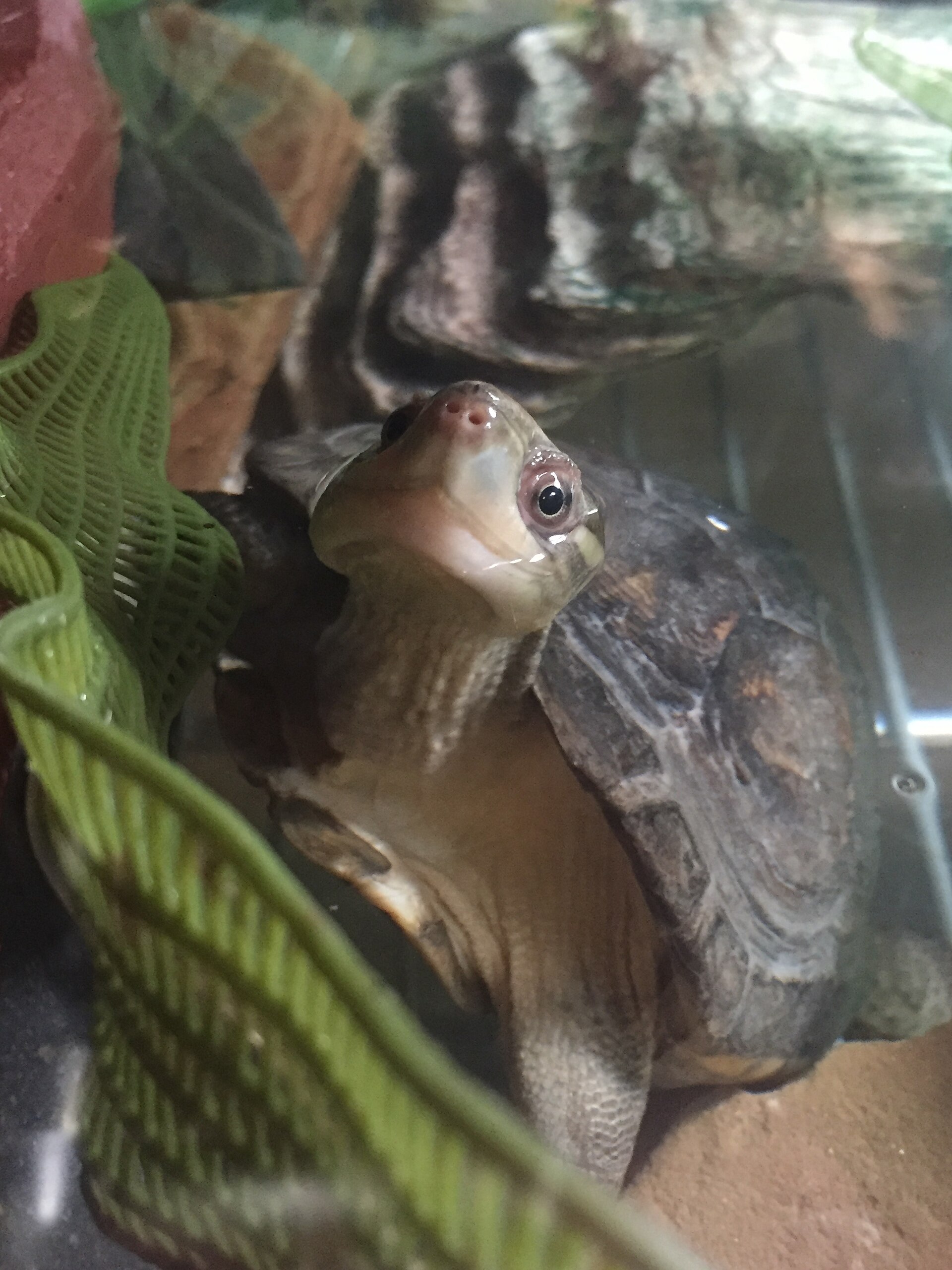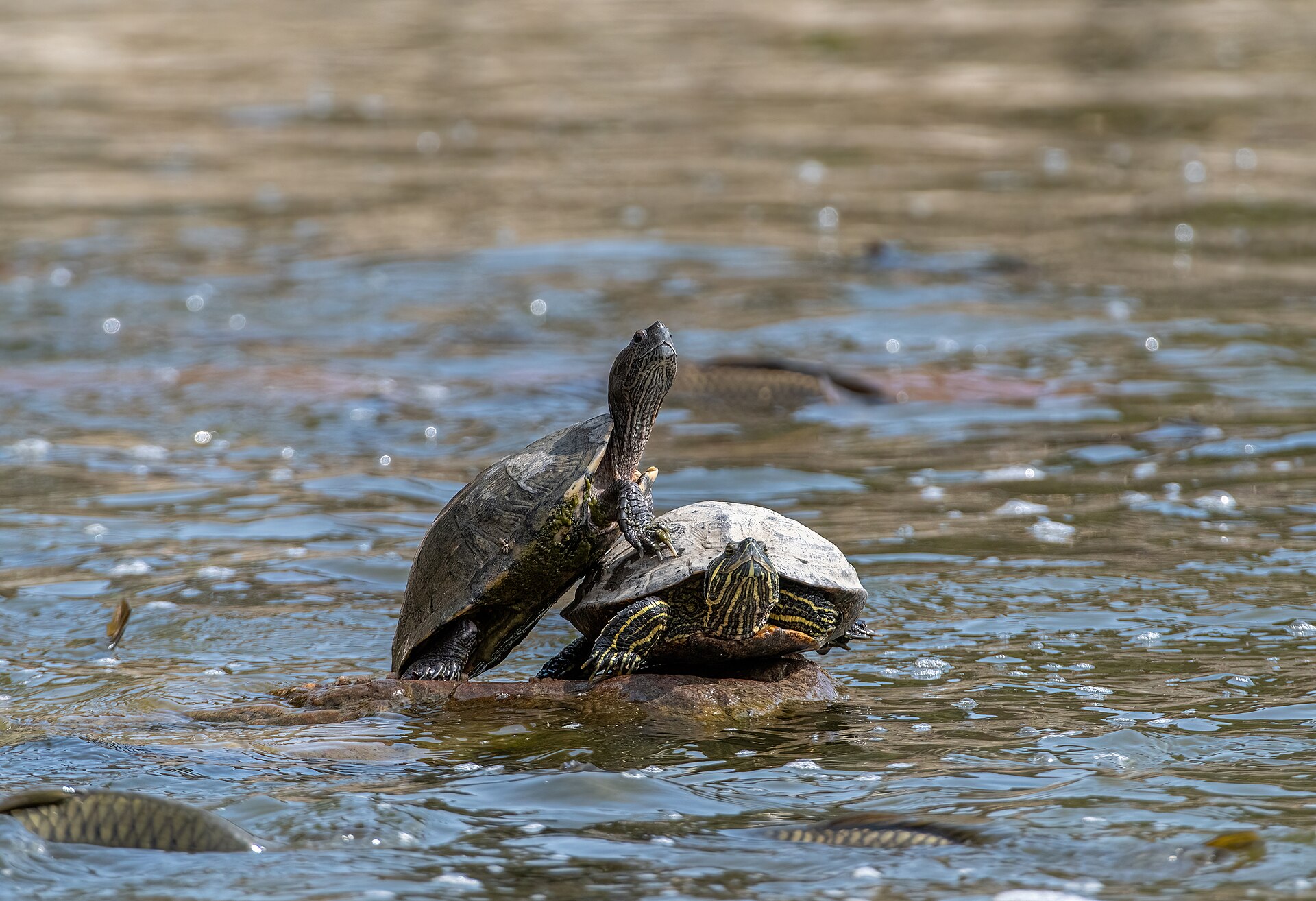
Pick up the turtle and look at the shell under a bright light. If the plates coming off are thin, clear or faintly coloured, and the surface underneath is smooth, hard and the same colour as the rest, that is normal shedding and you can put it back. If what is underneath is pitted, soft, white, bleeding or smells, keep reading, because that is shell rot and it needs a vet this week.
What normal looks like
The shell is bone with a skin of keratin plates called scutes over it. As an aquatic turtle grows, a new, larger scute forms under each old one, and the old one lifts and comes away. VCA Hospitals says the scutes normally flake off as the turtle grows and are shed in large patches rather than all at once. You will find them floating or stuck to the filter intake: translucent, about the thickness of a fingernail, and shaped exactly like the plate they came from.
- Sliders, painted, map, musk and mud turtles shed scutes. Fast-growing juveniles shed most.
- Box turtles and tortoises mostly do not. Their old layers stay on and wear, which is why an old box turtle is smooth. A tortoise dropping scutes is not normal.
- Skin sheds too. VCA notes that shed turtle skin in water looks like a whitish fuzz on the neck and legs and is routinely mistaken for fungus. Fuzz that lifts off in the water and leaves normal skin is shedding.
What abnormal looks like
| Sign | What it means |
|---|---|
| Soft spots, pits or holes in the plate under a shed | Shell rot, needs a vet |
| White, chalky or cheesy patches that do not rinse off | Fungal or bacterial infection |
| Red, raw or bleeding patches of skin after a shed | Infection, vitamin A deficiency or a burn |
| A smell from the shell | Deep infection under the scute |
| Scutes that lift at the edge but never come off, stacked several deep | Retained scutes, usually a husbandry problem |
| Shell soft or bendy anywhere | Metabolic bone disease, needs a vet |
Shell rot, which vets call ulcerative shell disease, is a bacterial or fungal infection that gets in through a scrape, a bite, a lamp burn or a scute that lifted and trapped dirt. VCA Hospitals and the Merck Veterinary Manual describe it the same way: pitting and ulcers that go through the keratin into the living bone beneath, sometimes with a pus-filled discharge as the scute sloughs. Merck adds that feeding crayfish is a common cause of one bacterial shell infection in turtles, so stop that if you do it.
Retained scutes
Scutes that will not come off are almost always a tank problem, not a turtle problem. Three causes cover nearly all of them.
- No dry basking. A turtle that never dries out fully never lets the old plate loosen. The dock must hold the whole animal out of the water under a lamp reading 90 to 95°F on the surface.
- Dirty water. Film and algae glue the old scute down and feed the bacteria under it. VCA notes that heavy algae can penetrate the shell surface. Oversize the filter and change a third of the water weekly.
- Too much food. Overfed juveniles outgrow their scutes faster than they can shed, and the plates stack and pyramid. Feed an adult every other day and a juvenile once a day, in amounts it finishes in 5 minutes.
The fix is the setup, plus patience. Do not peel. A lifted scute that is pulled off early takes the new surface with it and opens the shell to infection. Merck’s advice for retained shed in reptiles is a soak in 77 to 85°F water and nothing more forceful than gauze. Scrub the shell gently with a soft toothbrush at water changes and let the plates come in their own time.
Home care for small pits
A single shallow pit with no smell, no softness and no bleeding can be tried at home for a week. Dry the turtle on a towel, clean the spot with dilute povidone iodine, let it air for 30 minutes under the lamp, then return it to clean water. Do this daily. If the pit is bigger after 7 days, or a second one appears, or the turtle stops eating, stop and go to a vet.
What the vet will do
Anything soft, deep, smelly or spreading goes straight to a reptile vet. VCA describes the routine: a scraping and a culture to identify the organism, debridement of the dead keratin, cleaning, then topical or injectable antibiotics or antifungals. Deep cases go on dry-docking, where the turtle lives out of water except for a short daily swim to drink and eat, for weeks. Shell that has gone soft gets an X-ray and bloodwork for calcium, because that is metabolic bone disease, not rot, and the treatment is UVB, calcium and months.
What to buy
A floating basking dock big enough for the whole turtle, under a 75 W basking bulb, so the shell dries every day. A canister filter, 400 gph for a 40-gallon tank and 900 gph for a 75, since rot starts in dirty water. A UVB 10.0 T5 HO fixture and tube so the plate growing in underneath is hard. The vet directory lists reptile vets by state.
Sources
- VCA Hospitals, Owning an Aquatic Turtle
- VCA Hospitals, Aquatic Turtles, Problems
- VCA Hospitals, Aquatic Turtles, Diseases
- Merck Veterinary Manual, Disorders and Diseases of Reptiles
- Animal Diversity Web, Trachemys scripta (University of Michigan)
Written from these and checked three times before publishing. Not veterinary advice; a reptile vet who can see the animal beats any page.