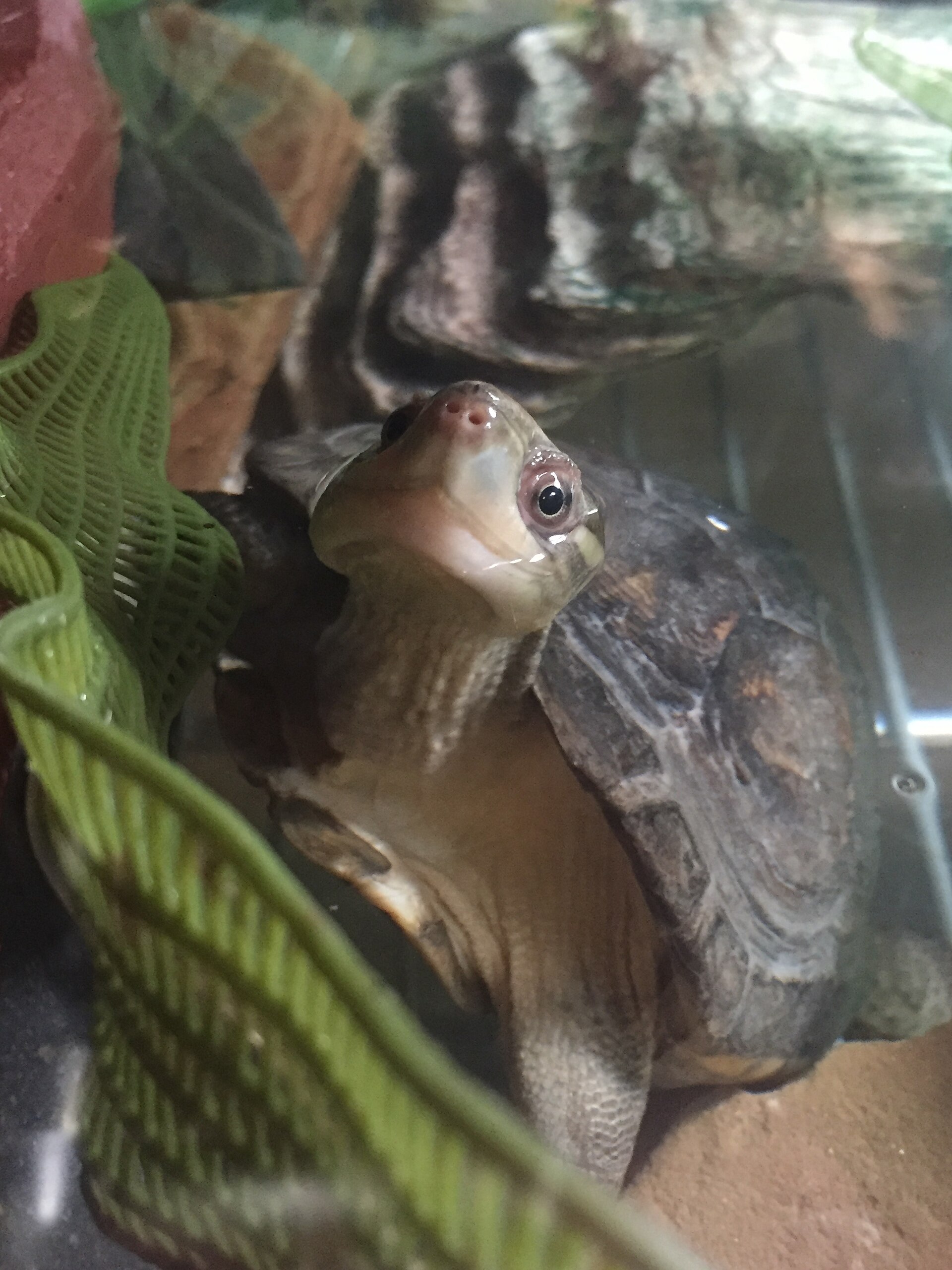
If the shell has a soft spot, a hole, a patch that lifts to show something white or bleeding underneath, a smell, or red spots spreading across the scutes, or if the turtle has gone off its food, book a reptile vet this week. That is infection in the bone, and no home treatment reaches it. A few shallow pits or a chalky, discoloured patch on a turtle that is eating and basking normally can be treated at home for a few days while you watch it closely.
What you are looking at
A turtle's shell is living bone under a skin of keratin plates called scutes. Bacteria and fungi get in through a scratch from a rock, a bite from a tankmate, a burn from an unguarded heater, or simply through water fouled with waste. VCA lists all of those as the usual starting points. Once in, the infection pits the surface, lifts the scutes, and in bad cases works into the bone.
Aquatic turtles get a particular form that Merck's manual calls septicemic cutaneous ulcerative disease, SCUD for short. It pits the scutes, throws small red spots on the shell and skin, and spreads to the blood and liver. The same manual names a shell bacterium picked up from feeding crayfish, so stop feeding them.
Two things look like rot and are not. Scutes shed in thin, clear layers that lift at one edge, and that is normal growth. Algae on an outdoor turtle's shell is harmless, though VCA notes a thick growth can start to penetrate the surface and is worth having checked.
Home treatment for mild rot
- Take the turtle out and dry it. Scrub the patch gently with a soft toothbrush dipped in dilute povidone-iodine or chlorhexidine, then rinse. PetMD gives this as the first step.
- Apply a topical antibiotic ointment twice a day. If the patch is not improving but the turtle is otherwise well, PetMD suggests a fungus may be involved and an antifungal cream may be needed. The vet can tell you which.
- Give the shell dry time. Infection needs wet. Keep the turtle in a tub lined with paper towel under the basking lamp at 85 to 90°F for most of the day, and return it to clean water for an hour or so to drink and eat. Fresh paper towel every time.
- Fix the water. Do a 50 percent change now and weekly after, run a canister filter rated for two to three times the water volume, and pull out any sharp rock or ornament. Check the heater has its guard.
- Watch for a few days. PetMD's rule is that if the skin or shell has not improved in a few days, see an experienced reptile vet.
When a vet is needed
Anything that goes below the surface. A soft spot, a pit that reaches bone, bleeding, a smell, a lesion that is spreading, red spots, a turtle that stops eating or basking. Any shell fracture, however small, goes in at once: VCA says a crack can be infected within hours.
The vet will scrape the lesion and look at it under a microscope, send a swab for culture so the right antibiotic is chosen, and run blood work to see whether the infection has gone internal. Dead shell is cut away under sedation, the area is dressed with iodine, and the turtle goes on injectable antibiotics or antifungals for weeks. Deep cases may need surgery. VCA calls these infections challenging to treat, and Merck notes that even a successful case leaves the shell scarred: new keratin grows slowly over the hole and the mark stays.
Keeping it from coming back
The infection returns if the cause stays. That means clean water, a dock where the whole turtle dries completely every day under a lamp at 90 to 95°F, no crayfish, no sharp decor, a guarded heater, and separating any tankmate that bites.
What to buy
A canister filter, 900 gph for a 75-gallon tank, is the difference between water that heals a shell and water that infects it. A floating basking dock big enough for the whole turtle, and a digital probe thermometer to prove the dock is hot enough to dry it. The vet directory lists reptile vets by state.
Sources
- PetMD, Skin and Shell Infection in Reptiles
- VCA Animal Hospitals, Common Diseases of Aquatic Turtles
- VCA Animal Hospitals, Common Problems in Aquatic Turtles
- Merck Veterinary Manual, Disorders and Diseases of Reptiles
- Merck Veterinary Manual, Mycotic Diseases of Reptiles
Written from these and checked three times before publishing. Not veterinary advice; a reptile vet who can see the animal beats any page.