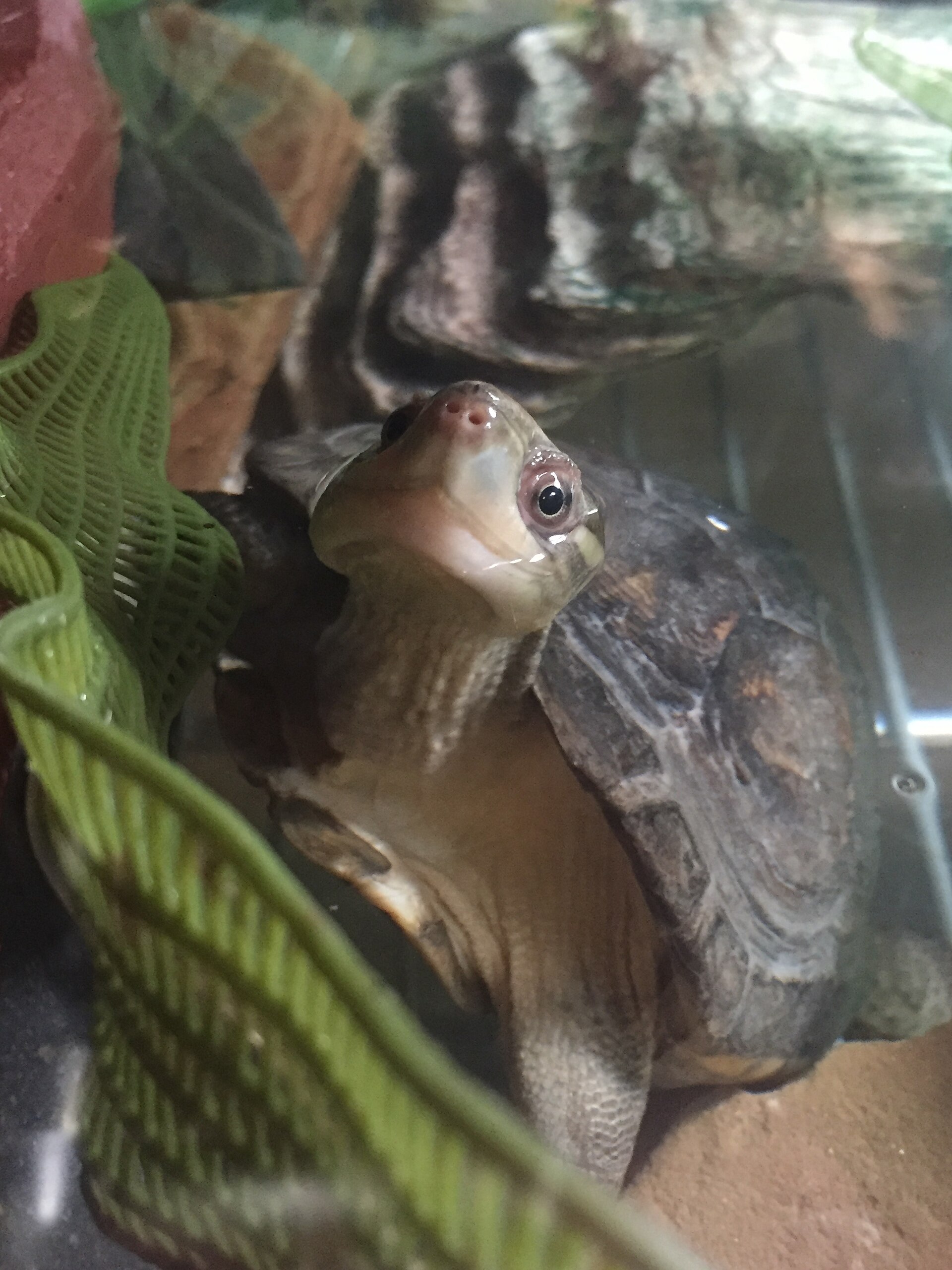
Book a reptile vet today. A shell that bends on any turtle past its first few months is metabolic bone disease, and the bone under that shell is already thin. Until the appointment, handle the turtle as if it were porcelain, and take away anything it can climb. LafeberVet's client handout says exactly that, because leg and spine fractures are the next stage.
What soft means
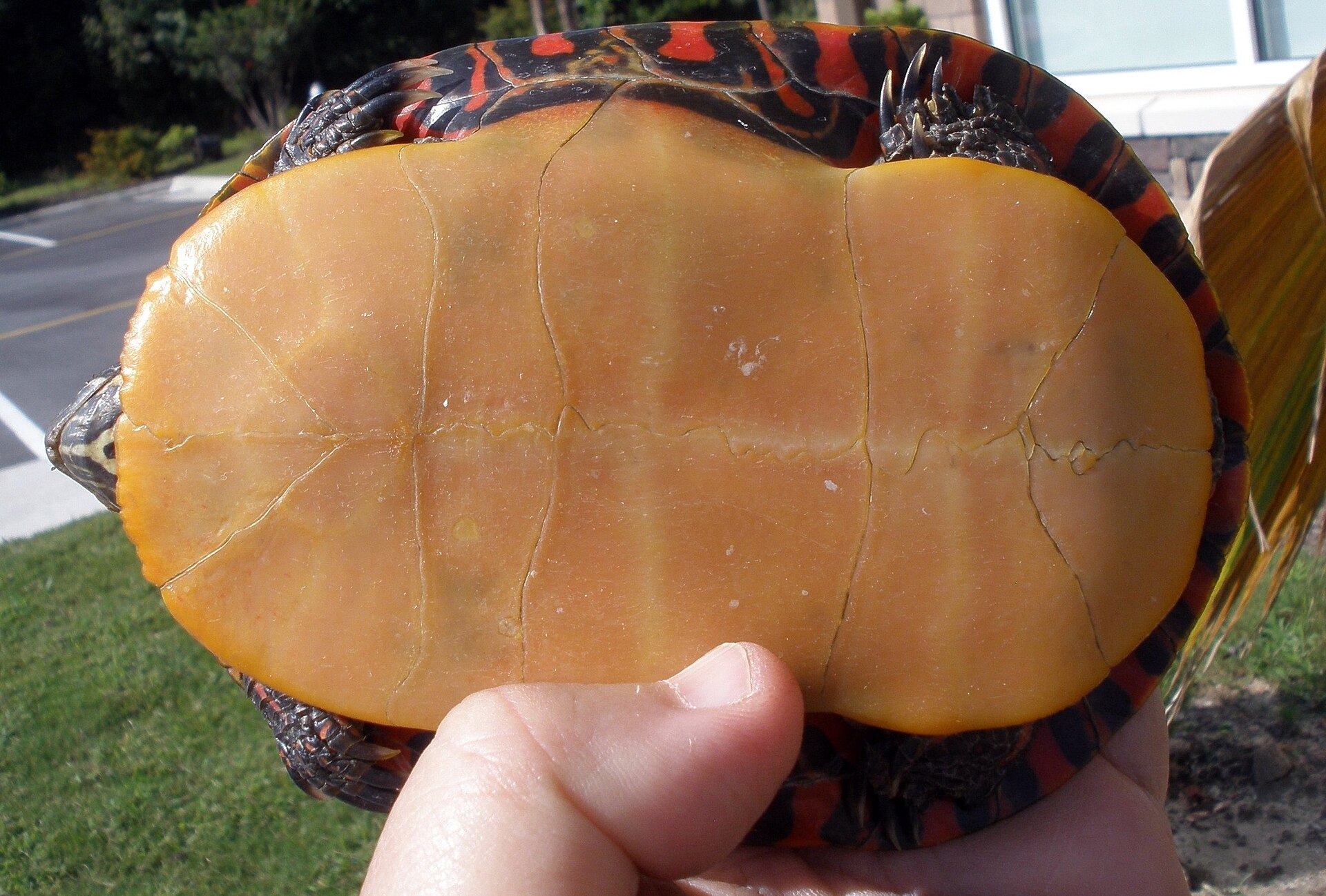
Press the plastron, the underside, gently with a thumb. A healthy shell feels like a fingernail and does not move. A sick one flexes, the edges curl up, the scutes grow unevenly and the shell can look too small for the body. The same handout lists the other signs: a pliable jaw, swollen legs, a reluctance to move, poor appetite, weight loss, a bent spine, an overgrown beak and nails. VCA adds that affected turtles grow slowly and often never reach adult size. Very young hatchlings have a little give in the plastron. Past that, give is disease.
Why it happens
Shell is bone. Bone is built from calcium, and a turtle can only absorb calcium with vitamin D3, which it makes under UVB light. Take away any corner of that triangle and the body pulls calcium out of the skeleton to keep the blood level up. The shell is the first bone to show it.
- No UVB, or a bulb that is too old. Output fades long before the tube stops glowing; Merck's guidance is to replace UVB bulbs about once a year and keep them at the maker's distance, because the dose falls with the square of the distance.
- UVB through glass or plastic. A lid or a window blocks it completely.
- A diet short of calcium or heavy in phosphorus. Merck's figure for reptiles is a calcium to phosphorus ratio of at least 1 to 1, and 2 to 1 is preferred. Lettuce, meat, feeder fish and dried shrimp all fall short.
- Too cold. A turtle below its working temperature cannot use what it eats.
What the vet will do
The vet will take a diet and lighting history, which usually tells most of the story, then X-rays to show thin bone and any fractures, and blood calcium and phosphorus. Treatment is fluids and an injectable calcium if the blood level is low, then an oral calcium supplement free of vitamin D and phosphorus given as directed, sometimes vitamin D, pain relief for fractures, and tube feeding if the turtle is not eating. Recovery takes months. PetMD is blunt that severe cases can die during treatment, and that the earlier it is caught the better the odds. A shell that has warped stays warped; it hardens again but does not straighten.
At home from tonight
- Fit a UVB 10.0 T5 tube 12 to 18 inches above the basking spot with nothing between it and the turtle, on a timer for 12 hours a day. If the tube you have is older than a year, replace it now.
- Bring the basking surface to 90 to 95°F and the water to 75 to 80°F, measured with a probe. For a tortoise, 90 to 95°F under the lamp and the high 70s across the table.
- Put a cuttlebone in the tank or on the table and leave it there. For tortoises and box turtles kept indoors, dust greens with calcium powder twice a week, and use the D3 version only if the vet agrees.
- Change the diet. Pellets plus dark leafy greens for a slider, weeds and hay for a tortoise, no all-meat or all-lettuce menus.
- Soak the turtle in lukewarm water for 15 to 30 minutes once or twice a day, with the water no deeper than half its height, and stay with it. This is the handout's instruction, and it helps a weak animal drink.
- Strict rest. Nothing to climb, no tankmates, no handling beyond medicating and soaking.
- When the weather is above 80°F, an hour of real sun in a wire or mesh pen with shade is the best UVB there is. Never in a glass tank, which overheats in minutes.
What to buy
A UVB 10.0 T5 HO fixture and tube is the single purchase that prevents this disease, and the one that is missing or stale in nearly every case. A cuttlebone costs a few dollars and gives the turtle calcium on demand. Calcium powder with D3 covers indoor tortoises. The vet directory lists reptile vets by state.
Sources
- LafeberVet, Metabolic Bone Disease in Reptiles and Amphibians (client handout)
- PetMD, Metabolic Bone Disease (MBD) in Reptiles
- Merck Veterinary Manual, Nutrition in Reptiles
- Merck Veterinary Manual, Disorders and Diseases of Reptiles
- VCA Animal Hospitals, Common Diseases of Aquatic Turtles
Written from these and checked three times before publishing. Not veterinary advice; a reptile vet who can see the animal beats any page.