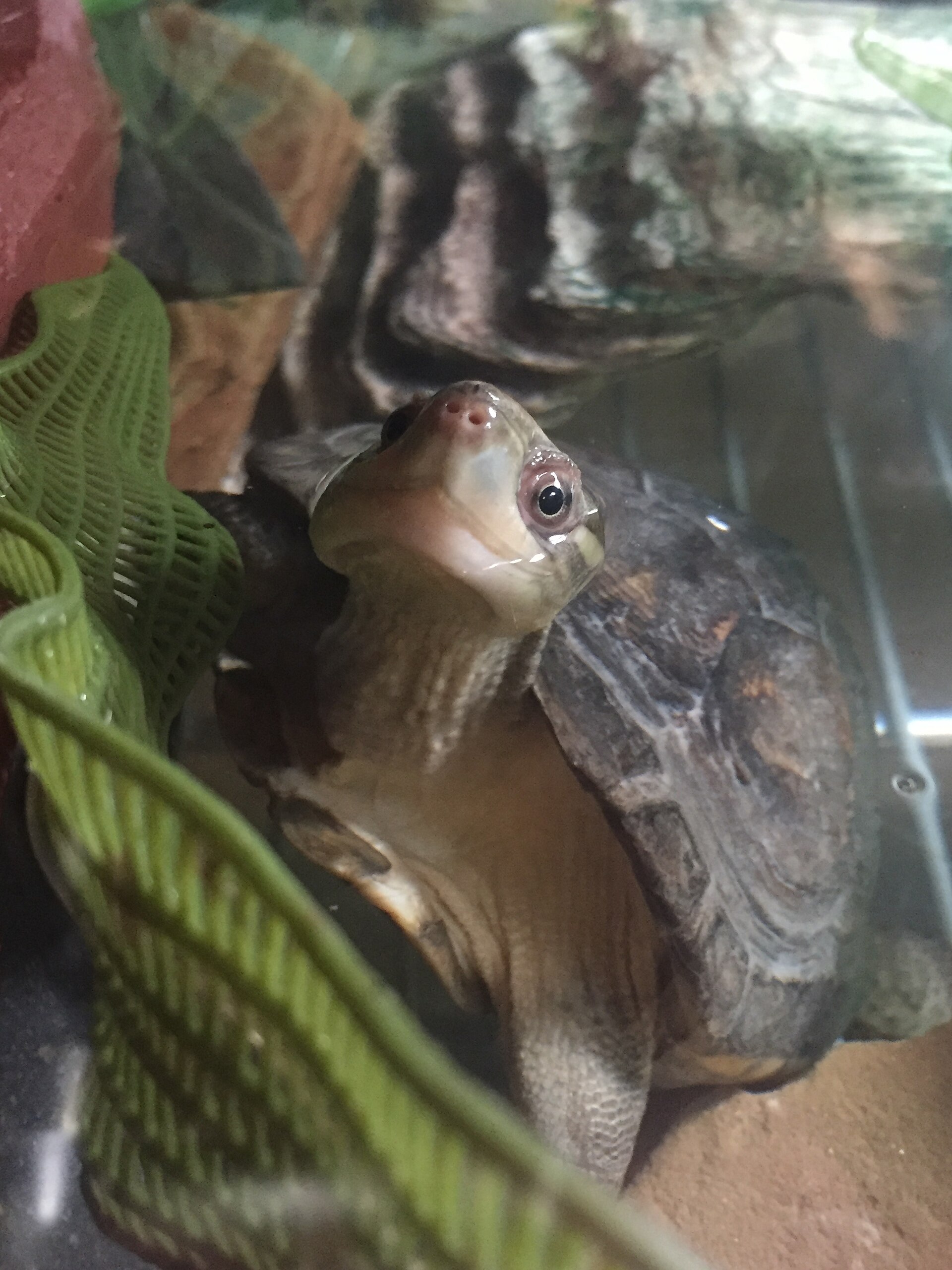
Book a reptile vet. A turtle whose eyes are swollen shut cannot see food and stops eating, and the shortage that swells the eyelids is also at work in the kidneys and the airway. The visit is not optional. The water change is something you can do tonight.
What it looks like
Both eyelids puffed up, often with a crust or a cheesy white discharge at the corners. The turtle wipes at them with its front feet, sits on the dock with its head pulled in, and does not go for food it would normally chase. Later signs are a firm lump on the side of the head just behind the eye, bubbles from the nose, wheezing and open-mouth breathing. A single red eye after a scuffle with a tankmate is a scratch, not this.
The usual cause
Vitamin A deficiency, which vets call hypovitaminosis A. Vitamin A keeps the lining of the eyelids, tear ducts, mouth, ear and airway healthy. Without it the lining thickens, the glands clog, the lids swell, and bacteria move into the blocked spaces. VCA lists the diets that cause it: iceberg lettuce, all-meat, and poor-quality commercial food. The classic case is a hatchling fed nothing but the dried shrimp sold beside it in the pet store.
Dirty water is the second cause and often the partner of the first. PetMD describes bacteria in waste-fouled water travelling up the throat into the middle ear, where the pus builds into the lump behind the eye called an aural abscess. Merck adds that turtles with pneumonia usually have a vitamin A deficiency underneath it. Swollen eyes, an ear lump and bubbles at the nose are three stages of one problem.
What the vet will do
Diagnosis is from the eyes and the diet history, with blood work and X-rays if the chest sounds wrong. Treatment is vitamin A by mouth or by injection. VCA is firm that this is done under veterinary supervision only, because an overdose is a real risk, so do not buy vitamin A drops and guess. The vet may add an eye ointment for the conjunctivitis and antibiotics if the eyes or airway are infected. An ear abscess is opened under anaesthetic, the plug of pus lifted out, the cavity flushed and packed, and the turtle sent home on an antibiotic injection and a vitamin A shot. PetMD puts healing at several weeks, with the ear cleaned and the lining of the recovery tub changed every day.
At home
- Change half the water today and every week after, and clean the filter. Add water conditioner with every change. Keep the water at 75 to 80°F.
- Change the diet for good. Aquatic turtle pellets are fortified with vitamin A and should be half of an adult's food. The other half is dark leafy greens, dandelion, romaine, kale and turnip tops, plus a little grated carrot or squash. Treat dried shrimp and feeder fish as treats, not meals.
- Get the basking spot to 90 to 95°F and the UVB on for 12 hours a day. A warm turtle fights infection; a cold one does not.
- Feed in a separate tub so uneaten food does not foul the tank.
- The eyes open as the lining recovers, which takes weeks, not days. If the turtle still cannot see, hold food to its nose with tongs until it can.
What to buy
Aquatic turtle pellets as the staple, which fixes the diet on its own in most cases. A canister filter, 400 gph for a 40-gallon tank, and water conditioner to make the weekly change a habit. The vet directory lists reptile vets by state.
Sources
- VCA Animal Hospitals, Common Diseases of Aquatic Turtles
- VCA Animal Hospitals, Box Turtles: Problems
- Merck Veterinary Manual, Disorders and Diseases of Reptiles
- PetMD, Ear Infections in Turtles
Written from these and checked three times before publishing. Not veterinary advice; a reptile vet who can see the animal beats any page.
