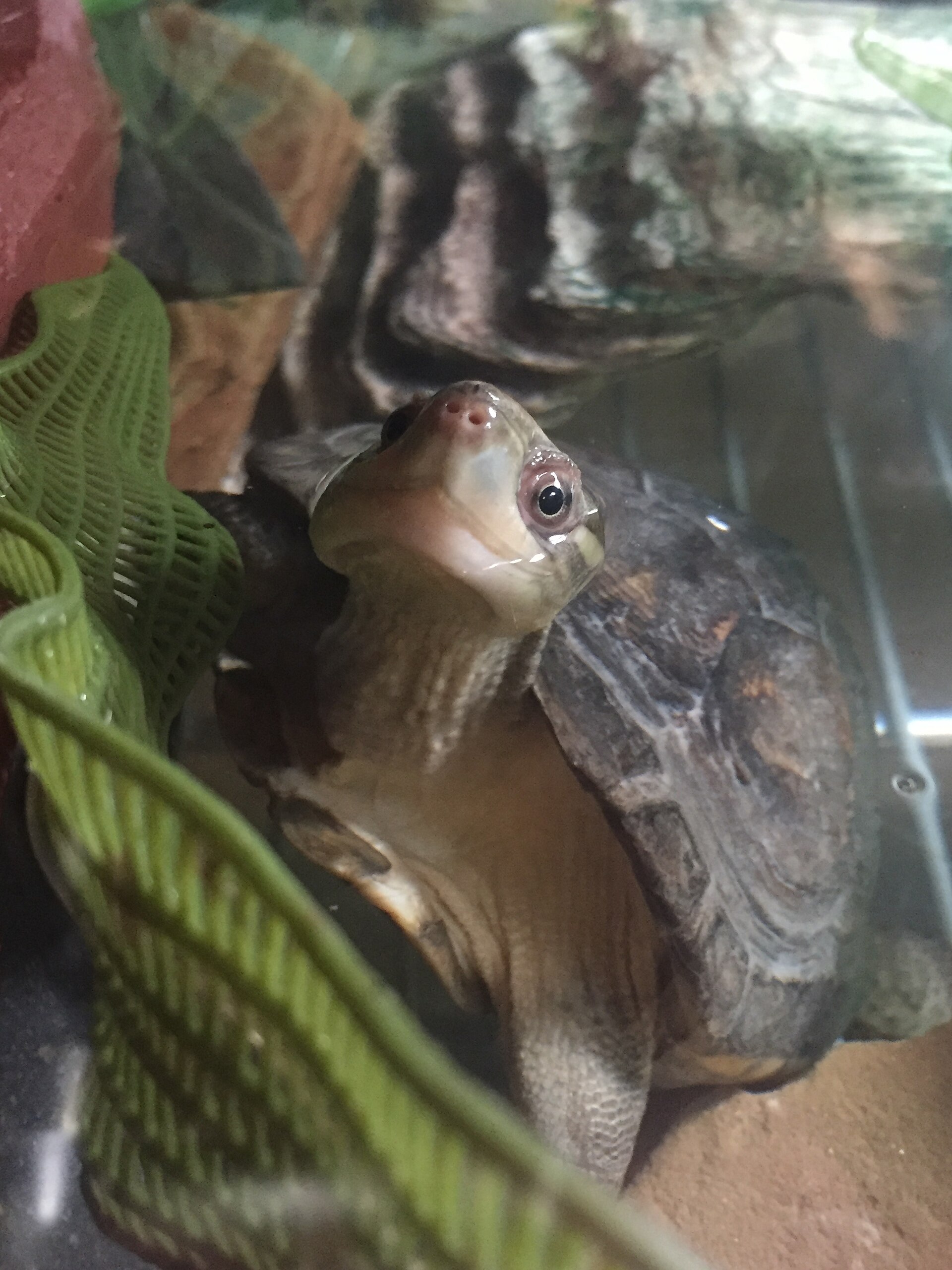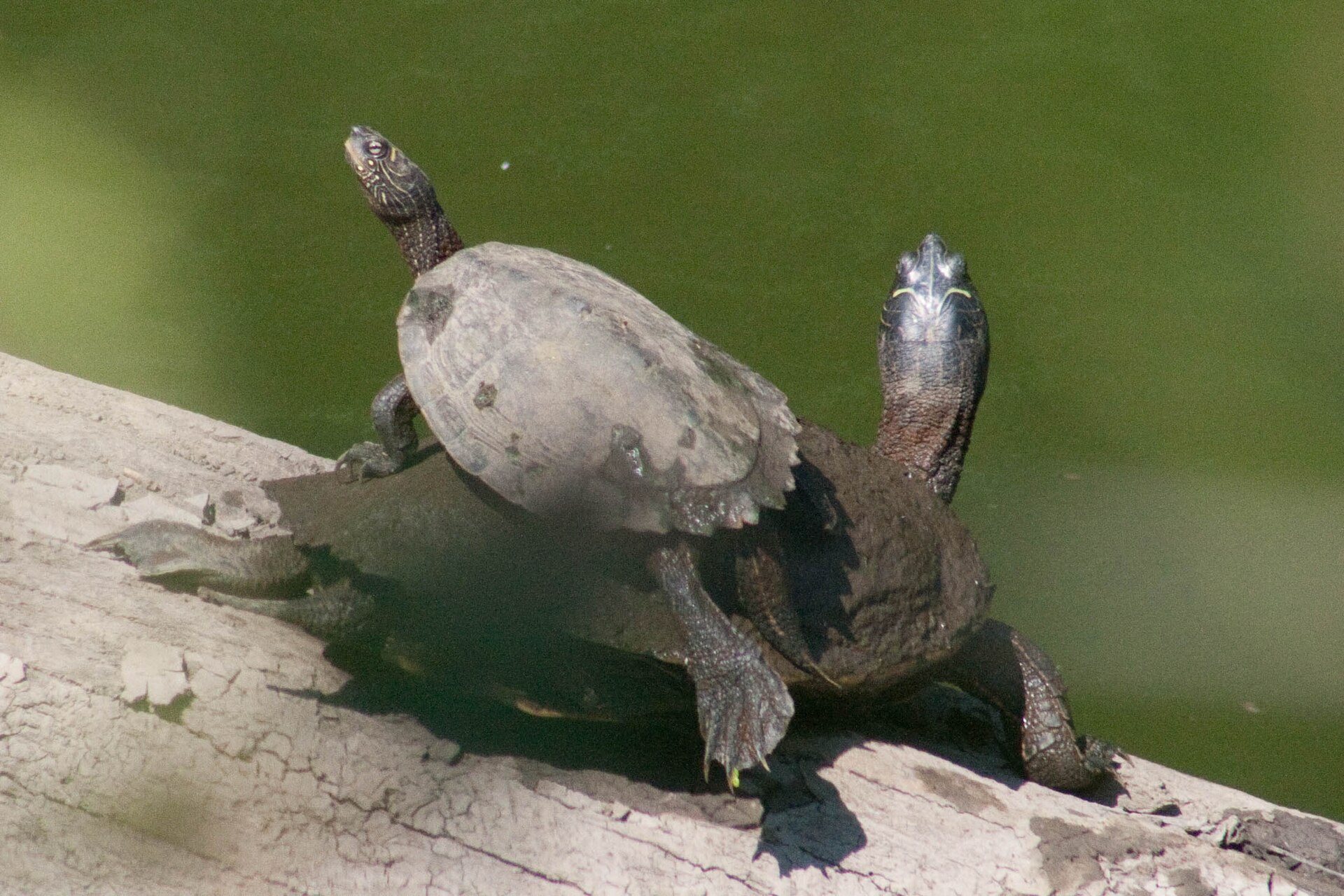
If one of your turtles has a bite wound, a missing toe or a torn tail, separate them tonight, and separate them for good. Turtles do not make up. The rest of this guide is for owners deciding whether to try, and the honest answer from veterinary sources is that most aquatic turtles are healthiest kept alone.
What turtles are not
Turtles are not social. A group of wild sliders is a crowd, not a family. Wild sliders bask on the same log because it is the best log, not because they like each other. In a tank, the same animals compete for the dock, the warm water and the food, and the loser spends its life in the cold corner, eats less and basks less. The Merck Veterinary Manual puts it plainly: trauma while feeding is common in groups, and injuries to cage mates can be severe.
When it can work
- Same species. Mixing species mixes sizes, speeds and tempers. A musk turtle in a slider tank is food that has not been eaten yet.
- Same size. Veterinary guidance is to house turtles of similar size to avoid bullying. A 2-inch difference in shell is a big difference in a turtle.
- One male, or none. Two males fight. One male with females harasses them; a male slider will spend spring biting at the female’s face and neck.
- Twice the space. Ten gallons of water per inch of shell for every turtle, so two 6-inch sliders need 120 gallons, not 60.
- Two of everything. Two docks under two lamps, so neither turtle can hold the only warm spot.
Species that live alone
Snapping turtles, softshells and alligator snappers are kept alone at any size. Musk and mud turtles tolerate each other poorly past adulthood and eat each other’s tails. Male box turtles fight in a pen. Tortoises of different species are never mixed, because they carry diseases that are mild in one species and fatal in another, and male tortoises ram each other for weeks on end.
Turtles and fish
A slider eats fish. Any fish it cannot catch today it will catch when the fish is sick or asleep. Feeder fish bring parasites and the thiaminase in goldfish and minnows causes a vitamin deficiency in turtles that eat them regularly. Keep fish in a different tank.
Introducing a new turtle
Keep a new arrival in its own tank for at least a month and have a vet run a fecal test before it meets anything. Then rearrange the main tank so neither turtle recognises it as home ground, put both in at once, and watch the first hour and the first feeding. Chasing, open-mouth lunges and one turtle never leaving the water are the signs it has failed. Try nothing twice.
Feeding together
Feed in separate tubs, every time, for as long as the turtles share a tank. A 40-gallon breeder tank with 4 inches of warm water makes a feeding tub for one turtle at a time, ten minutes each. It keeps the main tank clean and removes the single moment when most bites happen.
When a vet is needed
A bite that goes through the skin, any wound on the shell, a swollen limb or a turtle that stops eating after a fight. Turtle bite wounds in water go septic. The vet will clean the wound, usually prescribe an antibiotic by injection, and may ask you to keep the injured turtle dry-docked for a few hours a day while it heals. A missing tail tip or toe heals; a bitten eye often does not.
What helps
A second floating basking dock and a second 75 W basking bulb, so there are two warm spots. A 40-gallon breeder tank as a feeding tub, and as the separate tank when the experiment ends. The vet directory lists reptile vets by state.
Sources
- Merck Veterinary Manual: Providing a home for a reptile
- Merck Veterinary Manual: Management of reptiles
- VCA Hospitals: Aquatic turtles, owning
- VCA Hospitals: Aquatic turtles, housing
Written from these and checked three times before publishing. Not veterinary advice; a reptile vet who can see the animal beats any page.