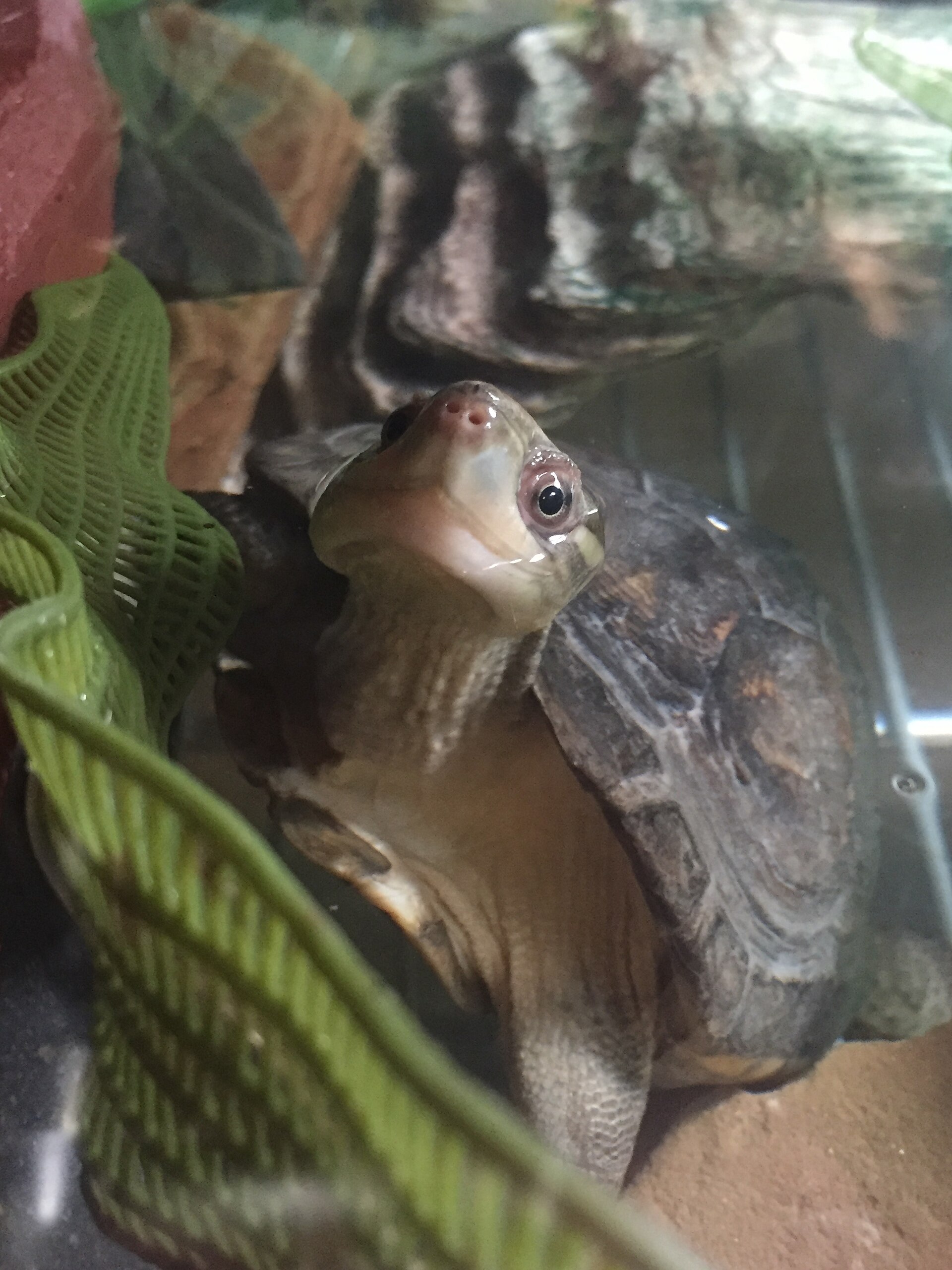
If the turtle that will not eat is also limp, swimming tilted to one side, blowing bubbles from its nose, breathing with its mouth open, or has eyes swollen shut, stop reading and call a reptile vet today. Those are signs of pneumonia, vitamin A deficiency or an abscess, and appetite comes back when they are treated, not before. Everything below is for a turtle that looks fine but ignores its food.
Check the water first
A turtle digests with heat it borrows from its surroundings. Cold water slows the gut, and a cold turtle stops asking for food because it cannot process what it eats. VCA's guidance for aquatic turtles is water at 75 to 82°F, never below 65 to 70°F at night, with a warmer basking spot above it. Merck's manual puts it plainly: feeding and digestion are tied to the temperature of the enclosure.
Put a probe thermometer in the water, not a dial on the glass. If it reads under 75°F, you have your answer. Add a submersible heater, or check that the one you have is working and not stuck behind a decoration, and bring the water up a few degrees a day. Most turtles start eating again within days of the water coming right. The same goes for a water change done with cold tap water: VCA warns that a sudden drop in water temperature knocks back digestion and immunity, so warm new water to tank temperature before the turtle goes back in.
Then the basking spot
Measure the dock surface with the probe. It should read 90 to 95°F for sliders, painted and map turtles. A turtle that cannot get fully warm after a meal digests slowly and eats less. Put the basking bulb and the UVB on a timer at 12 hours on, 12 off. In autumn a tank by a window gets shorter days and a cooler room, and the turtle reads that as winter. VCA notes that captive turtles kept warm on a 12 to 14 hour day do not usually try to hibernate, and most reptile vets prefer that they do not.
False hibernation
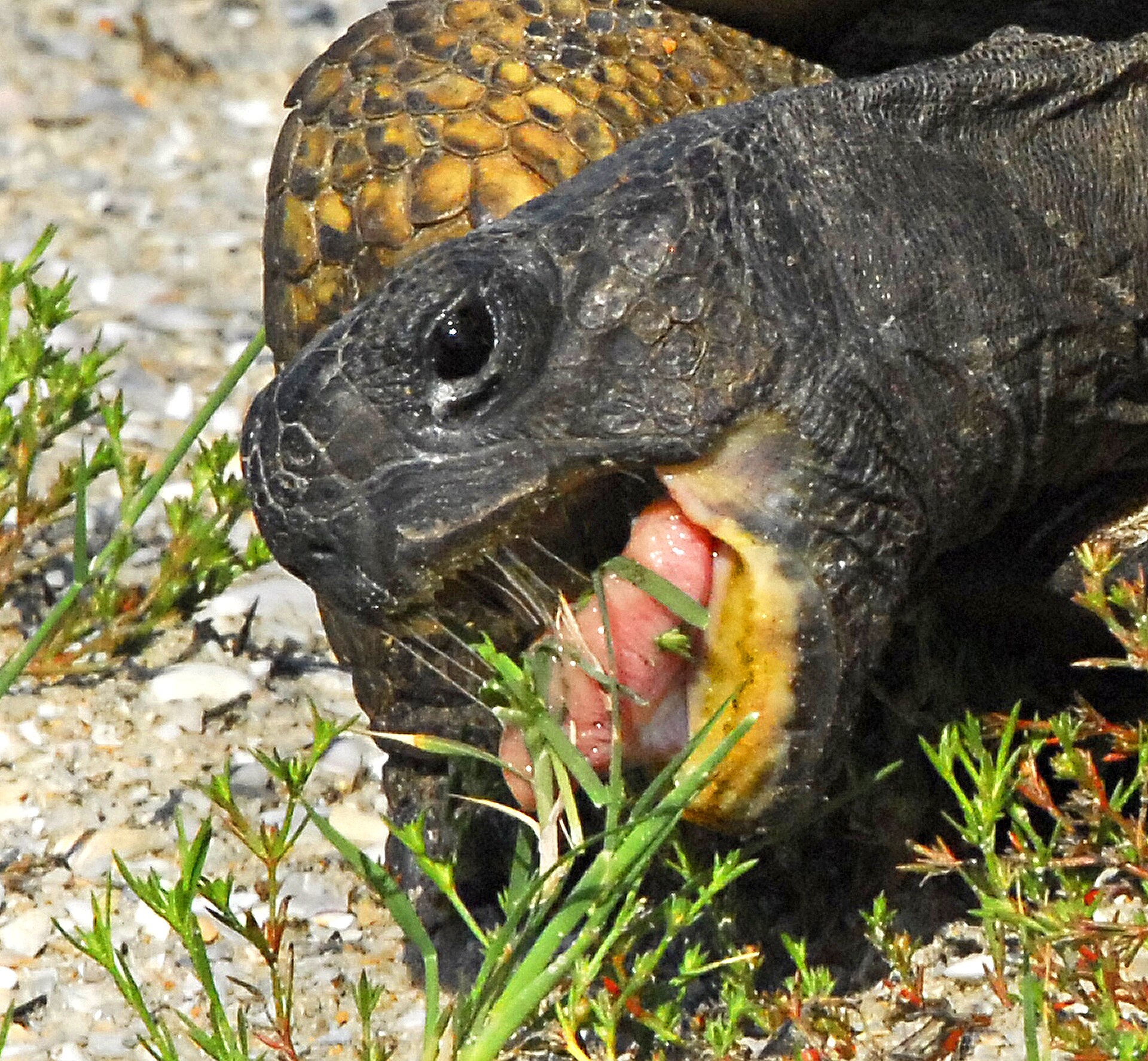
Box turtles and tortoises are the special case. True brumation needs a constant 40 to 60°F. A tortoise in a 65°F spare room is too warm to shut down properly and too cold to eat, a state VCA calls pseudohibernation, and it slowly starves while looking asleep. The fix is to warm the enclosure to its daytime range, 90 to 95°F under the lamp and the high 70s elsewhere, and offer food again. Only a healthy, well-fed animal that a vet has checked should be allowed to brumate for real.
Ordinary reasons
- A new turtle, or one moved to a new tank, often refuses food for a few days while it settles. Leave it alone, keep the temperatures right and try again.
- A female carrying eggs may eat little or nothing for days or weeks and still be bright and active. That is normal. A gravid female who stops eating and goes limp or unresponsive may be egg-bound, and VCA says that needs a vet the same day.
- Boredom with one food. LafeberVet lists strawberry, melon, tomato and banana as appetite triggers for turtles and tortoises, and a few small live fish for aquatic species. An earthworm works on most sliders.
- Dirty water. If the tank smells, do a 50 percent water change and clean the filter.
When it is illness
Reptiles do not run a fever, so you will not feel one. What you can see is weight loss, a shell that gives under a thumb, puffy eyes, a lump on the side of the head behind the eye, discharge from the nose, or a turtle that sits on the dock all day and never enters the water. Any of those turns a feeding problem into a vet visit.
The vet will weigh the turtle, examine the mouth and eyes, and usually take X-rays and a blood sample. Treatment depends on the cause: fluids, injectable antibiotics (turtles are hard to pill, so injections are the norm), a vitamin A injection, calcium for a soft shell. A turtle that has not eaten for a long time is warmed and rehydrated first, then tube-fed under the vet's direction. Do not force-feed at home. A cold, dehydrated turtle cannot use the food, and it is easy to push liquid into the lungs.
How long to wait
If the water or dock was cold, fix it and give the turtle a week. If the temperatures were right all along, do not wait for the problem to explain itself: an adult that has refused food for two weeks, or a hatchling for more than a few days, goes to the vet. Weigh the turtle on a kitchen scale once a week and write the number down. A falling weight settles the argument.
What helps
A digital probe thermometer, taped to the dock and dropped in the water, finds the cold spot that causes most of these cases. A 300 W submersible heater with guard holds the water at 75 to 80°F, and a 75 W basking bulb brings the dock to 90 to 95°F. The vet directory lists reptile vets by state.
Sources
- VCA Animal Hospitals, Housing Aquatic Turtles
- VCA Animal Hospitals, Common Problems in Aquatic Turtles
- VCA Animal Hospitals, Box Turtles: Problems
- Merck Veterinary Manual, Providing a Home for a Reptile
- LafeberVet, Feeding the Hospitalized Turtle or Tortoise
Written from these and checked three times before publishing. Not veterinary advice; a reptile vet who can see the animal beats any page.