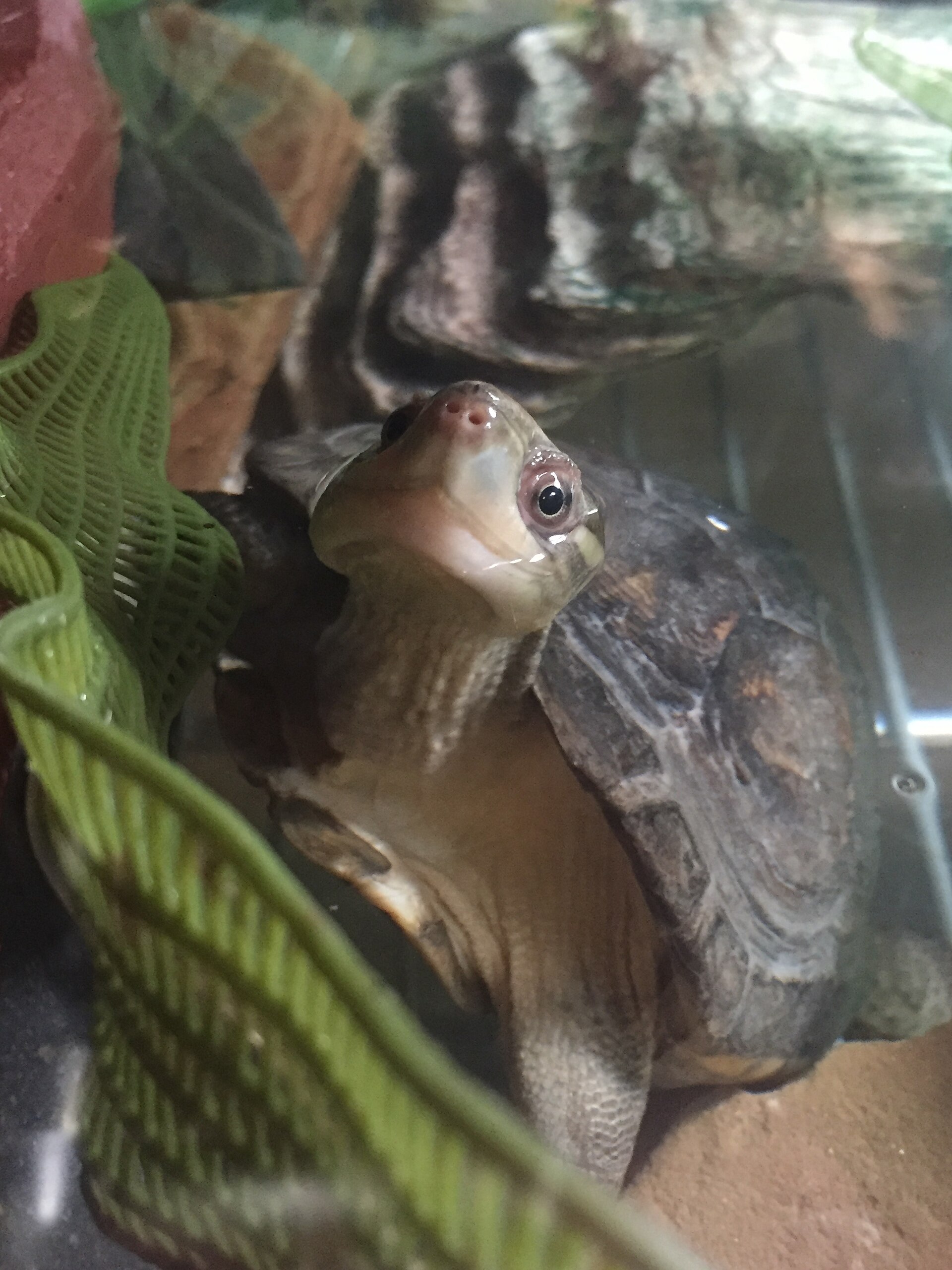
If the tank smells and the turtle is also keeping its eyes shut, has swollen eyelids, is gaping or floats oddly, change half the water tonight with conditioned tap water at tank temperature, then keep reading. A clean turtle tank has no smell beyond a faint pond note at the filter outlet. Anything you can smell from the doorway is a water quality problem, and water quality problems turn into eye, skin, shell and lung problems within weeks.
Where the smell comes from
A turtle eats in the water and empties itself in the water. Waste and uneaten food break down into ammonia, which is toxic and smells sharp. In a tank that has been running a few weeks, bacteria in the filter turn ammonia into nitrite, then into nitrate, which is far less harmful and which you remove with water changes. The RSPCA’s guidance calls those bacteria the lynchpin of water quality, and most smells come from one of three things going wrong with that chain.
- Too much going in: a turtle is fed more than it eats, and the leftovers rot.
- The bacteria are dead or missing: a new tank, a filter rinsed under the tap, or a filter that was switched off for a day.
- The filter is clogged: sludge in the canister goes without oxygen and gives off a rotten-egg smell.
Test before you guess
A liquid test kit from the aquarium aisle reads ammonia, nitrite and nitrate. Ammonia and nitrite should both read zero in an established tank; any reading above zero means the bacteria are not keeping up. Nitrate rises between water changes and a change brings it down. The RSPCA advises checking the water every one to two weeks and after every water change. Write the numbers down. Smell is a late sign; the test is an early one.
Fix it in this order
- Feed less, and feed in a tub. An adult slider eats every second or third day, as much as fits in its head. Feeding in a separate tub of tank water, as VCA suggests, keeps the food and most of the waste out of the tank. Remove anything uneaten within half an hour.
- Change water weekly. VCA puts the floor at a weekly change and describes owners who change 50 percent every week. The RSPCA’s 4 to 10 percent a week is written for fish, and a turtle makes far more waste than a fish, so 25 to 50 percent a week is the working range. Treat the new water with a conditioner: standing water for 12 hours removes chlorine but not chloramine, which most cities now use.
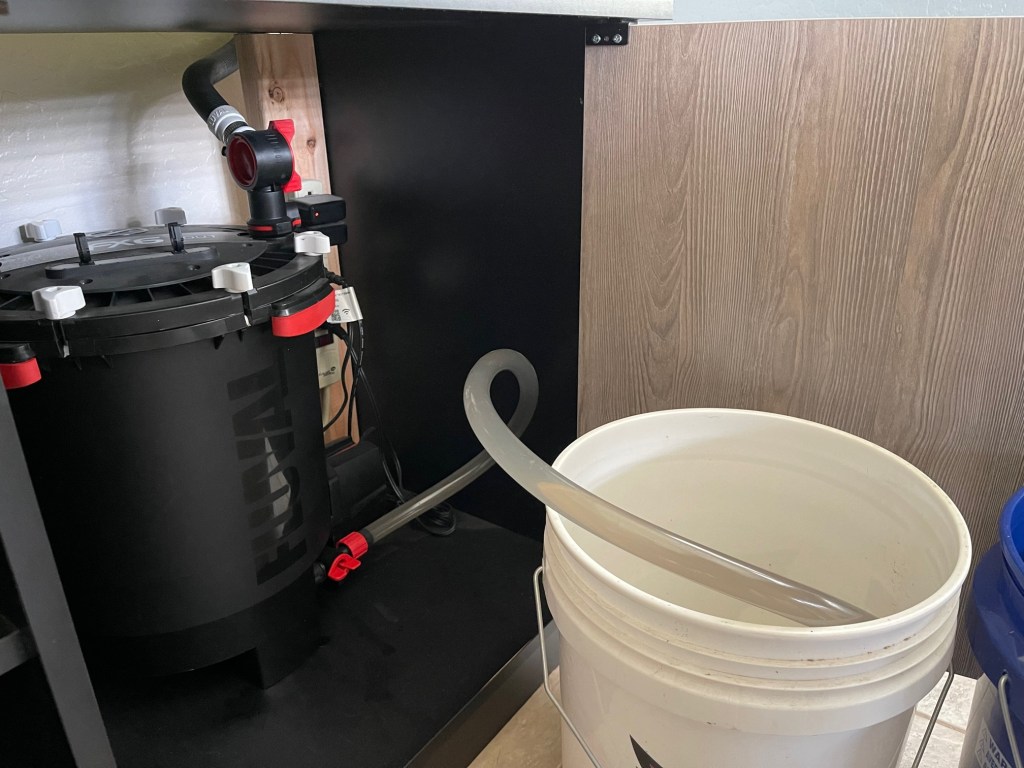
- Clean the filter in tank water. Rinse the sponges and media in a bucket of water you have just taken out of the tank, never under the tap. Tap chlorine kills the bacteria and the tank goes back to ammonia in a day. Replace media a third at a time.
- Oversize the filter. A canister rated for two to three times the water volume. A 40-gallon turtle tank wants a filter sold for a 100-gallon fish tank.
- Take the gravel out. A bare bottom is easier to siphon, and VCA warns that turtles swallow gravel and sand. Stones and docks collect algae, feces and food, and want a scrub every week or two.
Deep cleans
Merck recommends taking an aquatic setup apart and disinfecting it at least every three months. The RSPCA says a full water change is rarely a good idea because it kills the bacteria. Both are right. Keep the filter running in a bucket of tank water while you scrub the tank, refill with conditioned water at the same temperature, put the filter straight back, and the bacteria survive the clean.
What it does to turtles
Ammonia burns the eyes and skin. VCA lists poor filtration as a direct contributor to respiratory infection, and Merck names poor sanitation as the main cause of the ulcerating shell infection it calls SCUD, which pits the scutes. A turtle in a tank that smells will, in time, show swollen eyes, red or raw skin at the neck and legs, pits in the shell, or bubbles at the nose. Any of those is a vet visit. The vet will examine and culture the skin or shell, treat with antibiotics or topical iodine, and send you home to fix the water, because no drug works for long in dirty water.
Dirty water also carries far more Salmonella. Wash hands after every water change, and never use the kitchen sink.
What to buy
A canister filter, 900 gph, for anything over 50 gallons, or a canister filter, 400 gph, for a 40-gallon tank. Water conditioner, used at every change. If the tank itself is the problem, a 100-gallon stock tank costs less than a glass aquarium half the size. The vet directory lists reptile vets by state.
Sources
- How do I keep my turtle’s tank healthy? RSPCA Australia Knowledgebase
- Housing for Aquatic Turtles, VCA Animal Hospitals
- Common Diseases of Aquatic Turtles, VCA Animal Hospitals
- Providing a Home for a Reptile, Merck Veterinary Manual
- Disorders and Diseases of Reptiles, Merck Veterinary Manual
Written from these and checked three times before publishing. Not veterinary advice; a reptile vet who can see the animal beats any page.