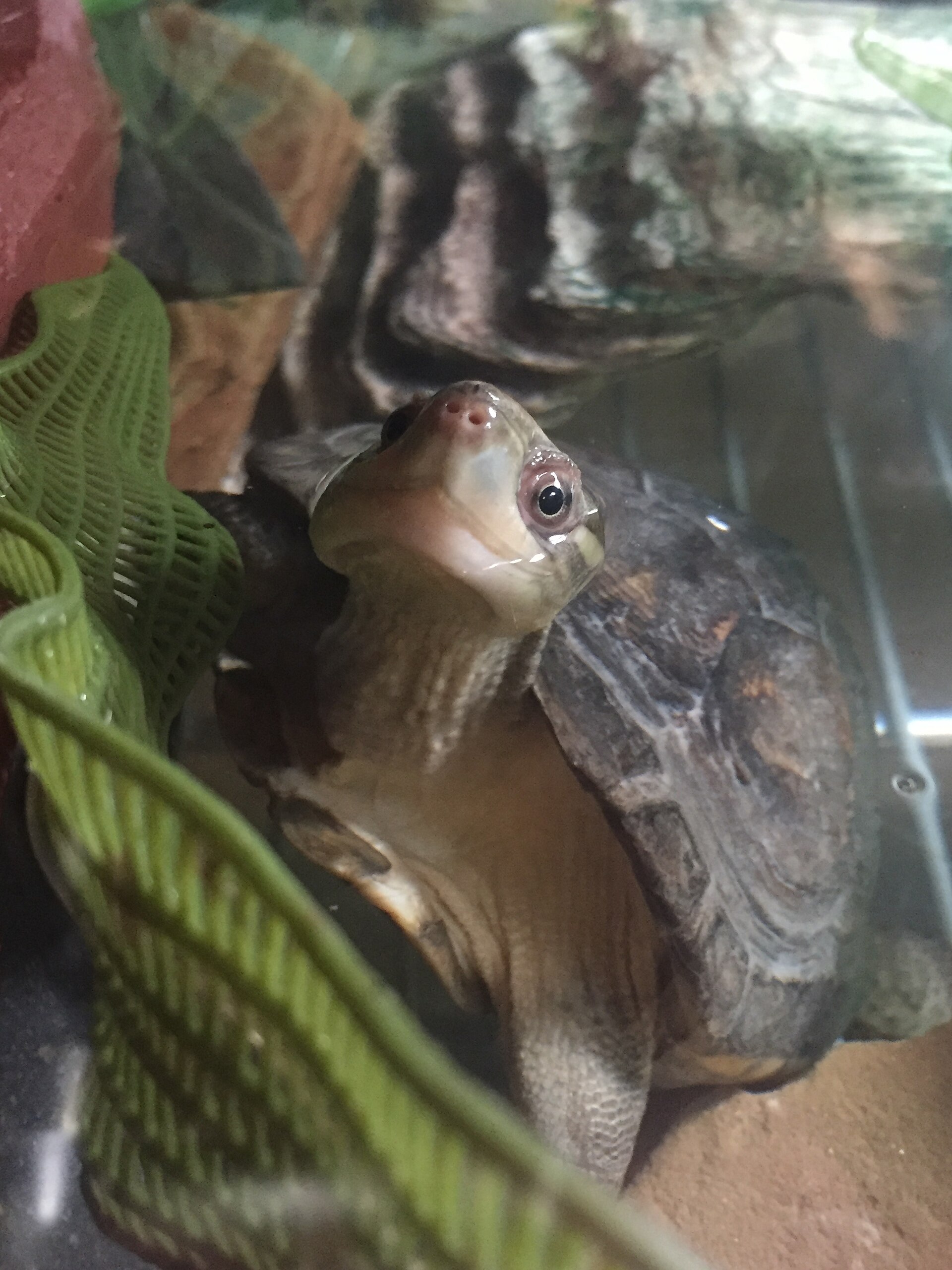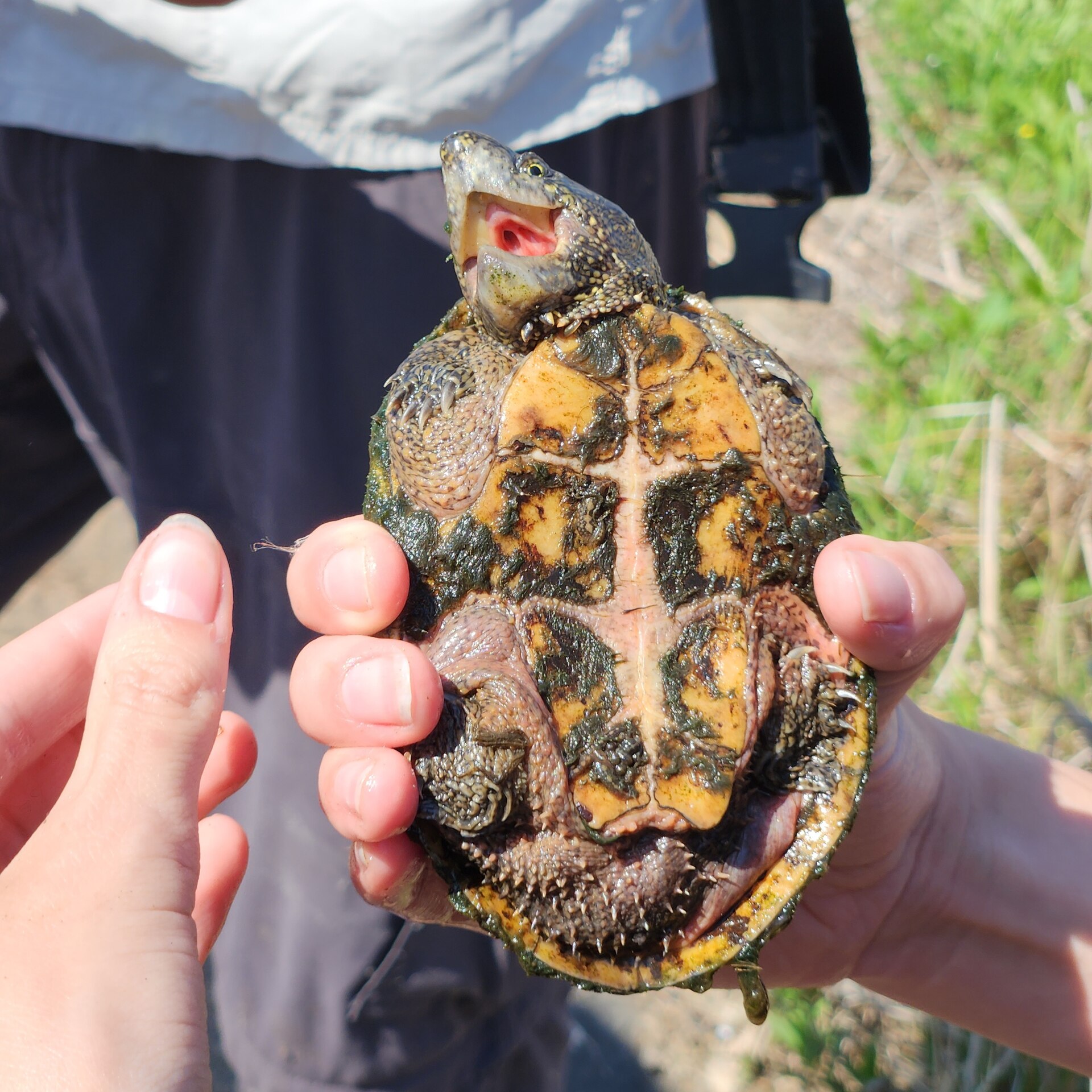
Lift the turtle out of the water and look at it dry. If the white is a thin film that trails off the neck and legs in sheets and the skin under it is normal, that is shed and nothing is wrong. If the patches are thick, cottony or crusted, stay put when the turtle is dry, or sit over red, raw or bleeding skin, that is infection. Raw skin is a vet visit this week. A small dry patch on a turtle that is eating and basking is something you can treat at home for a few days.
Shed or fungus
| Sign | Shedding | Fungus |
|---|---|---|
| In the water | Thin, clear-white film that waves | Cottony tufts or a grey-white crust |
| Out of the water | Peels off clean, or vanishes | Stays put |
| Skin under it | Normal colour | Red, raw, swollen or bleeding |
| Where | Neck, legs, tail, all over | One or two spots, often at a scratch |
| The turtle | Eating and basking | Off its food, sitting in the water |
VCA says it directly: shed skin in water looks whitish and fuzzy and is often mistaken for fungus, while full-thickness shedding that leaves raw or bleeding areas is abnormal and points to a bacterial or fungal infection, vitamin A deficiency, a burn or an injury. Scutes flaking off the shell in thin clear layers are also normal growth.
Why fungus takes hold
Fungus does not attack a healthy turtle in clean water. Merck's manual says an injury to the skin almost always comes first, and lists the conditions that let the fungus in: water that is too cold, dirty water, humidity that never lets the skin dry, poor diet and other illness. The organisms it names in reptile skin are Fusarium, Geotrichum and Trichosporon, all common in water and soil, which is why you cannot keep them out and have to keep the turtle strong instead. A turtle that never basks, because the dock is cold or it feels unsafe, never dries, and that is the single most common setup behind fungus.
Home treatment for a small patch
- Change half the water today and clean the filter. Then weekly. Check the water with a probe thermometer: 75 to 80°F.
- Get the dock to 90 to 95°F with a basking bulb and put the UVB beside it on a 12 hour timer. Merck notes that ultraviolet exposure helps skin and shell infections heal.
- Give it dry time. A tub lined with paper towel under the lamp for two or three hours a day, then back into clean water.
- Dab the patch with dilute povidone-iodine, the colour of weak tea, or dilute chlorhexidine, and let it air dry before the turtle goes back in. PetMD gives these as the first-line antiseptics. Do it once a day.
- Do not add salt, fish fungus remedies or anything sold for aquariums. Those are dosed for fish.
- If there is no improvement in a few days, PetMD's rule is to see a reptile vet.
When the vet is needed
Raw or bleeding skin, a patch that is spreading, more than two or three patches, the shell involved, a turtle that has stopped eating, or any swelling. The vet will scrape the patch and look at it under a microscope, or send it for culture or biopsy, because Merck notes that bacteria and fungus look alike from the outside and need different drugs. Treatment is a topical antifungal cream or an oral antifungal for fungus, antibiotics for bacteria, cutting away dead tissue if the shell is involved, and a check for vitamin A deficiency and for a burn from an unguarded heater, both of which VCA lists as causes of skin peeling off in sheets.
What to buy
A digital probe thermometer, because the cold water behind most fungus cases is invisible without one. A 75 W basking bulb to get the dock hot enough to dry the turtle every day. A canister filter, 400 gph for a 40-gallon tank, so the water stays clean between changes. The vet directory lists reptile vets by state.
Sources
- VCA Animal Hospitals, Common Problems in Aquatic Turtles
- Merck Veterinary Manual, Disorders and Diseases of Reptiles
- Merck Veterinary Manual, Mycotic Diseases of Reptiles
- PetMD, Skin and Shell Infection in Reptiles
- VCA Animal Hospitals, Housing Aquatic Turtles
Written from these and checked three times before publishing. Not veterinary advice; a reptile vet who can see the animal beats any page.