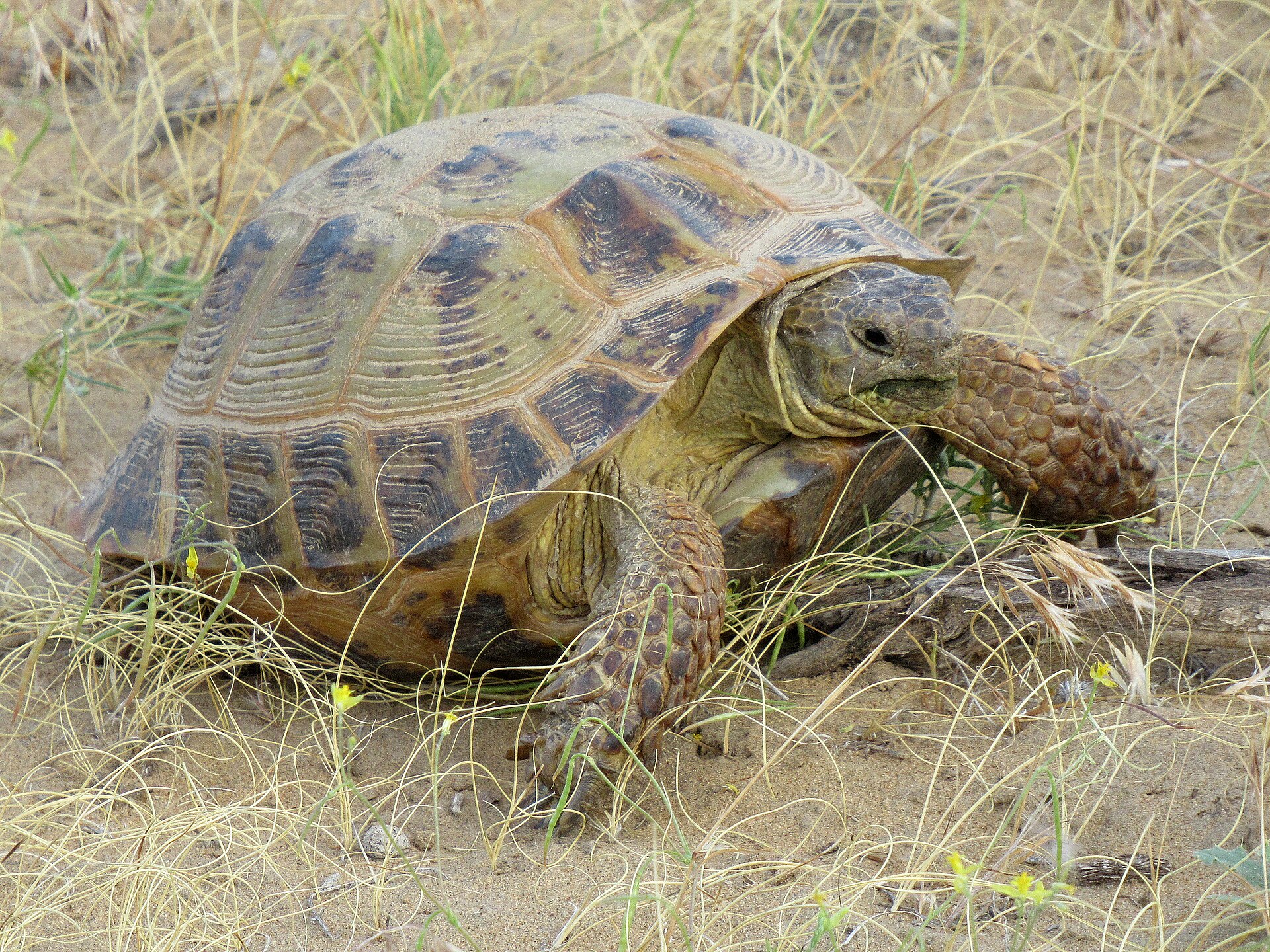
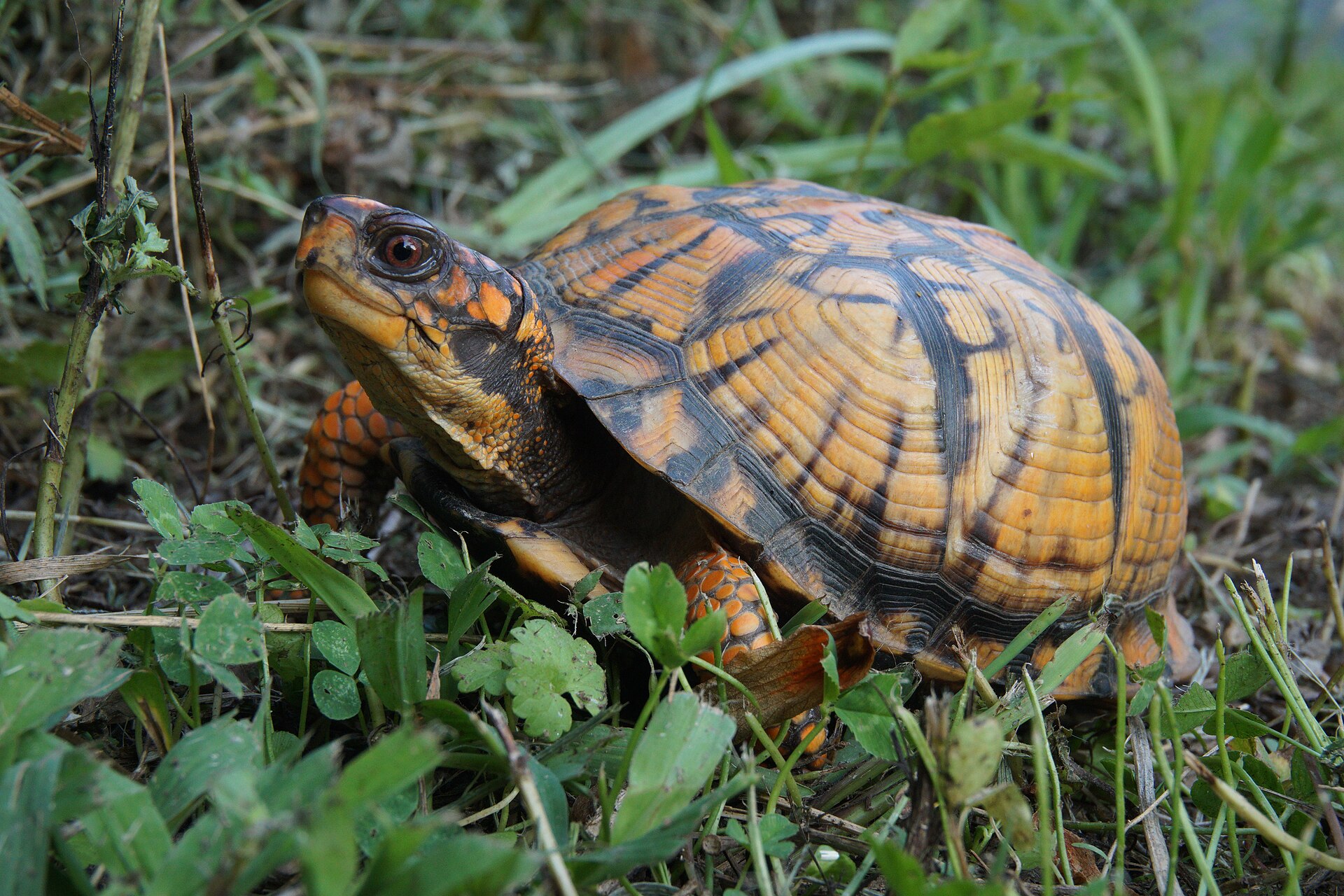
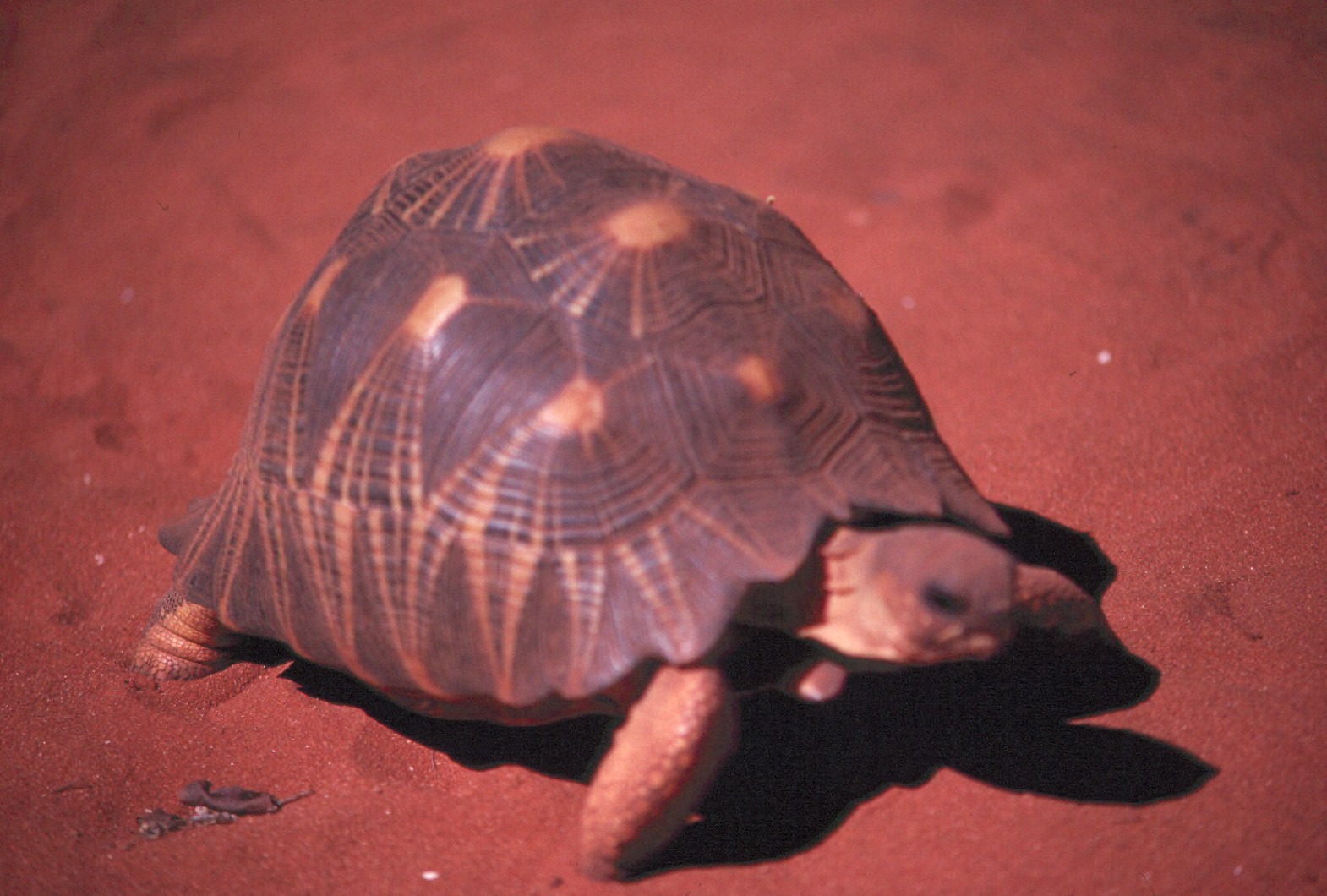
24 to 30 inAdult shell length
70 years or moreLifespan with good care
a yardFloor space at full size
LandNeeds an enclosure or a pen
Only if you own land and a heated outbuilding.
The enclosure at full size
A hatchling can start in an 8 by 4 ft table but outgrows it within two years. Adults need a yard of grass with sturdy fencing and a heated, insulated shed kept above 60°F all winter. They tunnel, so fences go deep or sit on concrete.
Temperatures
Basking 100°F for juveniles indoors, warm side 85°F, never below 60°F. Soak hatchlings daily in shallow warm water to keep them hydrated.
Light
Mercury vapor or strong UVB indoors; real sun outdoors, which is what they are built for.
Diet
Grass and hay are 80 percent of the diet: Bermuda, orchard, timothy. Weeds and cactus pads for the rest. No fruit, no commercial pellets as a staple. Too much protein and too little fibre causes pyramiding.
Handling
A juvenile can be lifted. An adult cannot be lifted by one person and will push through a wooden fence or a screen door. Wash hands after contact.
The law
Legal to keep in most states, but many cities restrict animals over a certain weight and some landlords will not allow one. Rescues are full of surrendered adults; adopt before you buy.
Where to go next
Read the 4-inch rule, explained before buying any turtle, and the basking, heat and UVB guide before the first day home. Nothing here replaces a reptile vet.