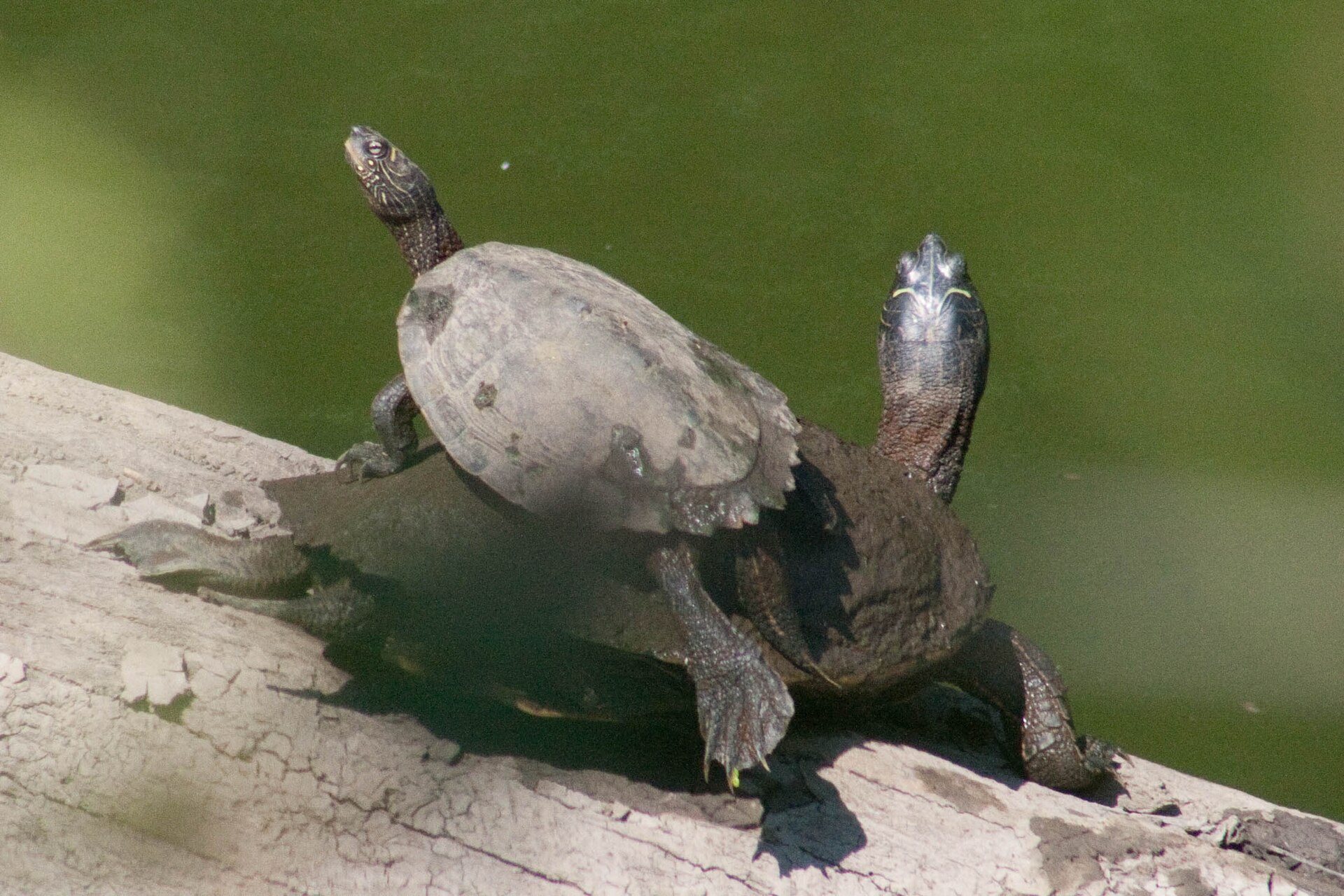
7 to 11 inAdult shell length
50 years or moreLifespan with good care
100 galWater at full size
AquaticNeeds a tank with a dry dock
Most in stores are imported. Budget for a vet check and a parasite test.
The enclosure at full size
A 100-gallon tank or stock tank for one adult, chosen for floor area rather than depth. Keep the water no more than 6 to 8 inches deep indoors, since this is a bottom-walker that rests with its nose at the surface, and give it a wide, sloped basking shelf it can climb without effort. Hatchlings start in 2 to 4 inches of water. Bare bottom or pea gravel too large to swallow. Outdoors in warm climates a shallow pond no deeper than 12 inches suits it. Adult males harass females, so house singly or several females to one male with hides.
Water
75 to 80°F. A heater is only needed if the room drops into the low 60s, because a correct basking spot and warm room do most of the work. Filtration is optional in the sense that a filter can be skipped if the water is changed completely every two or three days; a canister filter and a weekly change is the easier routine.
Temperatures
Basking surface 90 to 97°F, hotter than most pond turtles like, measured on the shelf itself with a probe thermometer. Room air in the mid 70s to 80s. Water 75 to 80°F, cooler than the shelf so the turtle has a reason to climb out.
Light
A UVB tube or a 100 to 150 watt mercury vapor bulb over the basking shelf, within the maker's stated distance, 12 hours a day. Replace UVB every six months. Keepers who use mercury vapor get heat and UVB from one fixture.
Diet
Mostly meat. Pellets such as Mazuri or Zoo Med as the staple, with fish, shrimp, snails, insects, earthworms and the occasional thawed mouse or pinkie. Greens can be offered but are often ignored. Juveniles eat daily in small pieces; adults eat every two or three days. It will take food from fingers, which is how most bites happen.
Handling
Calm and rarely bites, though a few release a foul-smelling fluid when picked up and the claws are sharp. Lift with both hands around the rear of the shell. Handle only for water changes and health checks. Wash hands after contact: turtles carry Salmonella.
The law
Federal law bars the sale of any turtle under 4 inches as a pet, which is why store animals arrive as yearlings. Ghana listed this species on CITES Appendix III and withdrew the listing in 2007, so it now carries no CITES paperwork and imports are not tracked that way. No state bans it by name; your state's general rules on non-native reptiles apply, and it must never be released.
Sources
Where to go next
Read the 4-inch rule, explained before buying any turtle, and the basking, heat and UVB guide before the first day home. Nothing here replaces a reptile vet; the directory lists them by state, and the law pages cover your state.