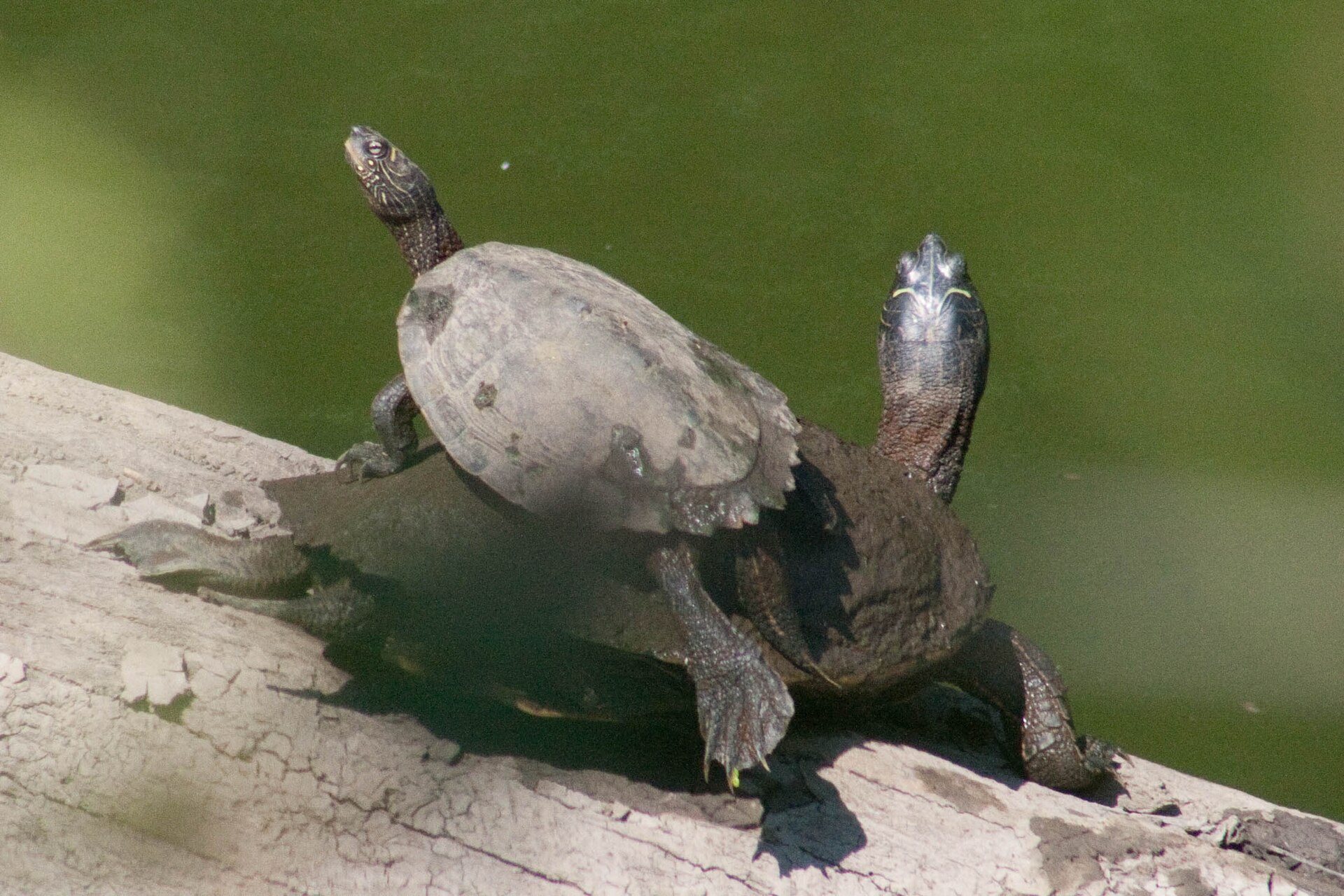
3 to 5 inAdult shell length
20 to 50 yearsLifespan with good care
40 galWater at full size
AquaticNeeds a tank with a dry dock
State endangered in parts of its range. Captive-bred only, with a receipt.
The enclosure at full size
A 40-gallon breeder is the standard recommendation for one adult, with 50 or more for a large female. Water about twice the shell length deep, no deeper than the turtle can reach the surface from while standing on a ledge or a plant, with rocks and driftwood as steps. Give it more land than most aquatic turtles get, a quarter to half of the floor, since mud turtles wander out of the water and in the wild overwinter on land near the pond. A low basking dock it can climb without a scramble.
Water
72 to 78°F; the water rarely needs much heat in a warm room. Gentle filtration, since they dislike current, and a 25 to 50 percent change weekly. Below about 70°F they stop eating, which looks like illness and usually is not.
Temperatures
Basking surface 84 to 90°F on a probe thermometer. Air in the tank 78 to 82°F. Water 72 to 78°F. Mud turtles bask less than sliders but use the lamp on cool mornings, so keep it over a spot they can reach.
Light
A UVB tube over the dock 10 to 12 hours a day, within the maker's stated distance, replaced every six months. A turtle that seldom basks still needs it in reach, and a soft or pitted shell is the first sign it has gone without.
Diet
Mostly animal matter: pellets, earthworms, snails, insects, shrimp and frozen bloodworms, with leafy greens and aquatic plants offered. Vary the protein; a bloodworm-only diet leads to vitamin A deficiency and swollen eyes. Juveniles eat daily. Adults get a protein meal every other day with greens available.
Handling
Short temper, strong jaws for its size, and a neck that reaches back further than you expect. Handle only when necessary, holding the rear of the shell. Wash hands after contact: turtles carry Salmonella.
The law
Federal law bars the sale of any turtle under 4 inches as a pet, and most adults barely clear it, so ask any seller how they comply. Not CITES listed. Listed as state endangered by the New York Department of Environmental Conservation, the Indiana Department of Natural Resources and the Pennsylvania Fish and Boat Commission, which bar collection and possession without a permit. Never take one from the wild; buy captive-bred and keep the paperwork.
Sources
Where to go next
Read the 4-inch rule, explained before buying any turtle, and the basking, heat and UVB guide before the first day home. Nothing here replaces a reptile vet; the directory lists them by state, and the law pages cover your state.