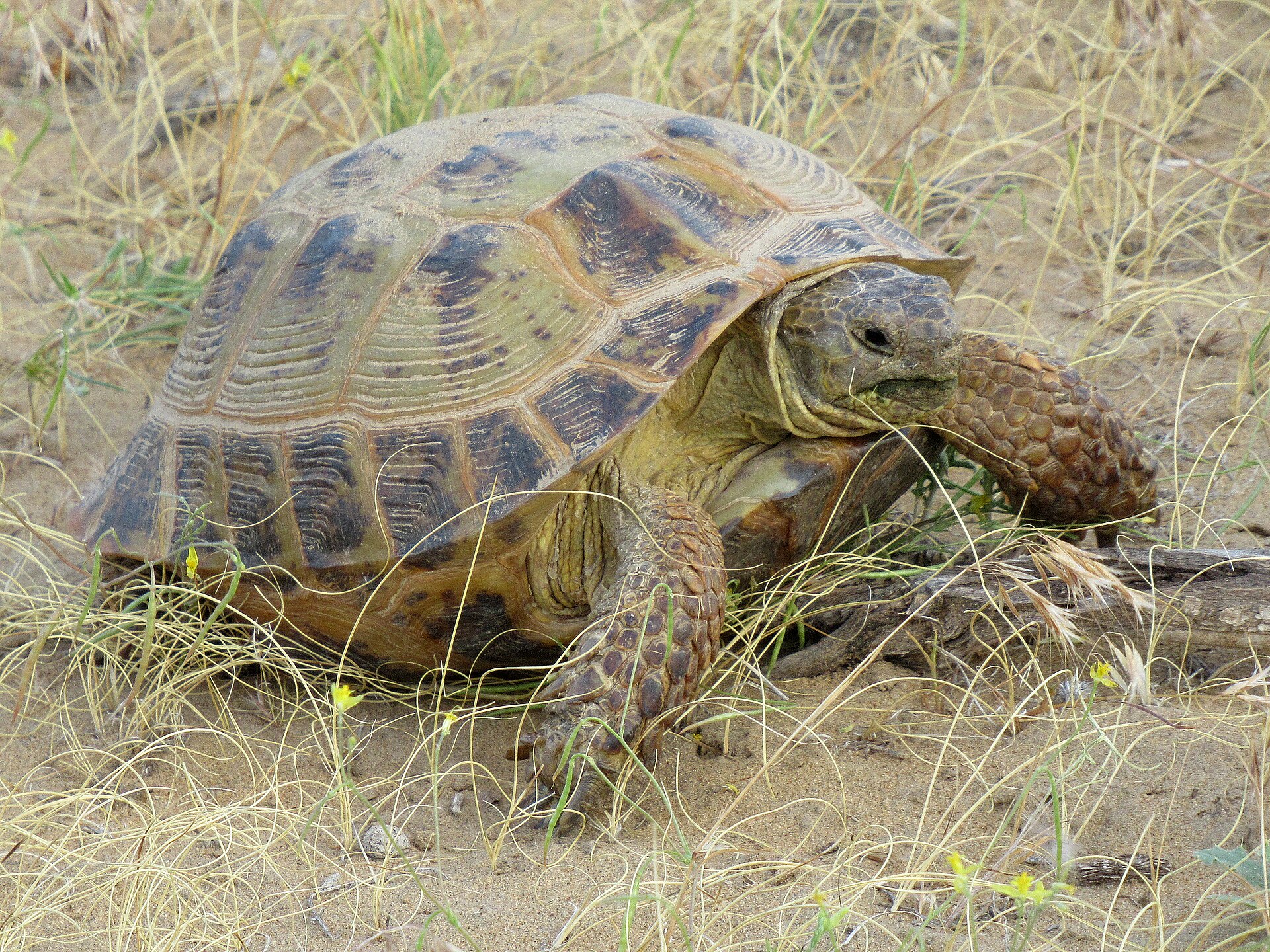
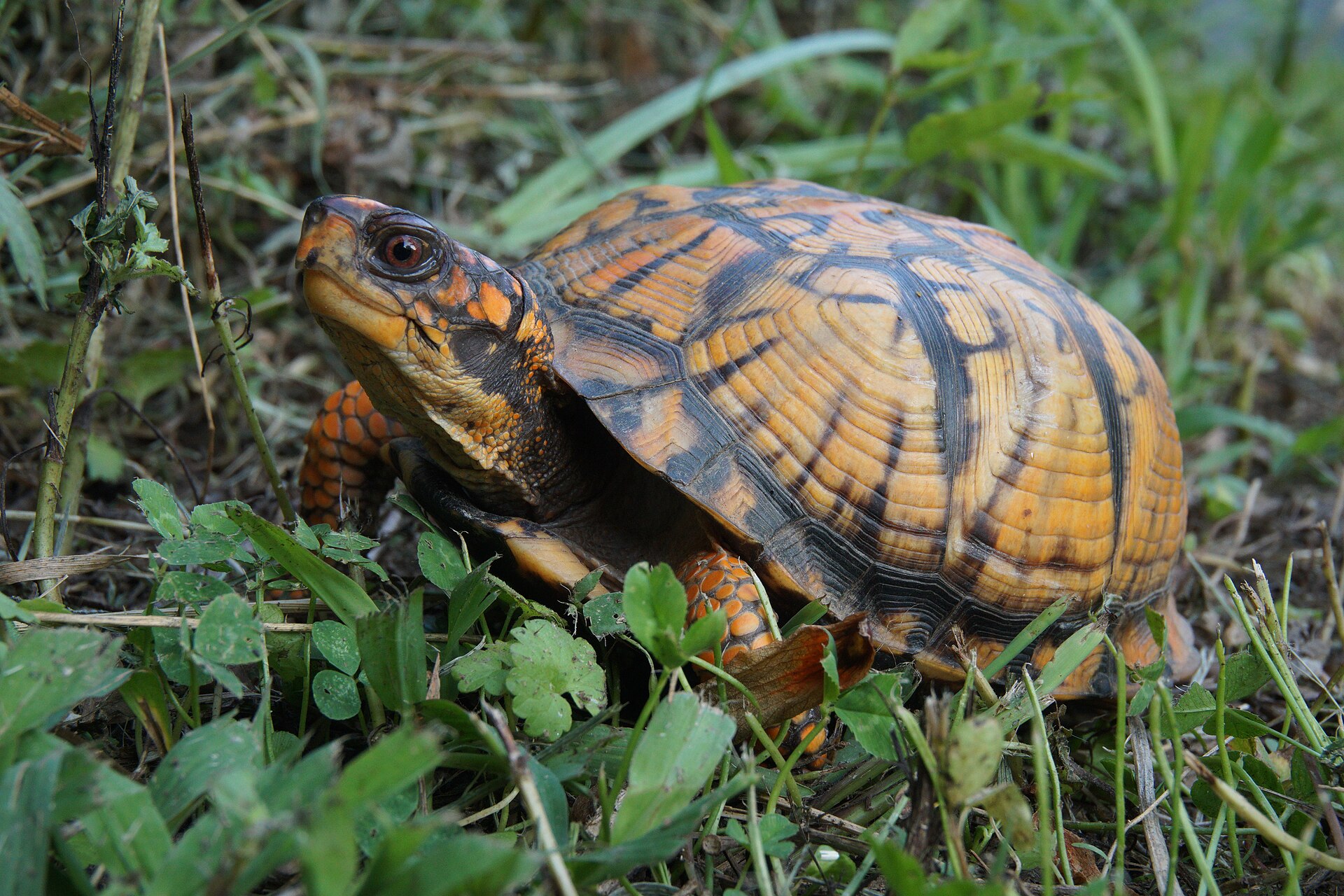
5 to 8 inAdult shell length
50 years or moreLifespan with good care
8 × 4 ftFloor space at full size
LandNeeds an enclosure or a pen
Ask which subspecies you are buying. Some brumate, some must not.
The enclosure at full size
Indoors, a tortoise table of 8 by 4 ft or larger with 4 inches or more of a topsoil and play sand mix, hides, flat stones and a shallow, topple-proof water dish. Walls it cannot see over, since a tortoise that can see out will try to get out. Outdoors in warm months, or year-round in a Mediterranean climate, a well-drained south-facing pen with shade, a heated shed and walls sunk against escape. Keep males and females apart outside the breeding season; a male harasses a female without pause.
Temperatures
Basking spot 86 to 95°F, daytime ambient 68 to 81°F, cool retreat 64 to 72°F. Nights can fall to 50°F. Humidity 30 to 55 percent, though the North African form tolerates up to 75 percent.
Light
UVB for at least 12 hours a day indoors. A mercury vapor bulb hung about 12 inches above the shell gives heat and UVB together. Replace a strip tube every six months and a 10.0 tube every ten to twelve. Sun outdoors whenever possible.
Diet
Grazing weeds and flowers: dandelion, hawkbit, sow thistle, clover, mallow, plantain, hibiscus and nasturtium, plus endive and other high-fibre greens. No fruit, ever. Dust food with plain calcium carbonate most days and a vitamin and mineral powder with D3 daily for the first three or four years, then three times a week. Cuttlebone always available.
Handling
Gentle and curious, but sensitive to being bothered. Pick up with both hands under the shell and put it down soon. Wash hands after contact; tortoises carry Salmonella like any reptile.
The law
Testudo graeca is CITES Appendix II, so insist on captive-bred paperwork. The federal 4-inch rule applies to sales. Healthy adults of the Turkish and European forms can brumate about three months near 41°F, never below freezing; sea-level North African forms generally do not. Post-brumation blindness and bladder stones are known problems in this species, so find a reptile vet before you need one.
Sources
Where to go next
Read the 4-inch rule, explained before buying any turtle, and the basking, heat and UVB guide before the first day home. Nothing here replaces a reptile vet; the directory lists them by state, and the law pages cover your state.