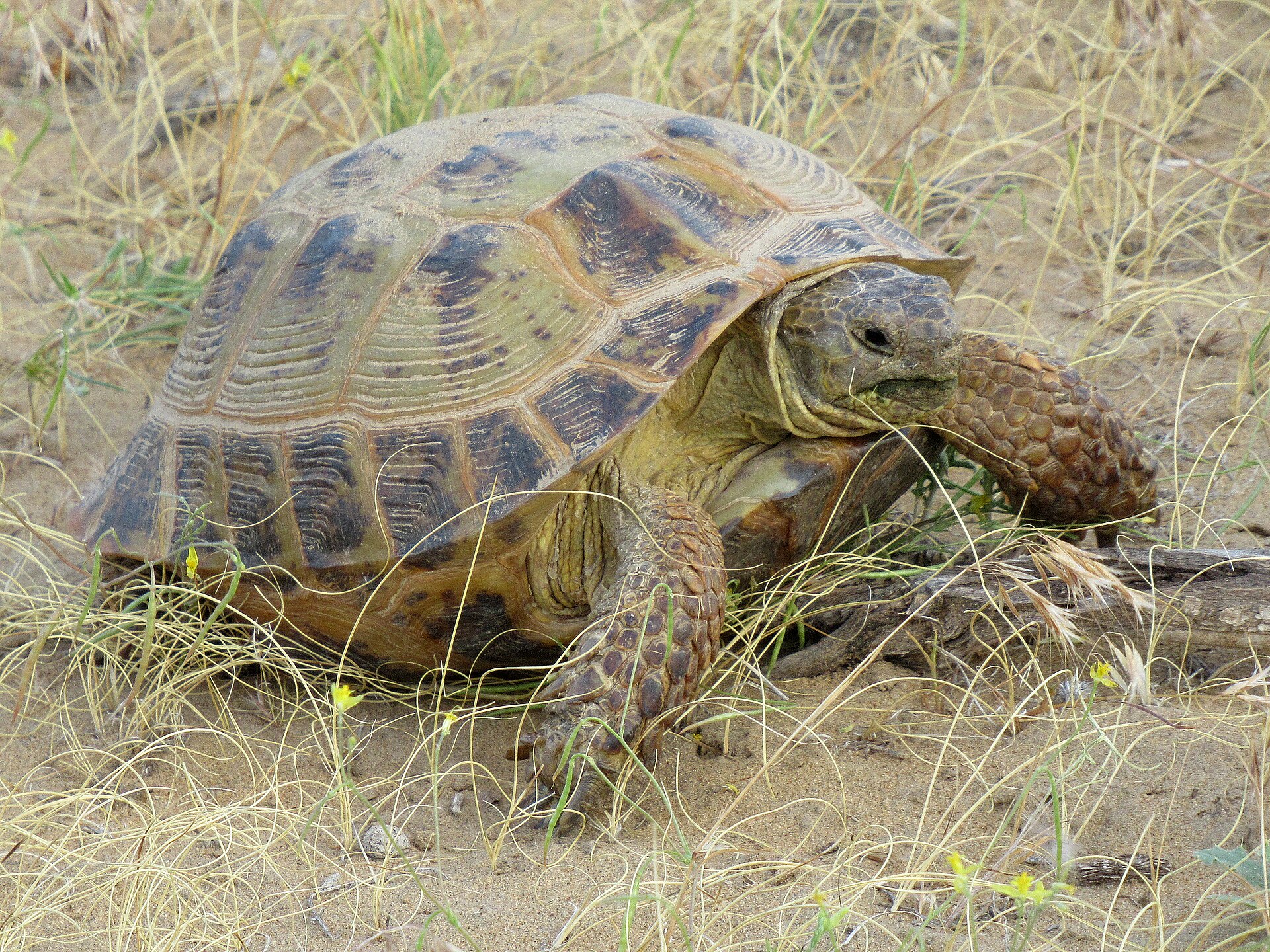
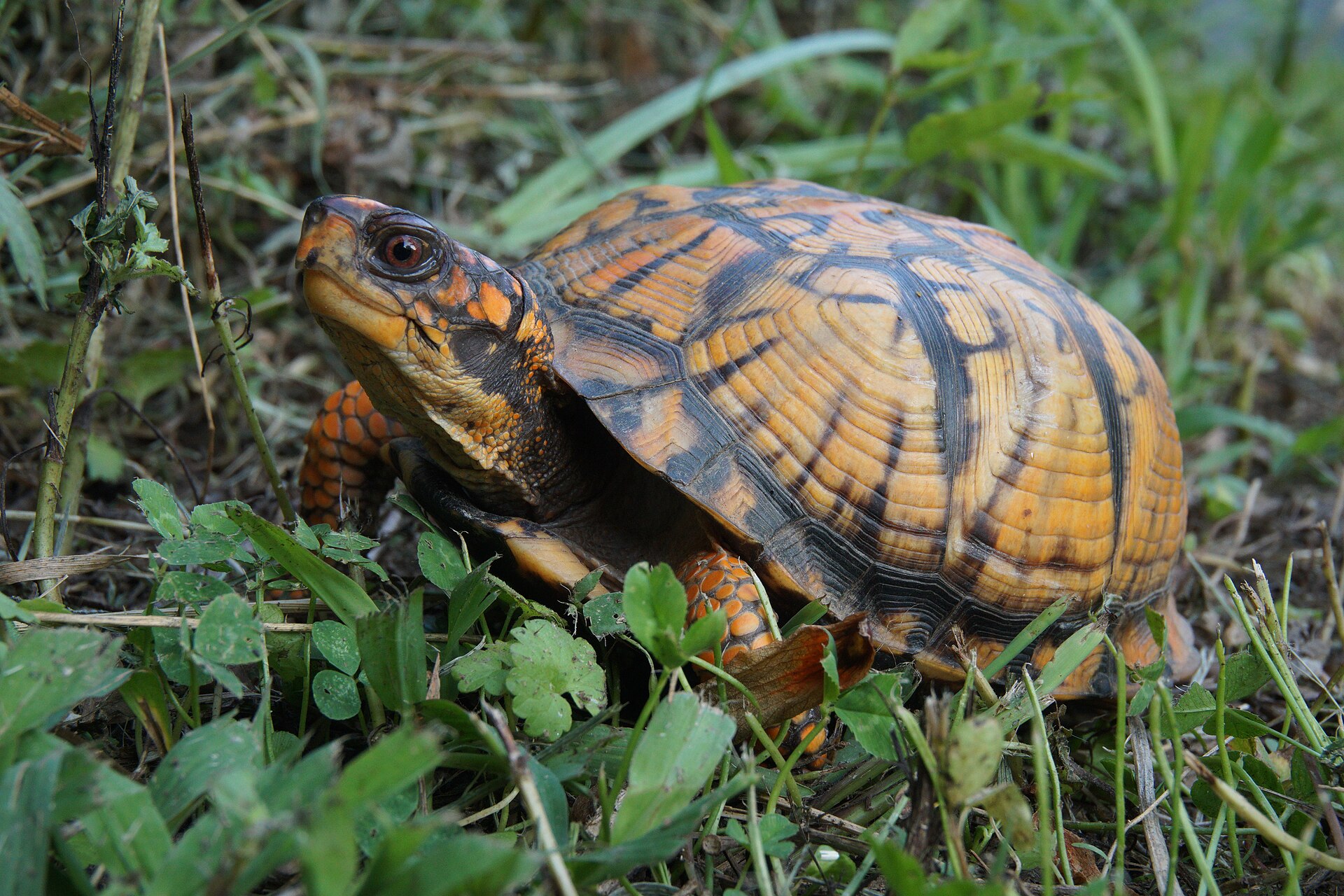
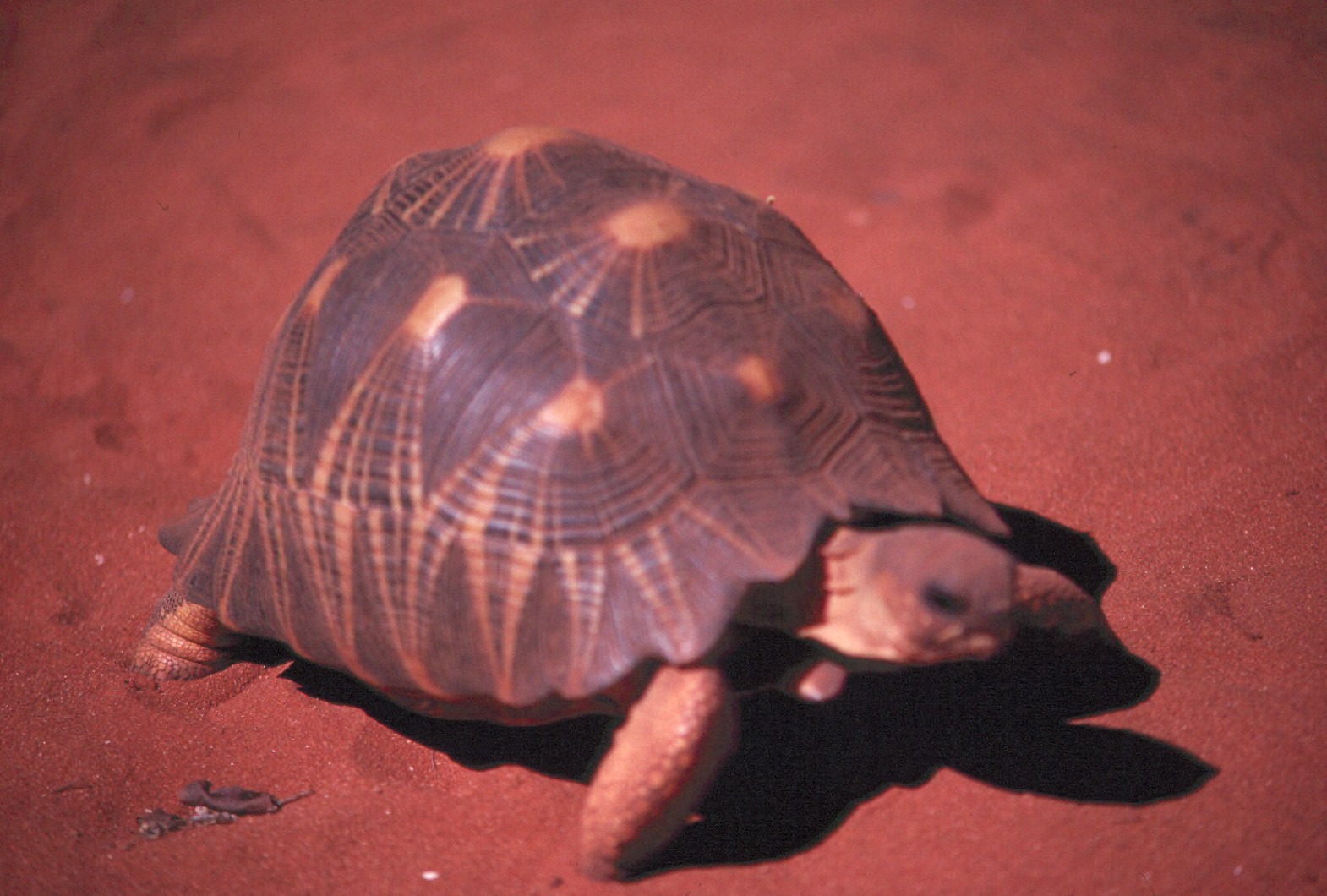
5 to 10 inAdult shell length
35 to 80 yearsLifespan with good care
8 × 4 ftFloor space at full size
LandNeeds an enclosure or a pen
CITES Appendix I since 2019. Captive-bred with documents, or not at all.
The enclosure at full size
Indoors, an 8 by 4 ft table is a fair home for one adult; the Tortoise Trust gives 1 to 2 square metres as the absolute minimum and says bigger is better since this species spends less time outdoors than other tropicals. Six to eight inches of soil or peat under grass clippings, sprayed lightly each day so it stays slightly moist but never wet, with a dry basking end. Outdoors in summer, a planted pen with walls of 8 inches or more and a heated hide. Never house with other species.
Temperatures
Basking spot 90 to 95°F, ambient in the mid 80s°F, a night drop of 5 to 10 degrees. Never below 50°F, and a frost will kill it. Humidity low to moderate, around 50 percent, with the substrate damp rather than the air.
Light
Natural sun, or a high-output UVB tube such as a 10.0 or 12 percent T5 over the basking end, changed on the maker's schedule. Shade must always be available so it cannot overheat.
Diet
Mostly grass and weeds: Bermuda, rye and alfalfa, dandelion and mustard greens, spineless cactus pads and succulents, with romaine or red leaf lettuce when wild food is short. No fruit, no kale or spinach in quantity, no animal food. Calcium regularly and cuttlebone always, with a D3 supplement indoors. Soak in warm water about once a week.
Handling
Handle as little as possible. This is a nervous species that gets sick when stressed, cold or damp. Both hands under the shell for health checks only. Wash hands after contact.
The law
Moved from CITES Appendix II to Appendix I at the 2019 conference, in force from 26 November 2019, which bans commercial international trade in wild animals. Captive-bred animals can still be sold within the United States, so ask for the breeder's records and keep them. Protected throughout India, Sri Lanka and Pakistan. The federal 4-inch rule applies to sales.
Sources
Where to go next
Read the 4-inch rule, explained before buying any turtle, and the basking, heat and UVB guide before the first day home. Nothing here replaces a reptile vet; the directory lists them by state, and the law pages cover your state.