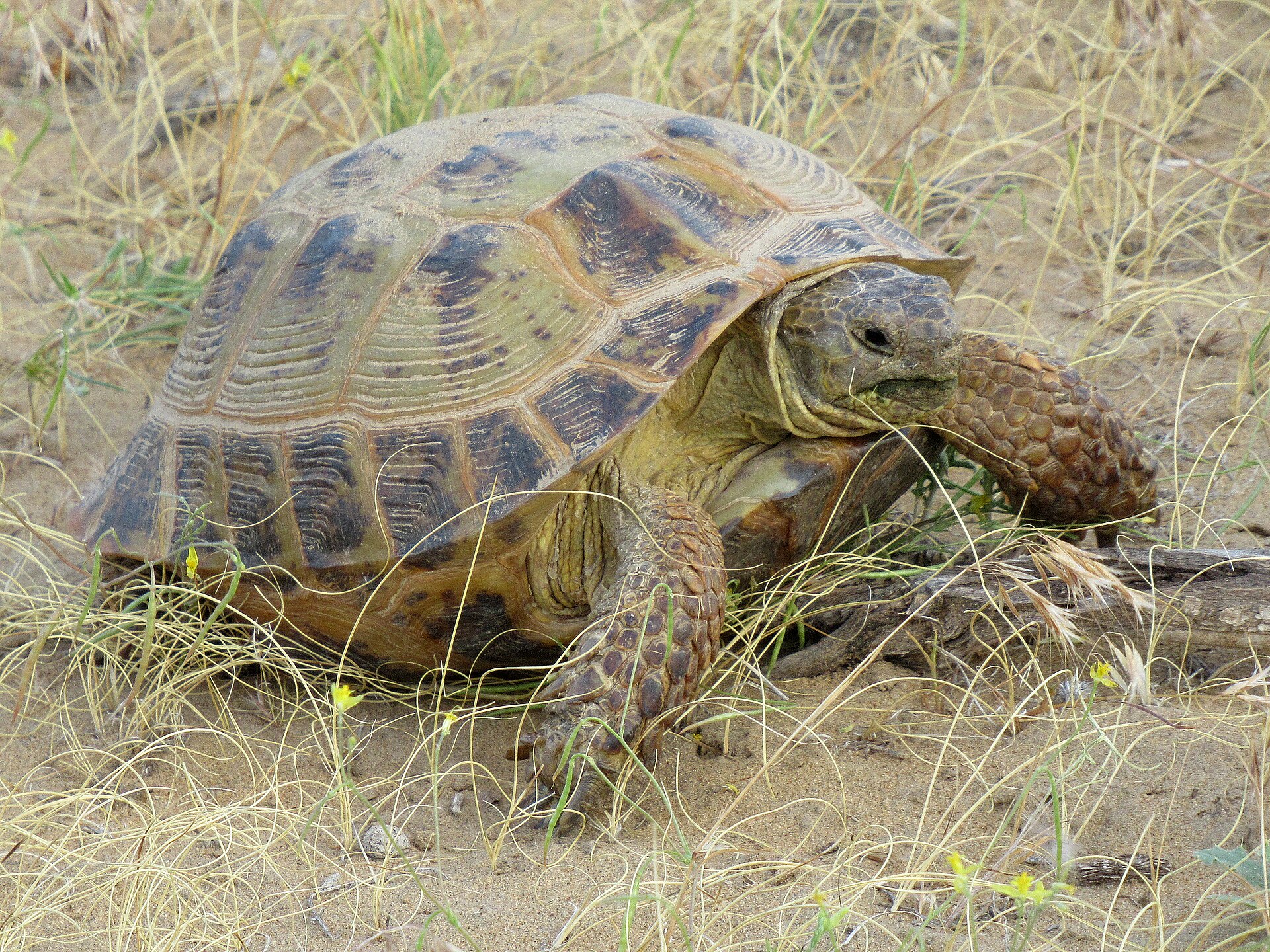
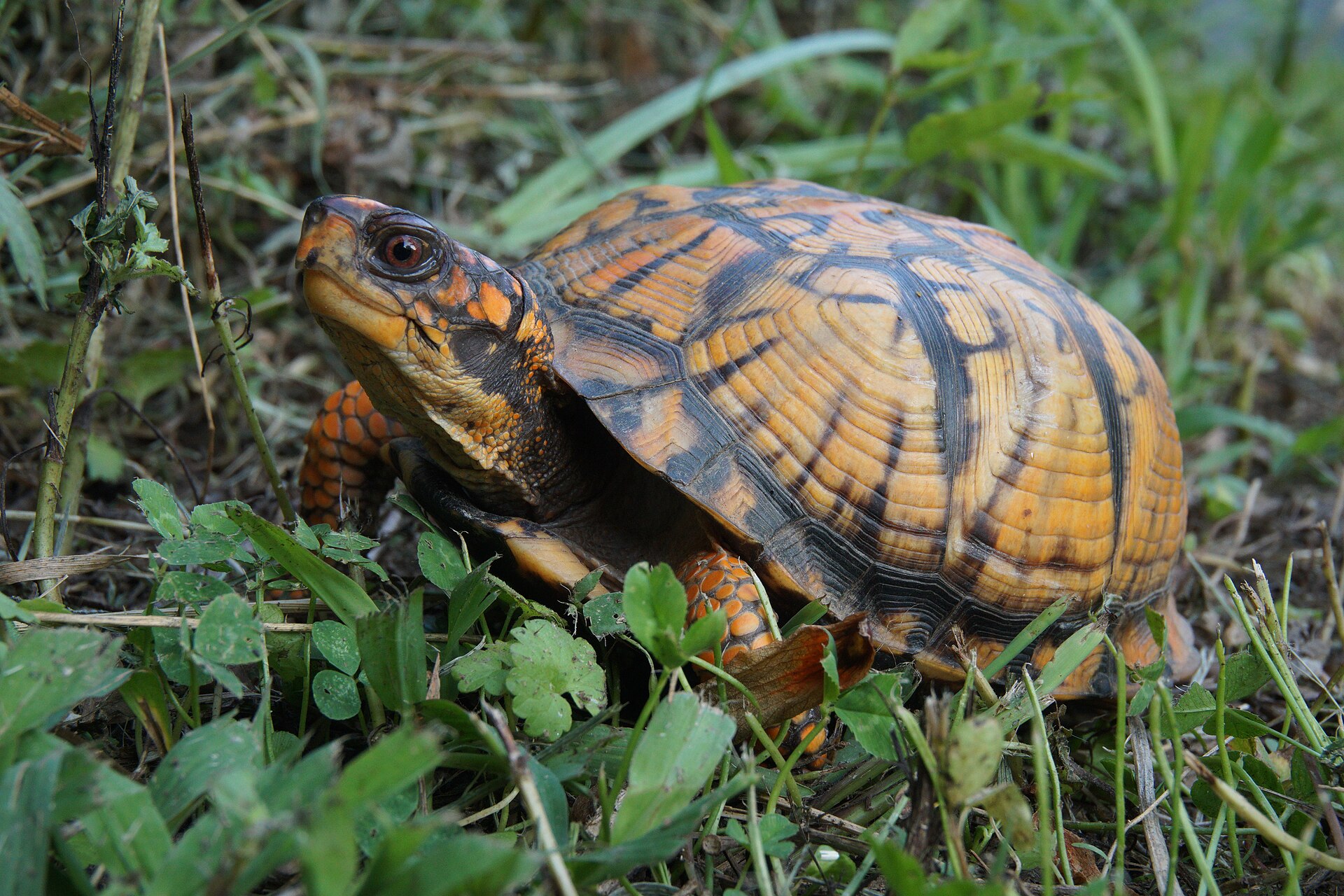
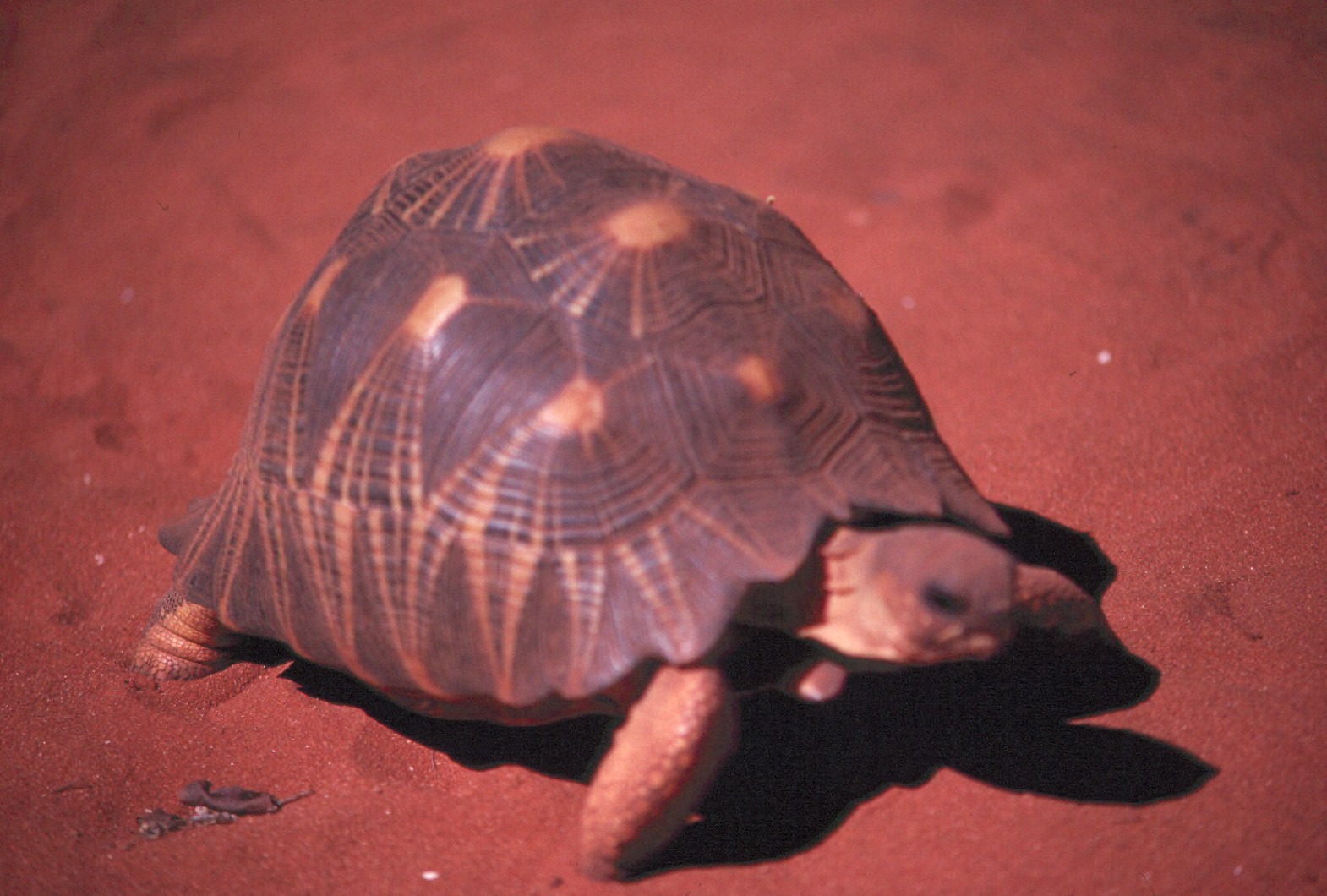
10 to 18 inAdult shell length
50 years or moreLifespan with good care
10 × 10 ftFloor space at full size
LandNeeds an enclosure or a pen
Damp is the number one killer of this species in captivity.
The enclosure at full size
Adults belong outdoors in a warm, dry climate whenever the weather allows: a 10 by 10 ft pen for a pair, walls at least 18 inches high, well drained, with shrubs for shade, a rocky hide and grass or alfalfa to graze. Add a heated, insulated hide for nights under 60°F. A hatchling starts in a 4 by 2 ft table or a 40 to 75 gallon tub on soil and peat, cypress mulch or a square of turf; a pair of adults needs 6 by 4 ft indoors at the very least, and larger is better.
Temperatures
Daytime 80 to 85°F with a basking spot of 90 to 95°F; some keepers run the room up to 90°F. Nights no lower than 75°F, and never under 60°F without heat. Humidity around 50 percent. Damp, cold air brings respiratory disease.
Light
A mercury vapor bulb, or UVB tube with a separate heat lamp, over the basking spot indoors. Real sun outdoors is what this species is built for and nothing replaces it.
Diet
A coarse, high-fibre grazing diet: grass and grass hay such as timothy and orchard, broadleaf weeds like dandelion, plantain, sow thistle and clover, spineless cactus pads and succulents. Dark greens a couple of times a week, fruit no more than 5 percent, never meat, and little kale or spinach. Hatchlings eat daily with calcium and D3 dusted on several times a week. Soak twice a week for 10 minutes.
Handling
Shy. It pulls in and waits when picked up, though it learns who feeds it. Not a pet for young children, and an adult female is a two-hand, 30-pound lift. Wash hands after contact.
The law
Leopard tortoises are CITES Appendix II, so cross-border trade needs permits. Wild imports to the United States have been barred since 2000 because of a tick that carries heartwater disease, so what is sold here is captive-bred. The federal 4-inch rule applies to sales. Check city limits on large animals before buying, as with a sulcata.
Sources
Where to go next
Read the 4-inch rule, explained before buying any turtle, and the basking, heat and UVB guide before the first day home. Nothing here replaces a reptile vet; the directory lists them by state, and the law pages cover your state.