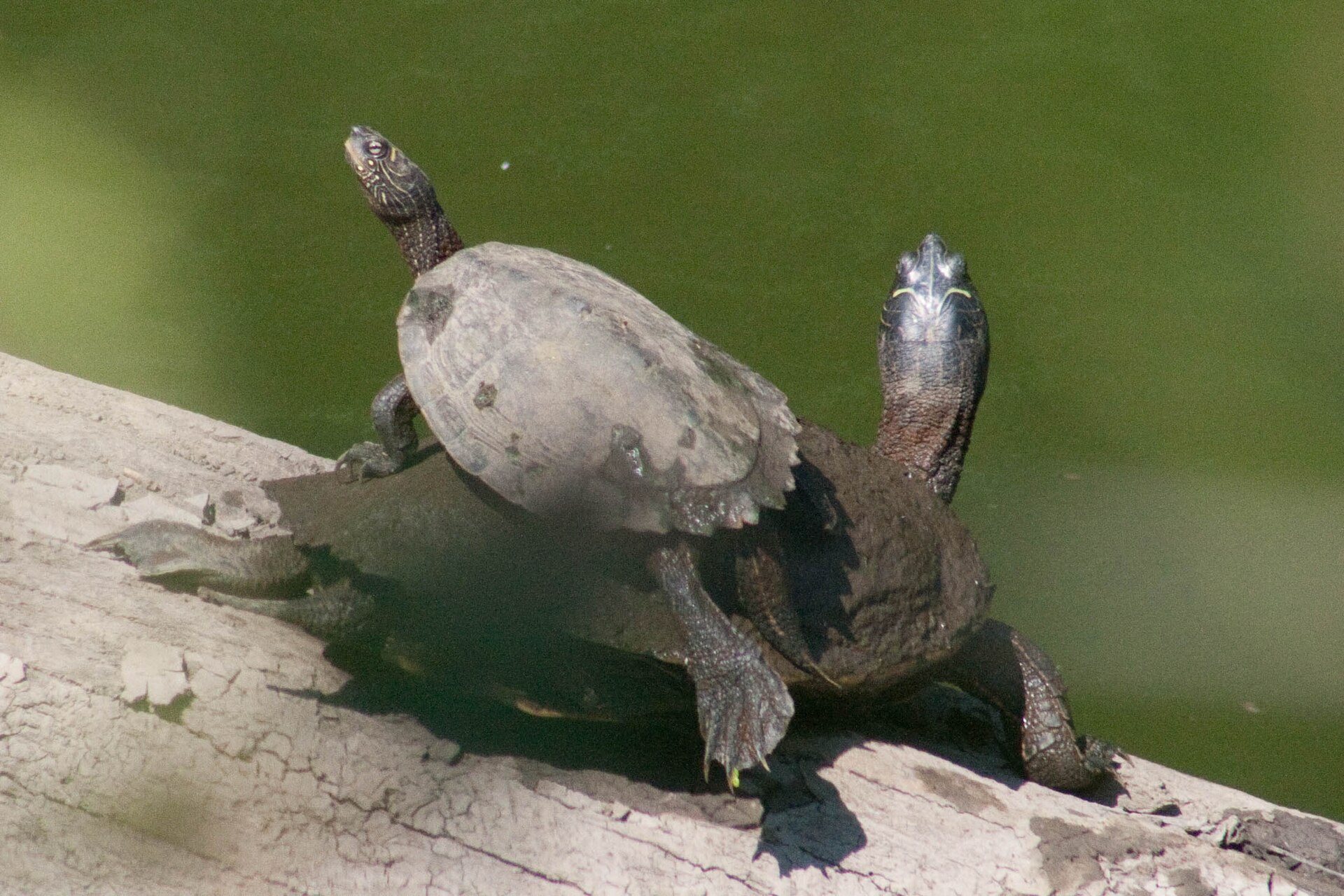
4 to 6 inAdult shell length
10 to 20 yearsLifespan with good care
40 galWater at full size
AquaticNeeds a tank with a dry dock
Captive-bred stock is easy to find. There is no reason to buy a wild one.
The enclosure at full size
Sources range from 20 gallons of water per adult to the veterinary rule of 10 gallons per inch of shell, which puts a 6-inch adult at 60. A 40-gallon breeder is a fair lifetime home for one and gives the floor area the turtle uses more than depth. Water depth from one and a half to three times the shell length, with submerged ledges and plants so it can rest near the surface. A large dock it can climb onto fully. Both sexes can be territorial, so a second turtle needs 10 more gallons and hiding places, and a pair that fights gets separated.
Water
70 to 80°F, with a guarded heater in a cool room. A canister filter rated above the tank size, since the protein-heavy diet loads the water fast, and a 25 to 50 percent change weekly. Dechlorinate new water before it goes in, and keep the flow gentle so the turtle can rest at the surface without fighting a current.
Temperatures
Basking surface 85 to 95°F on a probe thermometer; one UK source runs it as low as 80°F. Air above the water 75 to 85°F. Water 70 to 80°F, so the dock is always the warmest spot in the tank.
Light
A UVB tube over the dock 12 hours a day, replaced every six months. One care sheet calls UVB optional if the diet carries vitamin D3; veterinary advice is to provide it regardless, and it is cheap insurance against a soft shell.
Diet
Omnivore that eats like a carnivore. A pellet with 30 to 40 percent protein and a calcium to phosphorus ratio of at least 2 to 1 as the base, plus crickets, roaches, earthworms, shrimp and bits of fish, with leafy greens and aquatic plants offered. Juveniles daily, adults every two or three days. Cuttlebone in the tank.
Handling
Keep handling to a minimum. It is not a biter by habit but will nip at fingers it mistakes for food, so feed with tongs. Lift by the rear of the shell. Wash hands after any contact: turtles carry Salmonella.
The law
Federal law bars the sale of any turtle under 4 inches as a pet, so ask how a seller of small ones complies. The species is on CITES Appendix III at China's request, so imports need an export permit or certificate of origin; the US Fish and Wildlife Service recorded roughly 4,700 imported between 2005 and 2019. Listed as endangered by the IUCN in 2011. No state bans it by name. Never release one.
Sources
Where to go next
Read the 4-inch rule, explained before buying any turtle, and the basking, heat and UVB guide before the first day home. Nothing here replaces a reptile vet; the directory lists them by state, and the law pages cover your state.