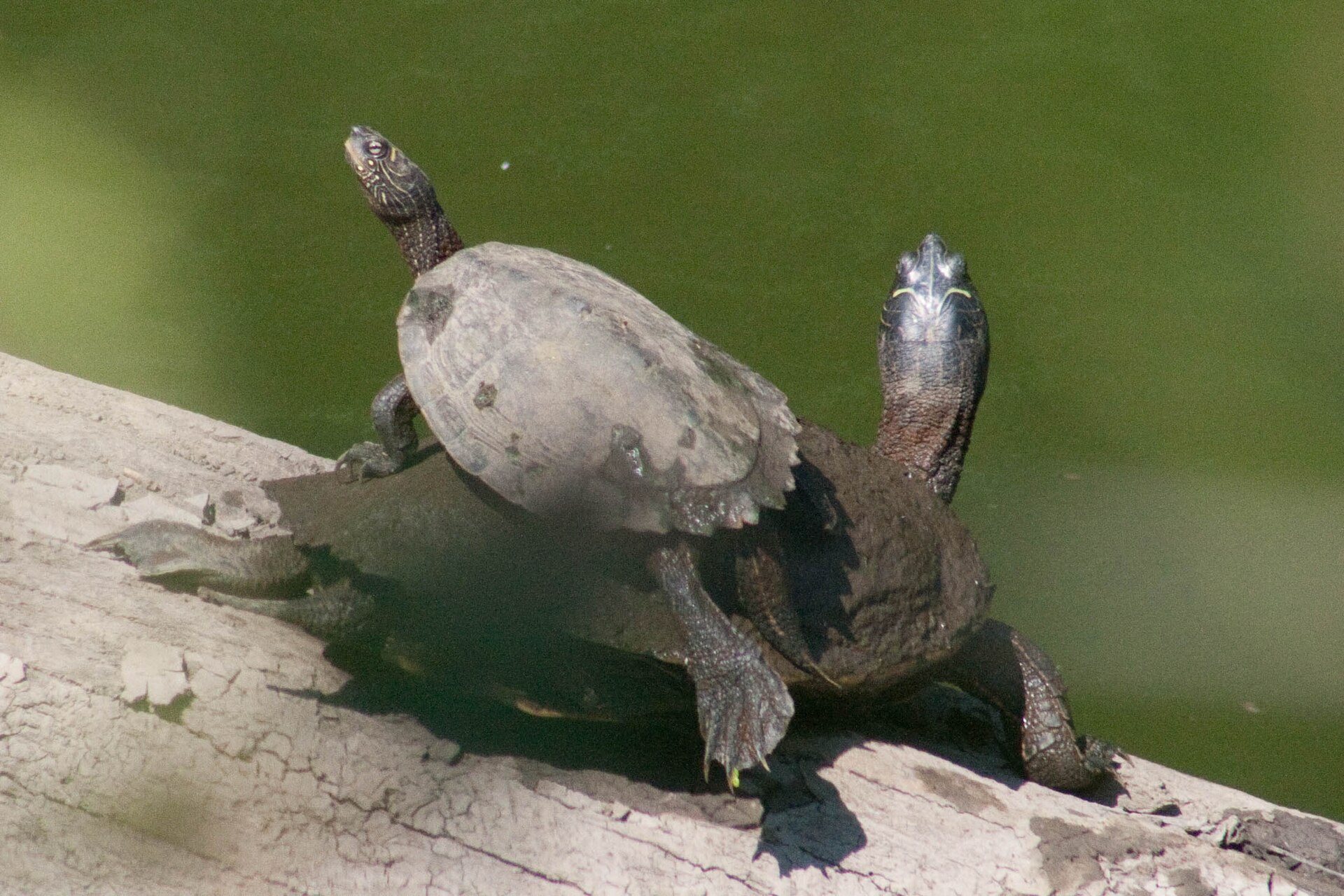
5 to 18 inAdult shell length
20 to 50 yearsLifespan with good care
150 galWater at full size
AquaticNeeds a tank with a dry dock
Females get huge. Sex it before you buy.
The enclosure at full size
A male can live in 75 to 125 gallons; a female at 18 inches needs 150 or more, and most end up in an indoor pond or stock tank. Length and width matter more than depth. Three to four inches of fine, smooth play sand across part of the floor so the turtle can bury itself with only the head showing, with water shallow enough there to reach the surface while buried and deeper water elsewhere. No gravel, no sharp rock, no rough decor: the skin scratches and then infects. A smooth sand bank for basking. One per tank; softshells injure each other.
Water
72 to 80°F, slightly acidic at pH 6 to 7, and very clean. Softshells absorb through their skin and develop ulcers in dirty water, so run a canister filter well above the tank rating, change 25 to 50 percent weekly and rinse the sand. Keep the heater behind a guard.
Temperatures
Basking spot 80 to 90°F on the sand bank. Water 72 to 80°F and no higher, since warm water speeds up skin infections. Air above the water in the low 80s. A probe thermometer on the bank, not a dial on the glass.
Light
A UVB tube over the basking bank 10 to 12 hours a day, replaced every six months. Softshells bask less than sliders but need the option, and they will stretch up through shallow water to lie under the lamp.
Diet
Carnivore. Pellets with around 38 percent protein as the base, plus earthworms, crickets, crayfish, shrimp, whole fish and, for a large female, the occasional thawed rodent. Juveniles eat daily; adults eat a portion about the size of their head and neck two to five times a week. Feed in the water and remove what is left within 15 minutes.
Handling
A long neck and a painful bite that reaches well back along the shell. Wet your hands, grip the rear edge of the shell with the head pointed away, and never lift by the tail. Handle as little as possible; the shell bruises. Wash hands after contact: turtles carry Salmonella.
The law
Federal law bars the sale of any turtle under 4 inches as a pet. Not CITES listed. State rules vary widely: the Minnesota Department of Natural Resources has barred possession since December 2021 without an aquaculture licence with a turtle endorsement, the South Carolina Department of Natural Resources caps possession at five, and the Arkansas Game and Fish Commission allows six for consumption. Georgia and Florida do not protect it. Check your state's wildlife agency and buy captive-bred.
Sources
Where to go next
Read the 4-inch rule, explained before buying any turtle, and the basking, heat and UVB guide before the first day home. Nothing here replaces a reptile vet; the directory lists them by state, and the law pages cover your state.